
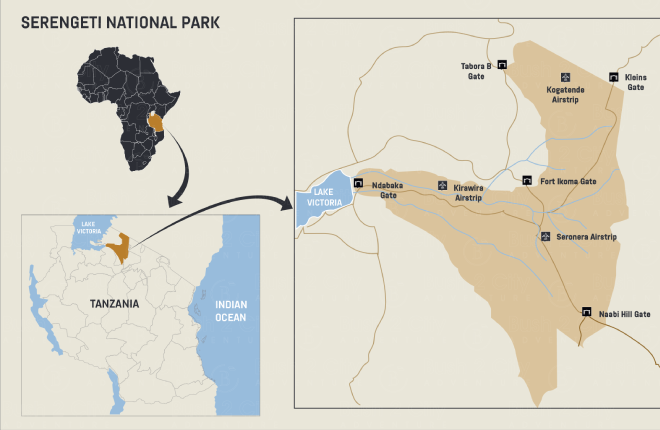
Serengeti National Park embodies the quintessential African safari experience. Vast herds of wildlife traverse the expansive savannah, creating a mesmerizing spectacle that stretches to the horizon. Predators are an integral part of this natural tableau, adding an element of unpredictability and excitement. Lions are frequently seen without the need for extensive searching. Cheetahs, renowned for their speed, are also a common sight, offering lucky visitors the chance to witness their breathtaking sprints. While leopards are more elusive, their penchant for resting in the large trees near the Seronera River gives you a good chance of spotting these magnificent creatures in their natural habitat.


The Serengeti is celebrated for its spectacular annual wildebeest migration, a monumental journey that sees approximately 8 million hooves pounding the vast plains. This mass movement involves over 1.5 million wildebeest, 200,000 zebras, and 300,000 Thomson’s gazelles, all in pursuit of new pastures. This event draws predators in large numbers, making sightings of big cats in action a thrilling aspect of the migration. Spotted hyenas, golden jackals, and black-backed jackals are also a common presence, closely trailing the migrating herds.
Throughout the year, the Serengeti provides exceptional opportunities for wildlife observation. The months of June and July are particularly favorable for witnessing the migration and potential crossings at the Grumeti River. In the park’s northern areas, the more renowned crossings of the Mara River are typically observed around August and September. For those interested in experiencing the wildebeest calving season, the period from January to February is considered optimal.


Birding in the Serengeti is a rewarding experience throughout the year, with the period from November to April standing out as the prime season. During these months, the park becomes a bustling hub for migratory birds from the Palearctic and within Africa, enriching the avian diversity. It’s also the breeding season for many resident birds, offering enthusiasts the chance to observe them in their vibrant breeding plumages. For general wildlife observation, the months of January to February and June to October are particularly favorable, although the best times can vary depending on the specific regions of the park you explore.
450+
Nov to Apr


Daytime Warmth at 26°C/79°F, Clear Skies, and Chilly Nights at 14°C/57°F
Mid-Year Cold Spells with Near-Freezing Temperatures, Morning Chill in June-September, and Potential Early Short Rains in October
Steady Temperatures: Comfortable Afternoons at 27°C/81°F and Pleasant Nights at 15°C/59°F
Rainy Spells: Short Rains in November-December, Dry Intervals in January-February, and Long Rains with Frequent Showers in March-May
Beginning your Serengeti adventure usually starts from Arusha, a prominent launch point for safaris in Tanzania. The most practical approach is flying into Kilimanjaro International Airport (JRO), which is conveniently located about 50km (31mi) from Arusha. Alternatively, travelers can opt for Julius Nyerere International Airport (DAR) in Dar es Salaam and catch a connecting flight to either Arusha Airport (ARK) or Kilimanjaro International Airport (JRO).
Once in Arusha, there are multiple ways to reach the Serengeti. Regular flights operate from Arusha to various airstrips within the park, providing quick access. Alternatively, adventurers can embark on a picturesque drive spanning approximately 325km (200mi), taking approximately 8 hours. Though the journey may be rough at times, it offers the opportunity to witness wildlife and breathtaking landscapes, particularly as it traverses the Ngorongoro Conservation Area.
For a more comprehensive experience, many travelers opt for a combination of flying and driving. This involves flying one way and driving the other, with an overnight stop at the Ngorongoro Crater. From there, it’s about a 140km (90mi) drive to the Seronera area in the heart of the Serengeti, which takes around 3 hours.
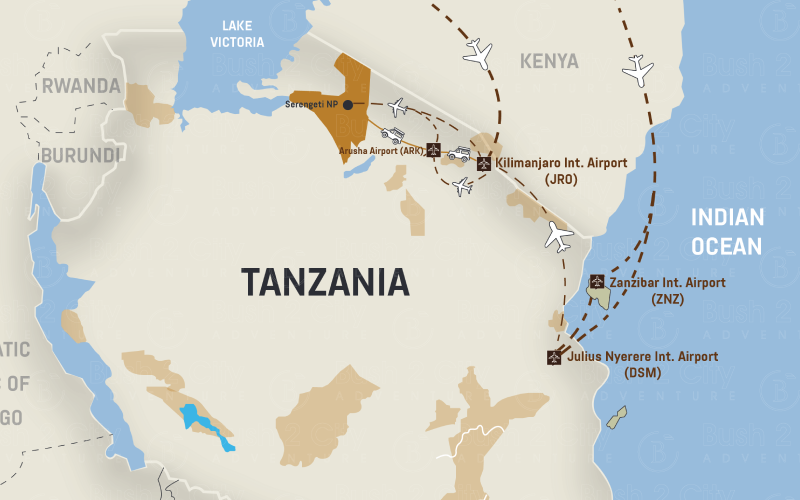
Please note that Bush 2 City Adventure currently does not offer international flight air ticketing services. Guests are kindly advised to arrange and book their own international flights to Tanzania. We recommend checking the official websites of major airlines that frequently serve Kilimanjaro International Airport (JRO) and Julius Nyerere International Airport (DAR) for availability and booking.
To learn more about international travel options to Tanzania from various global destinations, please click here
Your tour consultant typically handles bookings for domestic and charter flights between parks as part of the tour package. However, if you’re arranging your own flights to the Serengeti, several local carriers offer domestic flights:
Please refer to our FAQ – Tanzania page for detailed information regarding passports, visas, vaccinations, and other entry requirements.
In our opinion, a journey to Serengeti National Park is highly secure. Crime occurrences within Tanzania’s parks and reserves are infrequent, and your guide will prioritize your safety throughout the trip. For the latest updates on travel advisories concerning the Serengeti and Tanzania, please refer to the ‘Staying Safe – Tanzania’ section.
Given the presence of malaria in the Serengeti, it’s crucial to take precautions to safeguard your health. Utilize mosquito repellents containing DEET, as they are highly effective, and ensure you’re taking antimalarial medication. Additionally, consider covering exposed skin during the evening hours. Before your trip to Tanzania, it’s wise to consult with your local healthcare provider about recommended vaccinations for added protection.
Wildlife viewing is typically considered safe, particularly when conducted as part of an organized safari. It’s essential to heed the instructions provided by your guide at all times. Familiarize yourself with the park regulations, and if you’re embarking on a self-drive safari, remain inside your vehicle unless within a designated area. For additional safety recommendations, refer to the ‘Wildlife Viewing Safety Precautions’ section below.

Remarkable mobile retreats united by a single philosophy: that true luxury lies in the harmony of discovery and comfort. Following the ancient rhythm of the Great Migration, our camps transition seamlessly between the dramatic crossings of the Mara River and the verdant plains of Ndutu Ngorongoro.
Each hand-crafted tented suite is a masterclass in understated elegance, offering expansive living spaces and a profound sense of place. Here, warm hospitality meets the raw beauty of the wild, inviting you to disconnect from the modern world and reconnect with the purest essence of nature.
Prepare to follow the greatest show on Earth with Nasikia Migration Camp, a mobile safari experience designed to place you in the very heart of the Great Migration. This isn’t just a stay—it’s an adventure that moves with the wildebeest, ensuring you are always in prime position to witness the thundering herds.
As the seasons change, the camp moves from the southern Serengeti’s calving grounds to the river crossings of the north, giving you unparalleled access to this incredible spectacle. Your safari tent is a luxurious haven, complete with a comfortable king-size bed, an en-suite bathroom with a bucket shower, and a private veranda that looks out onto the ever-changing landscape.
The essence of Nasikia is the pure, authentic bush experience. Spend your days on thrilling game drives, tracking predators and witnessing millions of animals on the move. As evening falls, gather around the campfire to share stories, and as the African night sets in, the distant sounds of the wild will become your lullaby. This is an unparalleled opportunity to truly live the safari dream, right at the forefront of nature’s grand design.
Named for the Swahili word for “stars,” Nyota Luxury Camp is an intimate celestial sanctuary perfectly positioned in the wildlife-rich heart of the Seronera. Each vaulted suite is elevated on a private timber platform, offering a sophisticated vantage point over the meandering Orangi River and the infinite, predator-rich plains.
Retreat to your private veranda to witness the symphony of the Serengeti, or indulge in the transformative luxury of an outdoor hot shower under a vast, unpolluted sky. From sunrise balloon safaris to starlit campfire tales, Nyota offers a curated immersion into the wild—where the raw pulse of the Serengeti meets the refined elegance of a world-class retreat.

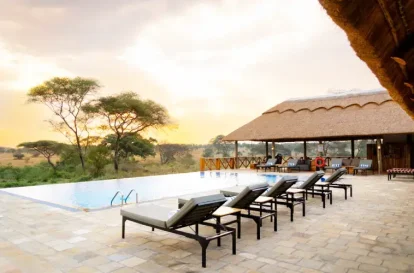
Enviably positioned in the soul of the Serengeti, Kubu Kubu Tented Lodge is a sanctuary of refined elegance. From this prime vantage point, the park’s most storied landscapes—the ancient Maasai Kopjes, the Seronera Valley, and the dramatic Grumeti River—are all within effortless reach.
Whether you are witnessing the thundering Great Migration from the privacy of your own terrace or soaking in the endless golden savannahs from the edge of the infinity pool, the experience is one of pure immersion. Between adventures, find your balance with a bespoke treatment in our tranquil spa. At Kubu Kubu, the raw beauty of the wild meets the sophisticated comforts of a world-class retreat.
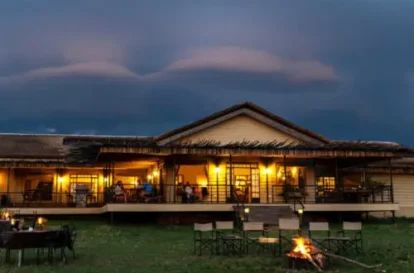
Serengeti Ark Safari Lodge is a luxury safari camp situated on a hillside in the northern Serengeti, Tanzania. This location is particularly advantageous as it provides easy access to the famous Mara River, a key crossing point for the Great Migration. The lodge is designed to blend modern comfort with the untamed natural beauty of the Serengeti, offering a serene and exclusive base for safari adventures.
The lodge features well-appointed, spacious tents on raised platforms, providing guests with spectacular views of the surrounding savannah plains and the wildlife that roams freely. Each tent is en-suite with modern facilities, including a flushing toilet and hot and cold running water. The camp also prioritizes sustainability, utilizing a solar power system and locally sourced materials to minimize its environmental footprint.
Serengeti Ark Safari Lodge offers a range of activities and amenities to enhance the safari experience. Guests can enjoy both game drives and bush walks, and for those seeking a unique perspective, hot air ballooning is also available. The camp’s main area includes a restaurant that serves a variety of cuisines, a well-stocked bar, a swimming pool, and a fireplace, creating a relaxing atmosphere where guests can unwind and share stories after a day of exploration.
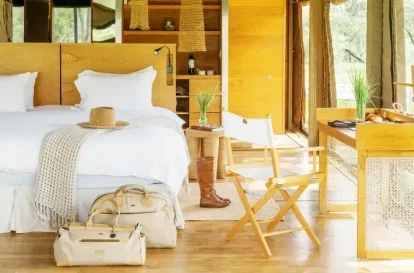
Roving Bushtops is an intimate luxury camp with just eight tented suites, moving seasonally between northern and southern Serengeti locations to offer access to different stages of the Great Migration. Depending on when you visit, your stay may centre on the Mara River region or the southern plains during calving season.
Private game drives with a ranger and Kuria spotter allow you to explore at your own pace, with outings shaped around your interests and wildlife movements. Back at camp, your spacious tent, private deck and hot tub offer a comfortable retreat, complemented by personal butler service, private dining and aromatherapy massages, subject to availability.
The experience balances time in the wild with time to unwind. Guided nature walks reveal the smaller details around camp, while optional balloon safaris, bush breakfasts and dinners beneath the stars add another dimension to your stay.
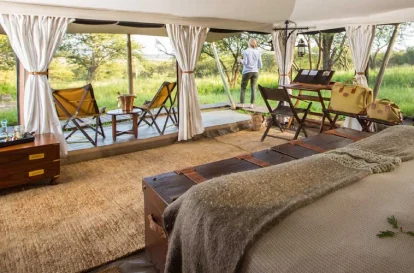
A safari in the Serengeti is a dream for many, and your stay at the Serengeti Pioneer Camp will put you in the perfect spot to experience it. This area is renowned for two incredible wildlife experiences: spotting the Big 5 and witnessing the Great Migration. The “Big 5” refers to five of the most sought-after animals to see: the lion, leopard, elephant, rhino, and Cape buffalo. Your camp is ideally located to help you spot all of them.
The Great Migration is another breathtaking event that passes right through this region. It’s the largest mammal migration on Earth, involving over two million animals, primarily wildebeest, as they move across the plains in search of fresh grazing land. Depending on the time of year you visit, you may have the opportunity to witness this magnificent spectacle firsthand.
Your home during this adventure is the Serengeti Pioneer Camp, a luxurious tented camp with a touch of classic safari charm. It’s perched on a rocky hill, giving you incredible, sweeping views of the Serengeti plains. This beautiful setting allows you to feel fully immersed in the wilderness, making your stay a truly unforgettable experience.
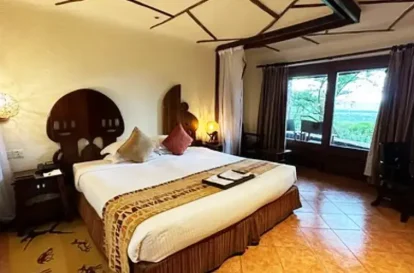
Perched on an acacia-lined ridge, Serengeti Serena Safari Lodge is an award-winning sanctuary overlooking the theater of the Great Migration. From the stunning infinity pool to your private, stone-built “rondavel” suite, the lodge blends traditional African aesthetics with five-star sophistication, offering panoramic views of the Serengeti’s predator-rich plains.
Beyond private safaris and excursions to the Ngorongoro Crater, the experience is defined by exclusive refinement. Whether indulging in starlit bush dining, guided nature walks, or rejuvenating spa treatments, you are immersed in a world where the ancient stillness of the wild meets impeccable, personalized service.
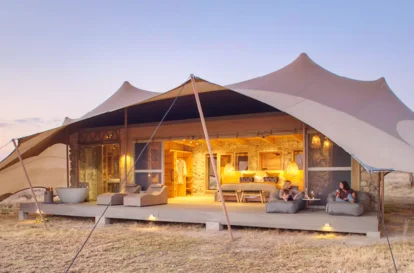
Before Namiri Plains existed, these vast grasslands in Tanzania were closed off to visitors for over 20 years to help the cheetah population recover. This was a hugely successful conservation effort, and today, the area is home to healthy populations of elephants, zebras, giraffes, and many other animals.
Namiri Plains is now a remote and much-loved camp that offers an excellent base for a safari. The camp’s design is beautiful, with graceful tented roofs, luxurious outdoor tubs, and a deep-blue pool overlooking the endless Serengeti landscape.
Located by the Ngare Nanyuki River, the camp offers plenty of ways to relax. You can spend a sultry afternoon by the pool, indulge at the spa, or find a good book in the library, which is filled with fascinating materials about big cats and conservation.
We highly recommend enjoying a cocktail on your private deck and watching the incredible cloud formations that only the Serengeti sky can produce. Completely refurbished in 2019, Namiri Plains runs entirely on solar power, although after each breathtaking sunset, you’ll find that the stars alone are enough to light up your night.
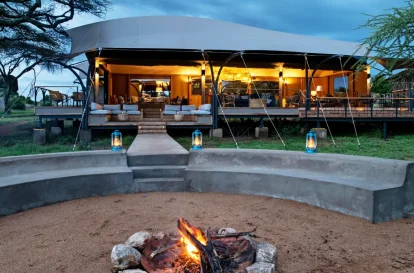
Lemala Nanyukie in the fabulous Eastern Serengeti exemplifies the outstanding comfort and service found across Lemala’s luxury properties. Meaning “endless plains” in Maasai, the Serengeti is a globally celebrated wilderness where Lemala Nanyukie is perfectly positioned a swift 60-minute drive east of Seronera Airstrip, offering breathtaking views from its savanna setting amidst ancient acacia trees and rocky kopjes. This vibrant region not only hosts the thrilling annual wildebeest migration but also boasts exceptional, year-round high-density game viewing, particularly of big cats, in an area once reserved for predator research. Consequently, Lemala Nanyukie welcomes guests all year, with all safari activities expertly led by highly knowledgeable guides.
Serengeti National Park embodies the quintessential African safari experience. Vast herds of wildlife traverse the expansive savannah, creating a mesmerizing spectacle that stretches to the horizon. Predators are an integral part of this natural tableau, adding an element of unpredictability and excitement. Lions are frequently seen without the need for extensive searching. Cheetahs, renowned for their speed, are also a common sight, offering lucky visitors the chance to witness their breathtaking sprints. While leopards are more elusive, their penchant for resting in the large trees near the Seronera River gives you a good chance of spotting these magnificent creatures in their natural habitat.
The Serengeti is celebrated for its spectacular annual wildebeest migration, a monumental journey that sees approximately 8 million hooves pounding the vast plains. This mass movement involves over 1.5 million wildebeest, 200,000 zebras, and 300,000 Thomson’s gazelles, all in pursuit of new pastures. This event draws predators in large numbers, making sightings of big cats in action a thrilling aspect of the migration. Spotted hyenas, golden jackals, and black-backed jackals are also a common presence, closely trailing the migrating herds.
Throughout the year, the Serengeti provides exceptional opportunities for wildlife observation. The months of June and July are particularly favorable for witnessing the migration and potential crossings at the Grumeti River. In the park’s northern areas, the more renowned crossings of the Mara River are typically observed around August and September. For those interested in experiencing the wildebeest calving season, the period from January to February is considered optimal.
Birding in the Serengeti is a rewarding experience throughout the year, with the period from November to April standing out as the prime season. During these months, the park becomes a bustling hub for migratory birds from the Palearctic and within Africa, enriching the avian diversity. It’s also the breeding season for many resident birds, offering enthusiasts the chance to observe them in their vibrant breeding plumages. For general wildlife observation, the months of January to February and June to October are particularly favorable, although the best times can vary depending on the specific regions of the park you explore.
450+
Nov to Apr
Daytime Warmth at 26°C/79°F, Clear Skies, and Chilly Nights at 14°C/57°F
Mid-Year Cold Spells with Near-Freezing Temperatures, Morning Chill in June-September, and Potential Early Short Rains in October
Steady Temperatures: Comfortable Afternoons at 27°C/81°F and Pleasant Nights at 15°C/59°F
Rainy Spells: Short Rains in November-December, Dry Intervals in January-February, and Long Rains with Frequent Showers in March-May
Beginning your Serengeti adventure usually starts from Arusha, a prominent launch point for safaris in Tanzania. The most practical approach is flying into Kilimanjaro International Airport (JRO), which is conveniently located about 50km (31mi) from Arusha. Alternatively, travelers can opt for Julius Nyerere International Airport (DAR) in Dar es Salaam and catch a connecting flight to either Arusha Airport (ARK) or Kilimanjaro International Airport (JRO).
Once in Arusha, there are multiple ways to reach the Serengeti. Regular flights operate from Arusha to various airstrips within the park, providing quick access. Alternatively, adventurers can embark on a picturesque drive spanning approximately 325km (200mi), taking approximately 8 hours. Though the journey may be rough at times, it offers the opportunity to witness wildlife and breathtaking landscapes, particularly as it traverses the Ngorongoro Conservation Area.
For a more comprehensive experience, many travelers opt for a combination of flying and driving. This involves flying one way and driving the other, with an overnight stop at the Ngorongoro Crater. From there, it’s about a 140km (90mi) drive to the Seronera area in the heart of the Serengeti, which takes around 3 hours.
Please note that Bush 2 City Adventure currently does not offer international flight air ticketing services. Guests are kindly advised to arrange and book their own international flights to Tanzania. We recommend checking the official websites of major airlines that frequently serve Kilimanjaro International Airport (JRO) and Julius Nyerere International Airport (DAR) for availability and booking.
To learn more about international travel options to Tanzania from various global destinations, please click here
Your tour consultant typically handles bookings for domestic and charter flights between parks as part of the tour package. However, if you’re arranging your own flights to the Serengeti, several local carriers offer domestic flights:
Please refer to our FAQ – Tanzania page for detailed information regarding passports, visas, vaccinations, and other entry requirements.
In our opinion, a journey to Serengeti National Park is highly secure. Crime occurrences within Tanzania’s parks and reserves are infrequent, and your guide will prioritize your safety throughout the trip. For the latest updates on travel advisories concerning the Serengeti and Tanzania, please refer to the ‘Staying Safe – Tanzania’ section.
Given the presence of malaria in the Serengeti, it’s crucial to take precautions to safeguard your health. Utilize mosquito repellents containing DEET, as they are highly effective, and ensure you’re taking antimalarial medication. Additionally, consider covering exposed skin during the evening hours. Before your trip to Tanzania, it’s wise to consult with your local healthcare provider about recommended vaccinations for added protection.
Wildlife viewing is typically considered safe, particularly when conducted as part of an organized safari. It’s essential to heed the instructions provided by your guide at all times. Familiarize yourself with the park regulations, and if you’re embarking on a self-drive safari, remain inside your vehicle unless within a designated area. For additional safety recommendations, refer to the ‘Wildlife Viewing Safety Precautions’ section below.
Embarking on an African safari promises an adventure of a lifetime, showcasing the continent’s rich wildlife, breathtaking landscapes, and diverse cultures. While safaris are widely considered safe, especially those organized through reputable tour operators, it’s prudent to take certain precautions to ensure a smooth and secure experience. Here are some essential safety tips to consider:
Traveling through Africa offers an enriching experience filled with breathtaking landscapes, diverse cultures, and unparalleled wildlife encounters. While it’s generally safe, especially on organized tours or safaris, navigating urban environments requires a bit of savvy to ensure your trip remains worry-free. Here are some straightforward tips to keep in mind, whether you’re exploring bustling metropolises or serene landscapes:
Exploring the wild through a safari adventure is an exhilarating experience that brings you closer to nature’s most fascinating wildlife. Whether you opt for a guided tour with an experienced professional or decide to navigate the trails on a self-drive journey, safety is paramount to ensure an enjoyable and incident-free adventure. Here are some essential safety guidelines and tips to help you navigate your safari safely:


