With almost a decade of experience, we’re proud to offer unrivaled, customized Tanzania travel advice. Here, we answer your most pressing questions about what you absolutely need to know for your trip to Tanzania.

With almost a decade of experience, we’re proud to offer unrivaled, customized Tanzania travel advice. Here, we answer your most pressing questions about what you absolutely need to know for your trip to Tanzania.

Reaching Tanzania from abroad always involves flying with at least one layover, as there are no direct non-stop flights from the US, Australia, or most of Asia. European departures offer more direct routes.
Flights from the US/Canada/Mexico
Flights from the US connect through hubs in Europe (e.g., Amsterdam with KLM, Istanbul with Turkish Airlines, Zurich with Swiss, Frankfurt with Lufthansa, Paris with Air France, London with British Airways), the Middle East (e.g., Dubai with Emirates, Doha with Qatar Airways), or Africa (e.g., Addis Ababa with Ethiopian Airlines, Nairobi with Kenya Airways). Ethiopian Airlines is often a competitive option.
Flights from Australia
Travelers from Australia typically have one or two layovers, often through Middle Eastern hubs like Dubai (Emirates), Doha (Qatar Airways), or Abu Dhabi (Etihad). Some Asian carriers like Singapore Airlines (via Singapore) or Malaysia Airlines (via Kuala Lumpur) can also be options. European connections are generally less direct from Australia.
Flights from Asia
From Asia, the most convenient connections are usually through Middle Eastern hubs such as Dubai (Emirates), Doha (Qatar Airways), Abu Dhabi (Etihad), Muscat (Oman Air), or Istanbul (Turkish Airlines). Other African hubs like Addis Ababa (Ethiopian Airlines) and Nairobi (Kenya Airways) also offer strong connections from various Asian cities.
Flights from Europe
Europe provides the most direct flight options to Tanzania. Key airlines include KLM (direct from Amsterdam to JRO and DAR), Turkish Airlines (from Istanbul to DAR, JRO, ZNZ), Swiss (from Zurich to DAR), Lufthansa (from Frankfurt to DAR), and Air France (from Paris to DAR). Other popular choices connecting via Middle Eastern or African hubs include Qatar Airways (via Doha) and Emirates (via Dubai), or Ethiopian Airlines (via Addis Ababa).

Regardless of your origin, the main international airports in Tanzania you’ll fly into are:
Julius Nyerere International Airport (DAR) in Dar es Salaam, ideal for coastal areas and Southern safaris.
Kilimanjaro International Airport (JRO) near Arusha, the gateway for Northern safaris and Kilimanjaro climbs.
Abeid Amani Karume International Airport (ZNZ) in Zanzibar, perfect for island holidays.
Once you’ve arrived in Tanzania, domestic flights are a very popular and efficient way to travel between different regions, especially for tourists on safari or beach holidays.
While most international travelers arrive by air, it is also possible to enter Tanzania via land borders from neighboring countries. This is a common method for those on overland tours or traveling through East Africa.
Visa on Arrival is generally available at these major land border crossings for eligible nationalities, similar to the process at airports. However, it’s still highly recommended to secure an eVisa in advance to ensure a smoother and quicker entry, as services and queues at land borders can be less predictable than at airports. Always have your valid passport, necessary visa fee in USD cash, and any required health certificates (like Yellow Fever) ready.
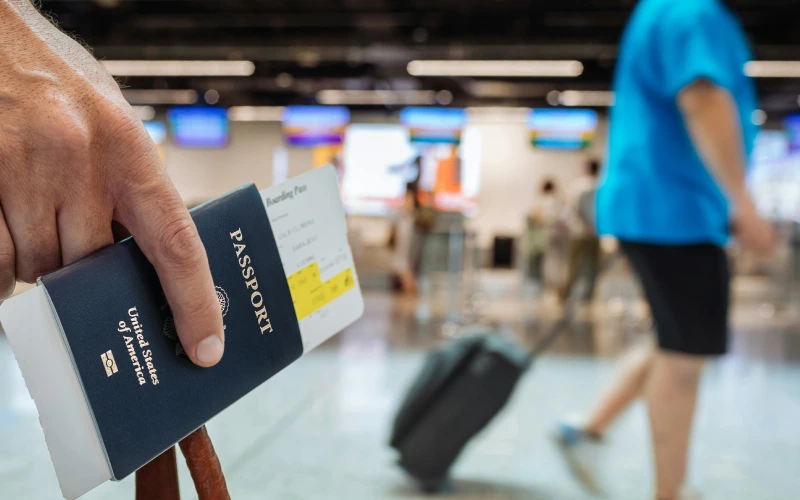
To enter Tanzania, all travelers must have a valid visa. You can apply for your Tanzania visa online through the official Tanzania Immigration Department website. Here is the link https://visa.immigration.go.tz/
Be sure to check the official government websites for the most up-to-date information on visa costs and specific requirements for your nationality.
For your convenience, single-entry visas can also be obtained on arrival at the following major entry points:
Visa on Arrival
If you are arriving at Tanzania, without having arranged a evisa in advance, please follow the procedure outlined below, to ensure that you get the correct visa and meet up with your driver guide outside the arrival door:
Required Documents: Upon arrival, have these ready:
Eligibility:
Not all nationalities qualify for Visa on arrivla. If your country requires a “Referral Visa,” you must apply online in advance. Always confirm your eligibility on the official Tanzania Immigration website.
Advantages:
Disadvantages:
Tanzania visa fees are typically in US Dollars (USD) and vary by visa type and sometimes nationality. Be aware that online platforms or agents might add their own service fees.
Here’s a breakdown of common visa costs:
Ordinary (Single Entry Tourist) Visa: $50. This is the most common for tourism, valid for up to 90 days. Multiple Entry Visa: $100.
Note for US Citizens: Due to an agreement, US citizens must apply for a Multiple Entry Visa for tourism, costing $100. This is usually valid for 12 months with multiple entries. Other nationalities can also opt for this.
Visa fees are generally paid online using major credit/debit cards (Visa or Mastercard) or via swift bank transfer. Remember to consider exchange rates and potential transaction fees if paying in a currency other than USD.
We do not recommend usong swift bank tranfer, this methord something bring confusion and challanging.
Recommendation
Even if eligible, we strongly advise applying for an eVisa online beforehand. This often leads to a quicker, smoother entry process and helps avoid long queues and last-minute stress at your arrival point.
Several factors can affect how long your visa takes:
Accuracy is Crucial: Any errors or missing information in your application will cause delays. Always double-check everything.
Payment Issues: Make sure your payment goes through successfully.
Peak Seasons: During busy travel times (like the Great Migration season, holidays, or Kilimanjaro climbing season), expect longer processing times due to higher demand.
Extra Checks: Some applications might need additional security checks, which can add time.
Weekends & Holidays: The immigration office doesn’t process visas on these days, so factor them into your timeline.
Referral Visas: If your country requires a “Referral Visa,” processing can take significantly longer, sometimes up to two months. Apply very early if this applies to you.
Apply Early: It’s highly recommended to apply 2 to 4 weeks before your trip, especially during peak seasons. Submitting less than 5 business days before departure increases delay risks.
Don’t Book Yet: Do not book non-refundable flights or accommodations until your visa is approved, especially if you need a Referral Visa.
Track Your Status: You can usually track your application’s progress online on the official Tanzania Immigration website. link https://visa.immigration.go.tz/

Managing your money in Tanzania is straightforward if you know what to expect.
Currencies
The Tanzanian Shilling (TZS) is the local currency. However, US Dollars (USD) are widely accepted, and often preferred, for major tourist expenses like safaris, high-end hotels, and visa fees. While tourist services accept USD, local markets and smaller purchases require TZS due to recent regulations.
Traveler’s Cheques
Avoid traveler’s cheques as they are generally not accepted in Tanzania.
ATMs and Credit Cards
ATMs are available in major cities (like Dar es Salaam, Arusha, Zanzibar Stone Town) and larger towns, dispensing Tanzanian Shillings. Be aware of transaction fees (around $3-$4 and daily withdrawal limits (typically TZS 200,000 – TZS 400,000, roughly $80-$160), meaning you might need multiple withdrawals for larger amounts. ATMs can be scarce in rural areas and national parks.
Credit Cards (Visa and Mastercard) are accepted at most major hotels, lodges, and larger shops, but American Express is less common. Expect a surcharge (5% to 10%) for credit card payments to cover banking fees. Always inform your bank about your travel plans to prevent card issues and carry a backup card.
Exchange Rates
You can exchange major foreign currencies (USD, EUR, GBP) for Tanzanian Shillings at banks and Bureau de Change (Forex Bureaux) in urban areas. Forex bureaux often offer slightly better rates. Check daily rates before exchanging. While USD is accepted for many tourist services, establishments will convert payments at their own rate, which might not be as favorable as an official exchange.

All travelers taking trips with Bush 2 City Adventure must have valid travel insurance, without exception, and no one will be permitted to start the safari until we have had sight of your insurance certificate and taken note of the details.
Please ensure that all members of your party are covered by insurance and that it includes medical cover and adequate cover for emergency rescue and repatriation. We would also recommend that your policy covers trip cancellation for any reason, personal liability, curtailment, and loss of luggage/personal effects.
If your travel insurance has been arranged in combination with your credit card provider, we will require proof of purchase of the cover. Please contact your bank/credit card provider for details of the participating insurer, together with the level of cover provided and the emergency (24-hour) contact telephone number.
When Should I Purchase Insurance
Travel insurance is a compulsory requirement for all safaris booked with Bush 2 City Adventure. We highly recommend securing your policy at the time of booking, or as soon as possible thereafter, to ensure full coverage.
It is important to carefully review the terms and conditions of your chosen policy to confirm it aligns with your personal travel needs. In particular, ensure that your insurance includes adequate cancellation protection, should you be unable to travel due to illness, an accident, or any unforeseen circumstances. Please note that many insurance providers limit or exclude cancellation benefits if the policy is not purchased shortly after confirming your trip.
Our Recommended Insurance Company
We strongly advise all travelers to carefully review the coverage details of any travel insurance policy before purchasing, to ensure it fully meets their individual travel requirements.
For visitors traveling from countries outside the United States, Bush 2 City Adventure recommends arranging travel insurance through World Nomads, as their policies are widely used by international travellers and provide suitable coverage for safari trips and related activities.
For travellers from the United States, we recommend considering Travel Guard. The company offers several policy options—such as Deluxe, Preferred, and Essential plans—which typically include coverage for trip cancellation, interruption, and delays, lost or damaged baggage, medical expenses, and emergency medical evacuation. Travelers can review and compare the available plans online and choose the one that best suits their needs.
Make Sure Your Policy Cover Everything
We recommend choosing a travel insurance policy that provides the highest level of coverage available. If your itinerary includes activities such as high-altitude trekking (e.g., climbing Mount Kilimanjaro) or adventure experiences like a hot-air balloon safari, it is essential to confirm that these are specifically included in your policy.
At a minimum, your insurance should cover key areas such as medical expenses (including emergency evacuation and repatriation), personal injury, loss or damage to personal belongings, and liability for any damage or injury caused to third parties. In addition, ensure your policy includes protection against trip and flight cancellations, whether initiated by you or due to unforeseen circumstances such as natural disasters or other unexpected events.
Must Cover Medical Insurance Too
Your travel insurance must provide adequate coverage for illness or injury, ensuring you can access appropriate medical care while in Tanzania. Medical treatment costs can be high, so your policy must include sufficient medical expense coverage.
You should also confirm that your insurance covers emergency evacuation and repatriation to your home country, should it become necessary. As coverage can vary, it is important to check whether your policy applies worldwide or is limited to specific regions. Some insurers may exclude certain destinations unless additional coverage is purchased. We strongly recommend selecting a policy that fully covers medical expenses—including hospital treatment, medication, and emergency procedures—for the specific country or region you are visiting in Africa.
Important if you Book Kilimanjaro Trekking
For climbs on Mount Kilimanjaro, it is important to note that many standard travel insurance policies only provide coverage up to altitudes of around 4,500 meters. However, as the summit reaches 5,895 meters, you will need to obtain a specialized policy that extends coverage to at least 6,000 meters. Additionally, ensure that your insurance includes emergency helicopter evacuation, as this is a critical requirement for high-altitude trekking on the mountain.
What’s the price of travel insurance?
The cost of your travel insurance will vary based on several factors, including your age, your health (especially any pre-existing conditions), the countries you plan to visit, and the level of coverage you choose.
Instead of buying a new policy for each trip, some travelers opt for an annual or multi-trip policy. If you have one of these, or plan to get one, it’s crucial to double-check that it’s comprehensive enough for your upcoming trip to Tanzania.

If your travel to Zanzibar is scheduled from October 1st, 2024, onwards, you are obligated to obtain The Zanzibar Mandatory Travel Insurance, regardless of any existing personal travel insurance you may have. Each traveler must apply for this insurance in advance. After a payment of USD 44 per person, you will receive a QR code that must be shown upon arrival.
The basic coverage of this mandatory travel insurance includes emergency medical expenses, repatriation expenses (both body and medical), personal accidents, baggage delays, theft, and loss, as well as legal expenses and personal liabilities.
To apply for Zanzibar’s Mandatory Travel Insurance, please visit: https://visitzanzibar.go.tz/.

Before your trip, it’s crucial to speak with your doctor about recommended health precautions and malaria prevention. Malaria medication is advised year-round for all areas below 1800 meters
If you’re arriving from, or have had a layover longer than 12 hours in, a country with a yellow fever risk, the Tanzanian government requires proof of yellow fever vaccination. You’ll need to demonstrate this upon arrival.
Remember, proof of yellow fever vaccination is only required if you are arriving from a country designated as being at risk of yellow fever, or if you have a layover longer than 12 hours in a country with a known yellow fever risk during your journey.
Should either of these situations apply to you, but for a medical reason, you are unable to receive the yellow fever vaccine, it is essential to contact your doctor in advance. Your physician must provide you with an official letter clearly explaining why you cannot be vaccinated. This letter will be required viewing for the authorities upon your arrival at any Tanzanian airport or border crossing.
For infants under 6 months old, the yellow fever vaccine is not required. Similarly, if you have a documented allergic reaction to the vaccine, you are exempt from this requirement. However, in either case, you must obtain an official letter of exemption from your doctor to present to Tanzanian authorities upon arrival.
Should you require a yellow fever vaccination upon arrival in Tanzania, the cost is USD 50 for foreign visitors. Tanzanian residents and citizens of the East African Community will pay 30,000 Tanzanian Shillings. An official receipt will be provided for your payment.
Beyond any mandatory vaccinations (like yellow fever, if applicable), other vaccines are generally recommended, not required. Bush 2 City highly advises consulting your physician, medical advisor, or a travel clinic to ensure you’re up-to-date.
We specifically recommend vaccination against Hepatitis A, Hepatitis B, Rabies, and Typhoid for your trip to Tanzania.
While a rabies vaccination is not mandatory for travel to Tanzania, we strongly recommend it, especially if your trip may involve close contact with dogs or wildlife.
Rabid dogs are not uncommon, particularly in rural areas, and access to immediate medical care may be limited in remote locations. Since even a minor bite or scratch can have serious consequences, Bush 2 City advises all travelers to ensure their rabies vaccination is up to date before departure. It’s a simple precaution that can offer peace of mind throughout your journey.
If your travels in Tanzania include camping, walking outside the safari vehicle, or visiting rural areas, there’s a chance you may come into close contact with dogs or wild animals. This increases the risk of bites or scratches and potential exposure to rabies.
Children are at higher risk of being bitten or scratched by animals that may carry rabies. For this reason, Bush 2 City strongly recommends that all children traveling to Tanzania receive the rabies vaccine before their trip.

Tanzania is a malaria zone, and in some areas, mosquitoes that carry the malaria parasite are common. To stay protected, there are several anti-malaria medications available. We recommend speaking with your doctor or a travel clinic to find the best option for your trip.
Be sure to bring all your prescription medications with you from home, as they may be hard to find in Tanzania. Keep in mind that some medications legal in your country might not be allowed here.
Before you travel, check that your medications are approved for use in Tanzania. We also recommend carrying a copy of your prescription or a letter from your doctor that explains what the medication is, the dosage, and confirms it’s for personal use only.

Even though locals often drink tap water in Tanzania without any issues, visitors should avoid it. Your body may not be used to the local water, which can cause stomach upsets. To stay safe, always drink bottled water or water confirmed as safe by your hotel or lodge.
Getting sick from unsafe water can leave you feeling unwell and missing out on parts of your trip. But staying hydrated is still very important, especially in Tanzania’s warm climate. At Bush 2 City, we recommend drinking at least two liters of clean water each day to keep your energy up and enjoy your travels to the fullest.
Traveling abroad often increases your risk of experiencing diarrhea. For this reason, Bush 2 City strongly advises you to pack appropriate anti-diarrhea medicines in your first-aid kit to be prepared.
Tanzania’s famous Northern Circuit, home to Serengeti, Tarangire, and Lake Manyara National Parks, is also home to the tsetse fly. These insects are most common in wooded areas, which are often part of visitors’ safari routes.
A bite from a tsetse fly can be more than just annoying. It can cause fever, fatigue, headaches, swollen lymph nodes, joint and muscle pain, and even a severe skin rash. More seriously, tsetse flies can transmit a dangerous parasite that causes human African trypanosomiasis, also known as sleeping sickness. If left untreated, this illness can be fatal.
While you can’t completely avoid tsetse flies, you can take steps to lower your risk: Wear long-sleeved shirts and long pants to keep your skin covered, choose light, neutral-colored clothing like beige, olive, or white, tsetse flies are attracted to dark and bright colors, Use insect repellent generously on exposed skin and clothing, While no repellent is 100% effective, it’s still an important line of defense and Avoid dense bushes or wooded areas, where tsetse flies are most active.
At Bush 2 City, we care about your comfort and safety. With a few smart precautions, you can focus on enjoying your safari without unwanted bites.
Bush 2 City Adventure is Africa’s premier safari company run by Africans and offers easy-to-choose offers and tailor-made quotes. Make decisions like a pro. More.
Get travel tips, destination guides, new lodge openings, and inspiration in your email
By Signing up from our mailing list, you agree to our privacy policy
