You are here:

The Ultimate Masai Mara Safari Guide: Luxury, Wildlife & The Great Migration

The Masai Mara is Kenya’s top safari destination. It is a beautiful land of rolling green hills and wide-open plains where you can see Africa’s famous “Big Five”—lions, leopards, elephants, buffaloes, and rare black rhinos—at any time of the year.

This legendary park borders Tanzania’s Serengeti. Together, they host the Great Migration: the largest wildlife movement on earth. Every year, millions of wildebeest and zebras cross the border, creating a spectacular, unforgettable display of raw nature.

Why is the Masai Mara the Best Safari Destination in Africa?

Travelers watching cheetahs from a safari vehicle

You should visit the Masai Mara because it offers the most reliable, high-density wildlife viewing in East Africa. It is a vibrant ecosystem where the circle of life unfolds right in front of your safari vehicle.


Masai Mara Highlights at a Glance:

  • Best For: Big cat tracking (Lions, Leopards, Cheetahs) and the Great Migration.


  • Peak Season: July to October for river crossings; year-round for resident game.


  • Key Species: The complete Big Five, massive herds of topi, eland, and zebra.


The reserve’s unique topography makes spotting animals incredibly easy. Without dense bush to hide the wildlife, you can watch elephants ambling through the grass, giraffes feeding on the high canopy, and large herds of buffalo moving across the plains all at the same time. This daily wildlife spectacle peaks beautifully when the migrating herds arrive from the Serengeti, offering a raw look at nature at its finest.

Where is the Masai Mara National Reserve Located?

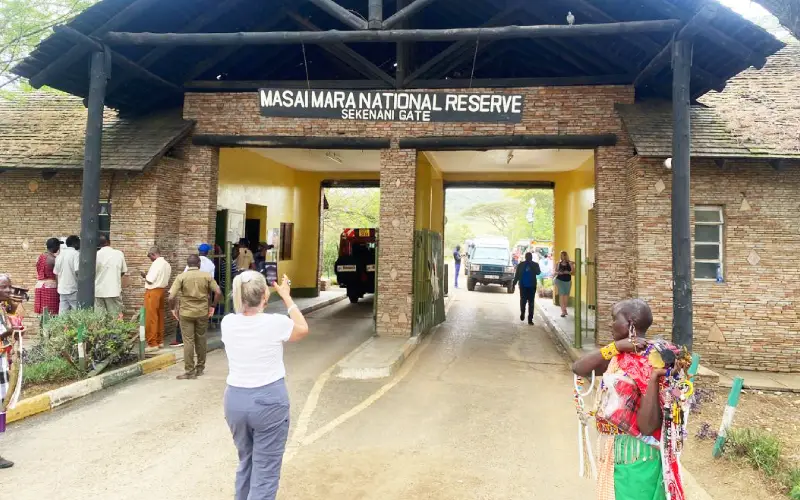
Masai Mara National Reserve Sekenani gate

Nestled in the southwestern corner of Kenya, the Masai Mara National Reserve sits on a beautiful plateau bordered by the Great Rift Valley and the Lake Victoria Basin. While the core reserve spans a compact 1,510 square kilometers (583 square miles), its true ecological footprint is massive. It connects seamlessly with Tanzania’s Serengeti National Park to the southwest, anchoring the world-famous Serengeti-Mara ecosystem.


To the north and east, the reserve is buffered by a collection of exclusive, community-managed conservancies. These private lands expand the protected wildlife habitat while offering travelers a more secluded safari environment.


For travelers arriving by road, the main entry point is Sekenani Gate. It is situated about 230 kilometers (143 miles) west of Nairobi, a journey that takes you through the vibrant gateway town of Narok before arriving at the edge of the wild savanna.

When Is the Great Migration in the Masai Mara?

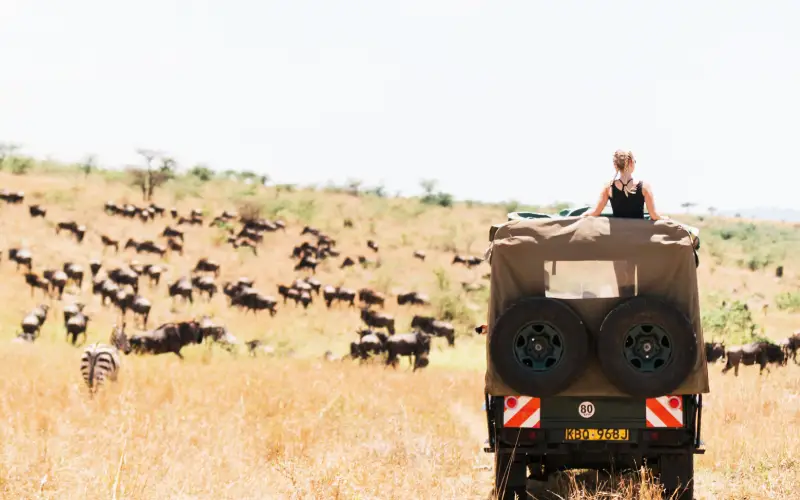
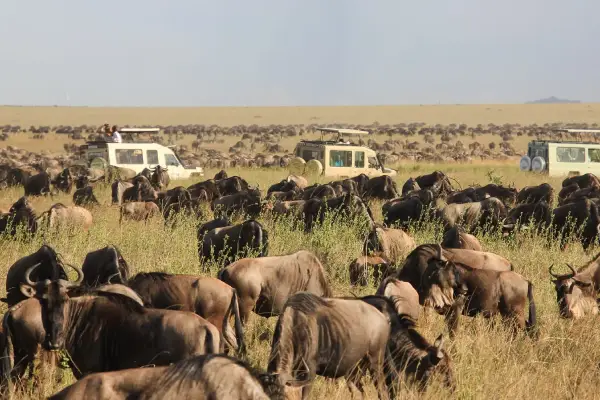
Thousands of wildebeests in Masai Mara National Reserve

The annual Great Migration is a spectacular bucket-list event involving roughly two million wildebeests, zebras, and gazelles moving across the Serengeti-Mara ecosystem. While the herds follow seasonal rainfall patterns in a clockwise circle year-round, their highly anticipated arrival in Kenya follows a precise seasonal timeline:


  • July to August (The Arrival & River Crossings): As the dry season takes hold in Tanzania, the herds push north into Kenya in search of fresh green grass. This brings them to the ultimate safari spectacle: braving steep embankments and Nile crocodiles during the dramatic Mara River crossings.


  • August to September (Peak Grazing): Once across the border, the massive herds settle into the open savannas of the Masai Mara National Reserve and its surrounding community-managed conservancies, offering unmatched wildlife photography opportunities.


  • Late September to October (The Return Journey): After depleting the fresh grass over roughly three months, the migration gradually turns south, crossing back into Tanzania’s Serengeti National Park to prepare for the calving season.

What Wildlife Can You See in the Masai Mara Year-Round?

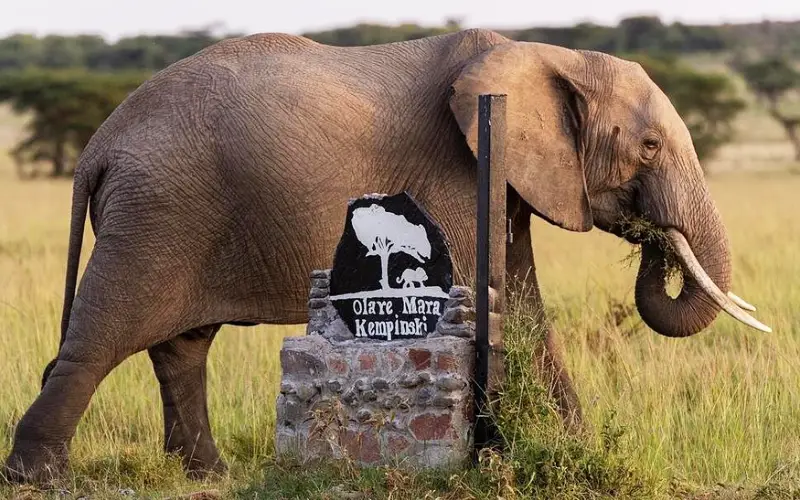
Elephant roaming at Luxury Olera Mara Kempinski Lodge

Beyond the seasonal migration, the Masai Mara National Reserve provides world-class safari game viewing 365 days a year. The ecosystem is uniquely famous for its resident big cat populations. Because these animals are highly habituated to vehicles, the Mara serves as one of the world’s premier destinations for close-up wildlife photography.


Whether you visit during the green season or the dry winter months, here is the ultimate Masai Mara wildlife checklist you can expect to encounter:


Wildlife Category Species Frequently Encountered
Big Cats & Apex Predators Iconic resident Lion prides, elusive Leopards, fast-moving Cheetahs, and Spotted Hyenas.
Large Safari Herbivores Massive African Elephant herds, Cape Buffaloes, Maasai Giraffes, and Burchell’s Zebras.
Rare & Endangered Species Highly protected Black Rhinos (spotted most frequently in the western Mara Triangle sector).
Plains Game & Antelope Vast herds of Topi, massive Common Eland, graceful Impala, and Coke’s Hartebeest.
Avian Highlights (500+ Species) Fierce Martial Eagles, colorful Lilac-Breasted Rollers, and Secretary Birds.

How to Get to the Masai Mara National Reserve?

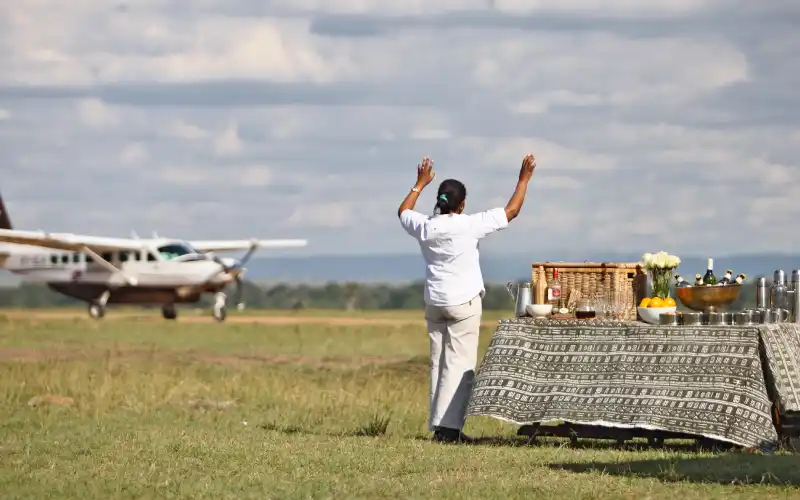
Welcome flight landing in Masai Mara Game Reserve

Getting to the Masai Mara from Nairobi is simple, with options for both premium fly-in packages and classic overland road safaris. Most luxury itineraries begin in Kenya’s capital city, Nairobi, before transferring to the bush.


Flying to the Masai Mara is the recommended option for premium safaris. Flights take roughly 45 to 60 minutes from Nairobi’s Wilson Airport (WIL). You will arrive at one of the multiple bush airstrips located directly inside the National Reserve or the bordering community-managed conservancies, such as Ol Kiombo, Keekorok, or Mara North.


This is the most seamless, time-saving choice. It completely bypasses highway traffic while offering breathtaking aerial views of the Great Rift Valley from above.


Driving to the Masai Mara is the classic overland route and remains a very popular safari option. The drive takes about 5 to 6 hours, depending heavily on highway traffic and your destination gate. The drive follows the main surfaced highway out of Nairobi, descending into the Great Rift Valley and passing through the gateway town of Narok for a convenient mid-way break.


While the tarmac road now runs smoothly all the way to Sekenani Gate, the feeder roads leading to the western sectors or private conservancies can still be unpaved and bumpy.


Road itineraries frequently link the Mara with Lake Nakuru National Park, which sits roughly 4 hours north of Sekenani Gate. This makes for an ideal stopover to track white and black rhinos.

Can You Combine a Masai Mara Safari With Other Parks?

Female eland in Masai Mara National Reserve

Combining destinations is the ultimate way to experience Kenya’s contrasting landscapes and wildlife. Depending on your travel style and budget, the Masai Mara integrates seamlessly into two distinct safari circuits.


For a driving safari, the Masai Mara connects naturally with world-class ecosystems along a well-traveled road loop. The premier choice is pairing it with Lake Nakuru National Park.


Set against dramatic Great Rift Valley scenery, Lake Nakuru delivers an incredible change of pace with its tree-climbing lions and abundant waterbirds. Most importantly, it is a highly reliable sanctuary for spotting white rhinos and the occasional black rhino, making it essential for checking off the complete Big Five.


A popular extended road route involves continuing north from Lake Nakuru into Samburu National Reserve. Venturing into this northern wilderness introduces a stark, beautiful landscape home to unique dry-country specialists you won’t see in the Mara, such as the reticulated giraffe, Grevy’s zebra, and the long-necked gerenuk antelope.


To avoid spending valuable vacation days on long, bumpy trans-country drives, Kenya’s more distant, iconic parks are best experienced as a seamless fly-in combination.


A quick, scenic bush flight links the Mara’s open plains with Amboseli National Park, famous for its legendary elephant herds framed perfectly by the snowcapped peaks of Mount Kilimanjaro.


You can also fly directly into Tsavo National Park. Entering this massive ecosystem drops you straight into Kenya’s largest, rawest wilderness, renowned for its rugged volcanic terrain and famous red-dust elephants.

When Is the Best Time to Visit the Masai Mara?

Elephants protect new bon baby in Masai Mara National Reserve

The best time to visit the Masai Mara depends entirely on your safari goals. July to October is the peak dry season and the absolute best time to witness the Great Migration and dramatic Mara River crossings. Because the vegetation thins out and waterholes dry up, wildlife congregates around permanent water sources, making animals exceptionally easy to spot.


For a more exclusive experience with fewer vehicles, November to February is an ideal window. This green season features a beautifully lush landscape and prolific birdlife. Because the Mara’s resident predators do not migrate, big cat activity remains exceptionally high, allowing you to enjoy world-class game viewing without the peak crowds.


For travelers seeking absolute crowd-free exclusivity, March to May brings the long rains. This low season is perfect for photographers wanting to capture dramatic skies, emerald-green landscapes, and quiet plains. While tourist volumes are at their lowest, you will need a sturdy $4 \times 4$ safari vehicle to navigate the muddy roads.

How Do You Get Around the Masai Mara?

Elephant grazing freely in front of a safari vehicle in Masai Mara National Reserve

The Masai Mara is accessible from Nairobi via a paved highway, but the internal tracks within the reserve are entirely unsurfaced. These dirt roads frequently deteriorate into poor condition, particularly during the rainy seasons. Consequently, the only realistic way to navigate the reserve is in a robust, high-clearance $4 \times 4$ vehicle.


Your transport logistics will depend heavily on the type of safari you book:

  • Fly-In Safaris: Travelers who fly into local bush airstrips generally stay at all-inclusive luxury camps. These properties offer daily game drives in their custom-designed, open-sided $4 \times 4$ vehicles, accompanied by a resident guide.
  • Road Safaris: Travelers on driving safaris typically get around in the same closed-top safari vehicle and with the same driver-guide they traveled down with from Nairobi.


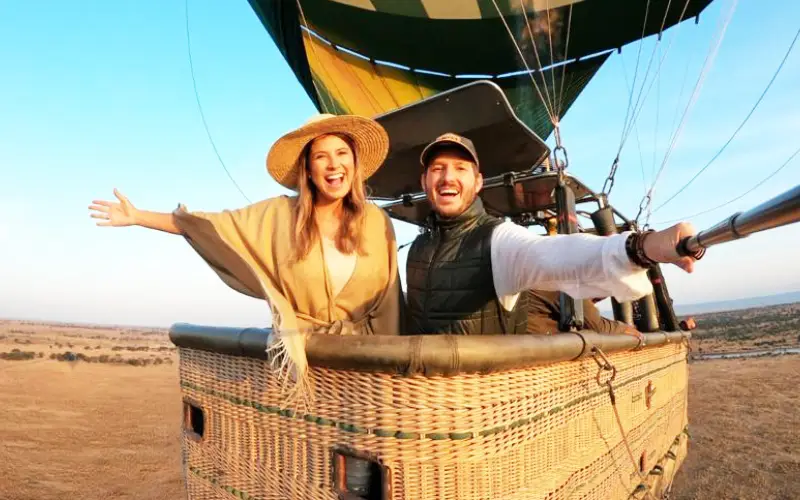
Soar above the Mara savannah on a hot-air balloon safari


Guided activities within the national reserve are strictly regulated. The only alternative guided experience allowed on the public tracks is a hot-air balloon safari. However, if you are looking for more flexibility, nearby private conservancies offer exclusive activities prohibited in the main reserve, including night game drives and guided walking safaris.

How Many Days Should You Stay in the Masai Mara?

Sundowner drinks with bonfire in Masai Mara National Reserve

The ideal length of your stay depends entirely on your safari goals. A short three- to four-day itinerary serves as an excellent introduction, offering two full days on the ground to explore the core reserve and spot the primary resident wildlife. This window is highly efficient and covers the major highlights, though the daily pace remains relatively fast to fit everything in.


If you are visiting during the Great Migration or want a deeper, more relaxed experience, extending your stay to 5 to 7 days is recommended. A longer stay allows you to split your time between the main reserve and a private conservancy, giving you the luxury of time to wait for dramatic river crossings and track more elusive predators like leopards.

How Can You Escape the Crowds in the Masai Mara?

Safari vehicles and millions of wildebeest migration in Masai Mara National Reserve

During the height of the Great Migration, the public tracks of the main reserve can feel undeniably crowded, with vehicles often clustering dozens deep around a single river crossing or lion pride.


The secret to clawing back that classic, unhurried isolation is to step off the public grid entirely and slip into the private, community-managed conservancies that border the reserve—like Olare Motorogi, Mara Naboisho, or Mara North. Here, across thousands of acres of unfenced wilderness, a strict low-density rule caps accommodation to just one guest tent per 700 acres. Instead of jostling for a view with a convoy of minibuses, your wildlife encounters are shared with only a couple of other vehicles, leaving you alone with the vast silence of the plains and the raw, uninterrupted theater of the bush.

Where to Stay in the Masai Mara

&beyond Kichwa Tembo Tented Camp in Masai Mara National Reserve

Choosing where to stay determines your entire safari experience, as the greater ecosystem is divided into three distinct accommodation zones:


Staying inside the national reserve places you directly in the heart of the action. It features iconic, well-established luxury lodges and classic tented camps positioned along prime river bends. This is the ideal location if your primary goal is minimizing drive times to witness the Great Migration river crossings, though you will share the public roads with higher volumes of other vehicles.


Staying in the bordering private conservancies offers the highest level of exclusivity and seclusion. This is where you will find ultra-premium, low-impact luxury eco-camps that feature high guide-to-guest ratios and tailored, vintage safari luxury. While you can easily drive into the main reserve for day trips, staying here grants you crowd-free wildlife viewings and access to exclusive activities like night drives and walking safaris.


Staying outside the main gates is the best option for budget-conscious travelers. Numerous permanent camps and campsites are clustered near the Sekenani and Talek gates, making them well-suited for shorter stays or group-style road itineraries. While these properties offer lower accommodation rates, you must account for daily park entry queues and longer morning drives to reach prime game-viewing areas.

What Facilities Are Available in the Masai Mara?

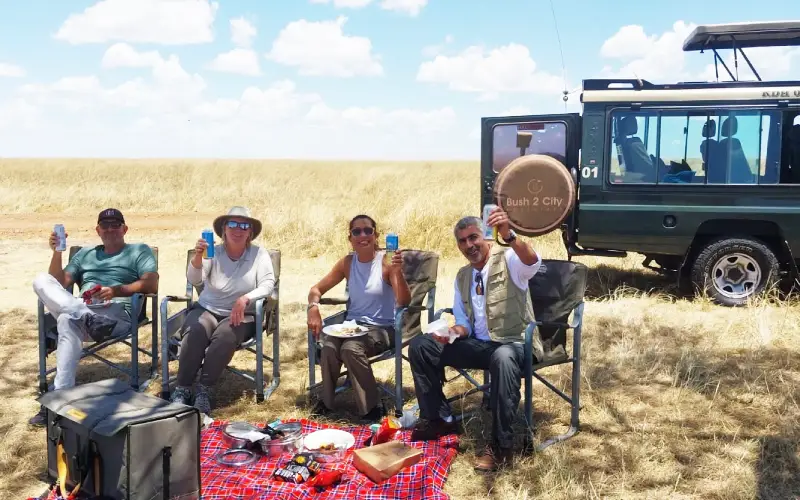
Bush 2 City Adventure Guest having lunch in Masai Mara

Public infrastructure within the Masai Mara National Reserve is minimal. Most visitor services are managed internally by individual safari lodges and camps. The reserve’s public facilities consist only of entrance gates, bush airstrips, and basic picnic sites with public toilets.


There are no commercial filling stations, grocery shops, or standalone restaurants inside the reserve. However, these basic amenities are readily available in the small settlement of Nkoilale, located just outside Sekenani Gate. For major grocery shopping, banking, or ATM access, you should stop in the larger hub town of Narok while traveling en route from Nairobi.

How Much Does a Masai Mara Safari Cost?

Guest ready to Balloon take off in masai Mara National Reserve

The total cost of your safari depends heavily on your travel style, the season, and your transport logistics. Mandatory government park entry fees for international adult visitors are US$100 per day during the low season from January to June, and they increase to US$200 per day during the peak migration season from July to December. These tickets are strictly valid for a 12-hour daytime window.


Value-driven road safaris typically cost between US$250 and US$400 per person, per day. These multi-day packages use a closed-top 4X4 safari vehicle to drive down from Nairobi and utilize mid-range tented camps or commercial lodges situated just outside the reserve boundaries.


Premium fly-in safaris generally range from US$700 to over US$1,500 per person, per day. This all-inclusive pricing covers luxury boutique camp stays inside private, uncrowded conservancies, gourmet meals, beverages, internal flights directly from Nairobi, and daily game drives in custom open-sided 4 X4 vehicles led by expert resident guides.

Is the Masai Mara Safe to Visit?

Walking safari in Masai Mara Game Reserve

The Masai Mara is a very safe safari destination. Most travelers visit on our organized itineraries under the care of experienced professional guides who manage all logistics. Wildlife poses virtually no risk during game drives, provided you follow your guide’s instructions and remain entirely inside your vehicle.

You also do not need to worry about being disconnected in the bush. Every safari vehicle is equipped with long-range radio communication, keeping your guide constantly connected to the park headquarters, nearby lodges, and safari camps. From a health standpoint, the Mara is a malaria-risk area, so travelers should carry mosquito repellent and take recommended antimalarial medication.

Ready to Visit the Masai Mara?

Click the button below to contact our expert team today and begin designing your tailored Masai Mara safari experience.

About Bush 2 City

Bush 2 City Adventure is Africa’s premier safari company run by Africans and offers easy-to-choose offers and tailor-made quotes. Make decisions like a pro. More.

Popular Safari Tours

$1600 to

$4100 pp (USD)

$2454 to

$5333 pp (USD)

Blog Categories

Featured Safaris

$2000 to

$4434 pp (USD)

Kenya:

Private tour,

Luxury,

You Visit: 2 Days Masai Mara NR | Lake Naivasha NP

$1600 to

$4100 pp (USD)

Kenya:

Private tour,

Mid-range,

You Visit: Nairobi (city) | 2 Days Amboseli | Tsavo Park | Tahita Hills & Lumo Conservancy

$2454 to

$5333 pp (USD)

Kenya:

Private tour,

Semi-luxury,

You Visit: Nairobi | 2 Days Masai Mara | Lake Naivasha | 2 Days Amboseli

Book your Kilimanjaro trek

Our team is always here to help

Photo Gallery of The Ultimate Masai Mara Safari Guide: Luxury, Wildlife & The Great Migration

Map of The Ultimate Masai Mara Safari Guide: Luxury, Wildlife & The Great Migration

Photo Gallery

Photo Gallery

Photo Gallery

Sign Up from Our Newsletter

Get travel tips, destination guides, new lodge openings, and inspiration in your email

By Signing up from our mailing list, you agree to our privacy policy

Request a Quote