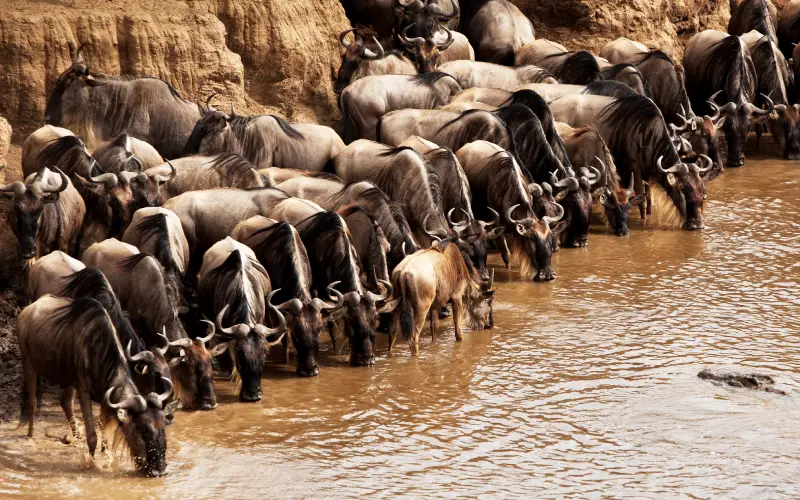
The famous Mara River crossings happen in the northern part of Serengeti National Park in Tanzania and continue into Kenya’s Maasai Mara.
Every year, between July and October, millions of wildebeest, zebras, and gazelles migrate north searching for fresh grass and water after the rains. To continue their journey, the herds must cross the dangerous Mara River — one of the most dramatic wildlife events in Africa.
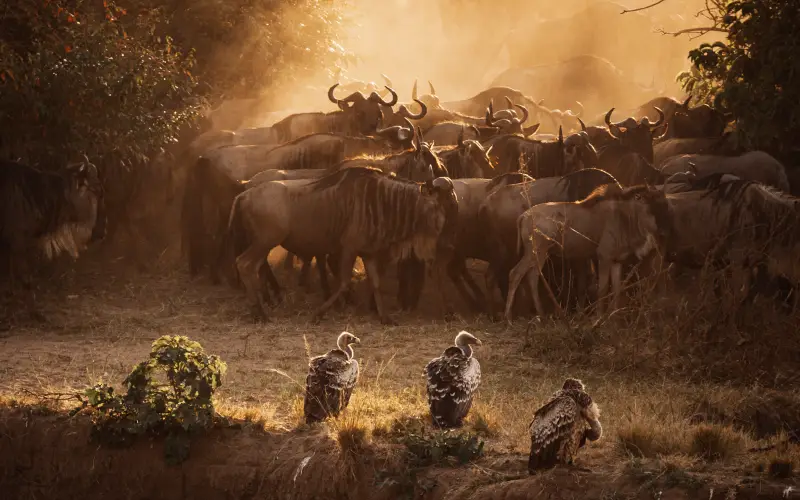
The Mara River is filled with strong currents, steep riverbanks, and giant Nile crocodiles waiting beneath the water. On the opposite side, lions and hyenas often wait for exhausted animals emerging from the crossing.
How the Crossing Happens
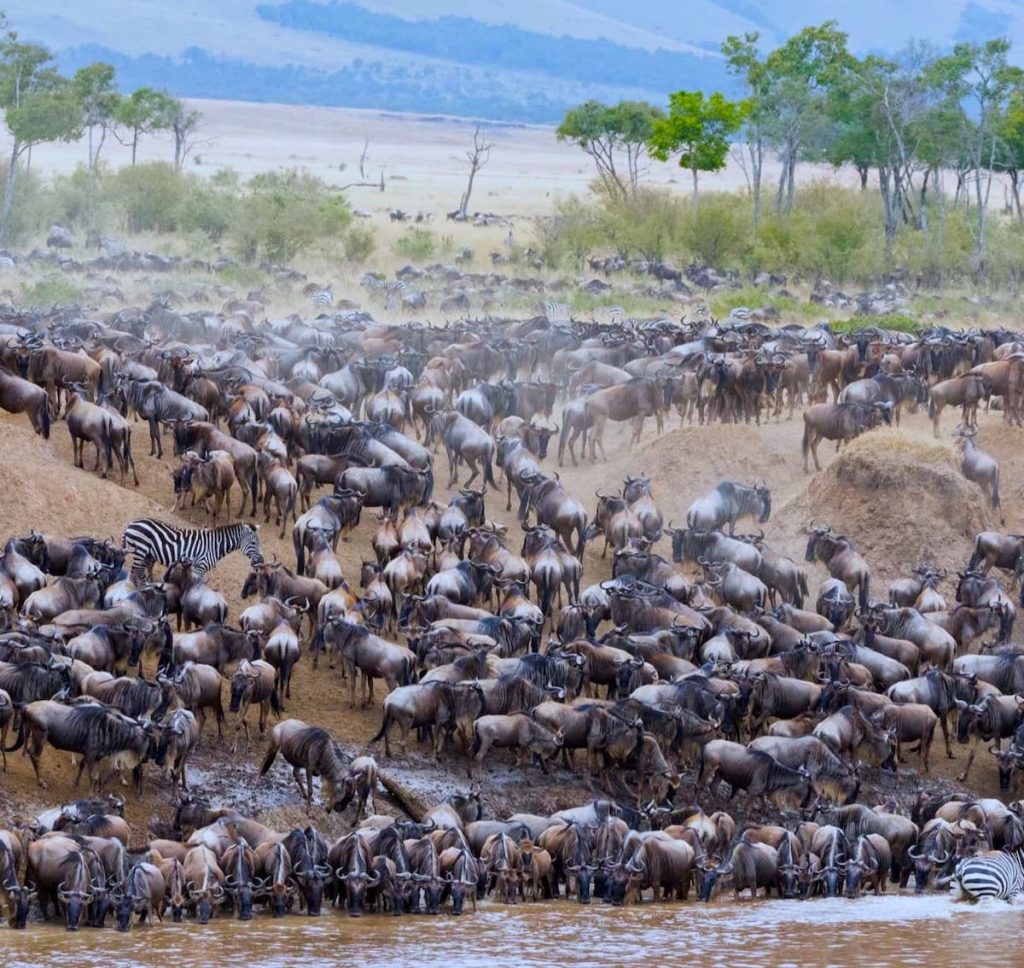
Before crossing, thousands of wildebeest gather near the riverbank. They move back and forth nervously, sometimes waiting for hours or even days.
The animals often:
- Stand close to the edge of the river
- Panic and run away suddenly
- Make loud grunting sounds
- Wait for one brave wildebeest to jump first
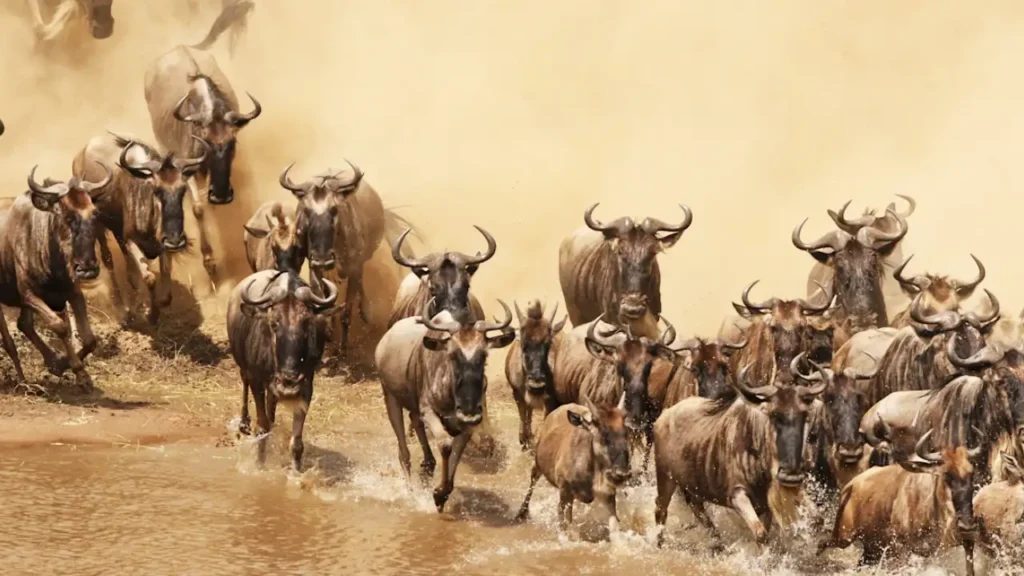
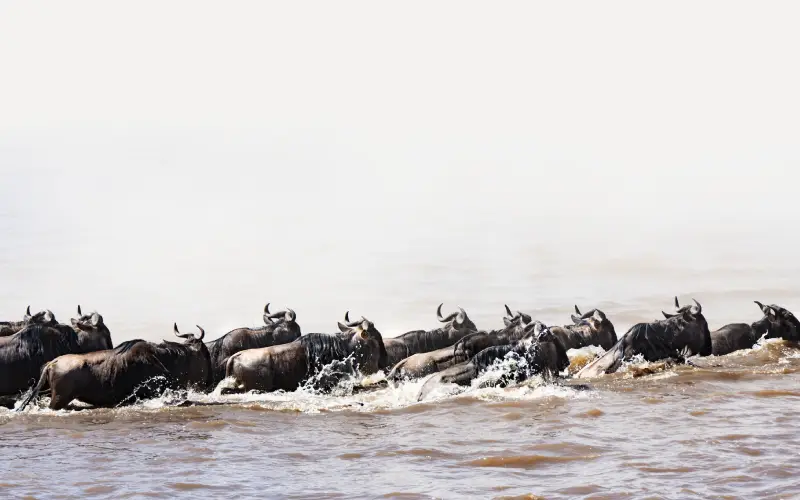
Then suddenly, chaos begins. One wildebeest jumps into the river, and within seconds thousands follow in a massive stampede through the water. Dust rises into the air, crocodiles attack from below, and the sound of thousands of hooves and animal calls fills the landscape.
Main River Crossing Areas in Serengeti
Kogatende
Kogatende is the most famous river crossing area in Northern Serengeti. Many dramatic crossings happen here during migration season, especially from July to October. This area offers some of the best opportunities to witness river crossings up close.
Lamai Wedge
Located near the Kenya border, Lamai is another excellent migration area known for beautiful landscapes, fewer crowds, and active river crossings.
Crossing Areas in Masai Mara, Kenya
Mara Triangle
The Mara Triangle is one of the best wildlife areas in Maasai Mara and is famous for migration crossings and predator sightings.
Maasai Mara National Reserve
After crossing from Serengeti, the herds spread across the Maasai Mara plains before eventually returning south toward Tanzania later in the year.
Why Every Crossing Is Different
No crossing can ever be predicted exactly.
Sometimes the herds cross immediately.
Other times, they may wait near the river for an entire day before turning back.
This unpredictability makes every migration safari unique and exciting, because no two river crossings are ever the same.