You are here:

Toro National Park

Toro NP

Overview

Wildlife

Birds

Best Time To Visit

Weather & Climate

Getting There

Malaria & Safety

Accommodations

Overview – Toro NP
Toro National Park (formerly Toro-Semliki Wildlife Reserve), Uganda’s oldest protected area, maintains a charming, off-the-beaten-track atmosphere. Situated in the scenic Semliki Valley”,”Western Uganda”], framed by the foothills of the Rwenzori Mountains and the waters of Lake Albert, the park offers a remote and peaceful setting. While wildlife densities are generally low, it is one of the country’s best sites to encounter the rare forest elephant and giant forest hog. Birdwatchers will also find it rewarding, with opportunities to spot the iconic shoebill and easily visit the nearby Semuliki National Park.
semliki
Best Time To Go
December to March and June to August (Dry and early Wet seasons)
High Season
June to September (Peak time for Uganda)
Size
543km² / 210mi²
Altitude
619-1,462m / 2,031-4,797ft
Pros & Cons
Outstanding birdwatching opportunities, including the iconic shoebill
Home to seven primate species, among them chimpanzees
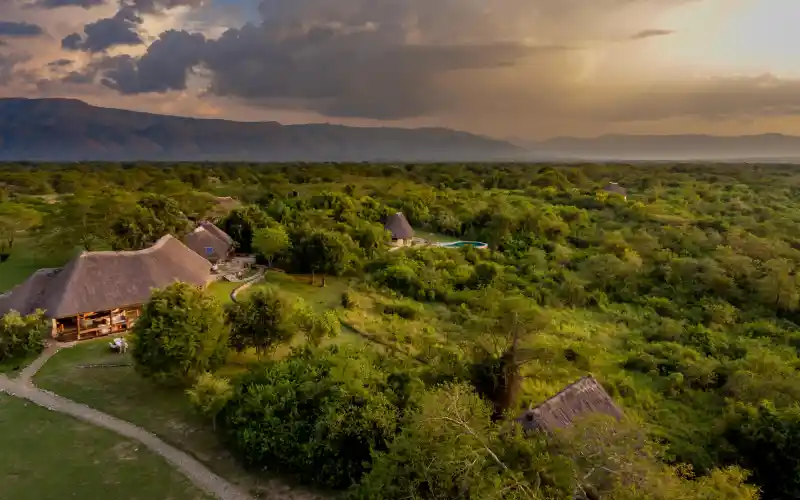
The park’s only lodge provides an intimate and exclusive bush experience
Serves as a convenient base for day trips to Semuliki National Park
Offers night drives within the park and boat excursions on Lake Albert
Wildlife densities are generally low, requiring patience for sightings
Accommodation options are limited
Some roads may become impassable during the rainy season
setse flies are present and can be bothersome
Wildlife
Toro National Park is one of the rare places in Africa where both elephant species—plains and forest—coexist. While lions were last confirmed in 2010, leopards are occasionally spotted on night drives. Guided walks through Mugiri Forest may reveal chimpanzees. Other wildlife includes buffalo, Uganda kob, defassa waterbuck, giant forest hog, red-tailed monkey, black-and-white colobus, and olive baboon.
Scenery
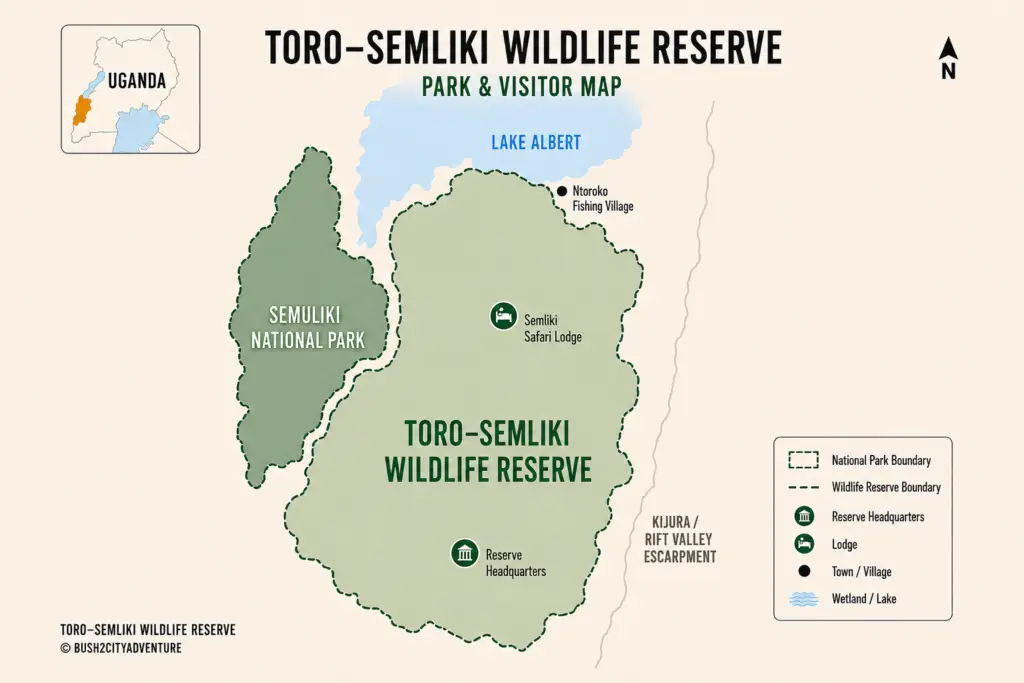
Toro National Park enjoys a stunning setting within the Semliki Valley, a low-lying section of the Albertine Rift. The valley is framed by the Rwenzori Mountains to the south, the Rift Valley escarpment to the southeast, Lake Albert to the northeast, and the forested reaches of the Congo Basin to the northwest. The park is primarily covered by woodland and savannah, interspersed with forested river corridors and clusters of borassus palms.
Activities
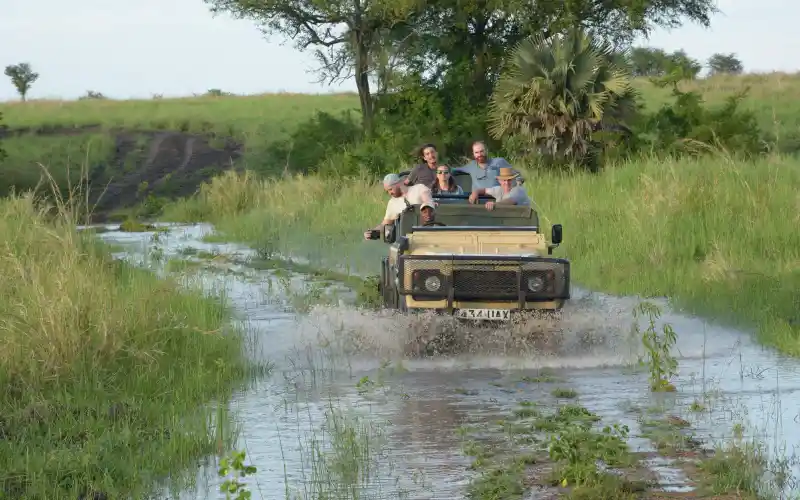
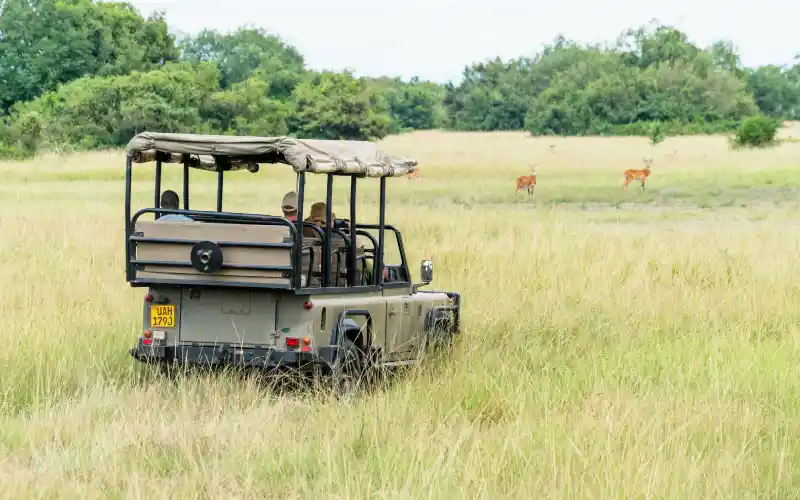
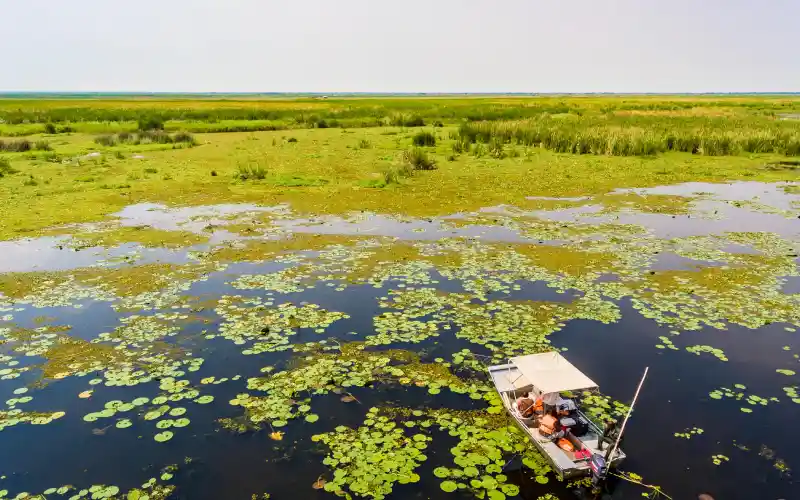
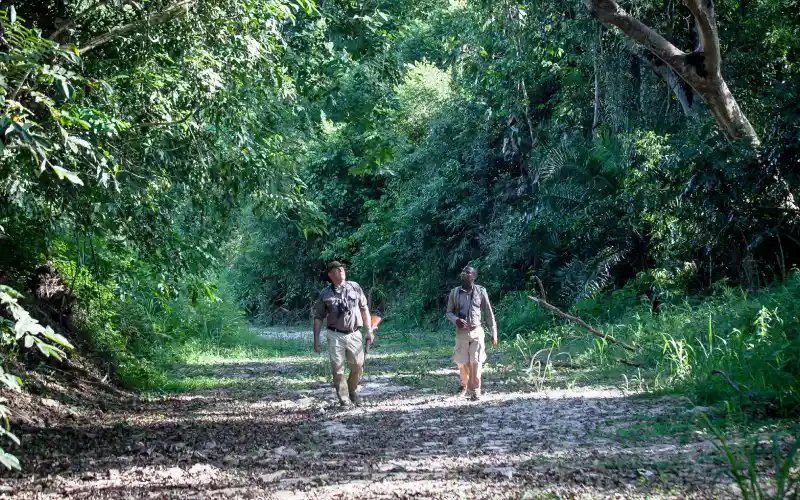
Game drives in Toro National Park are typically most rewarding in the early morning, when elephants frequently cross the main roads, and in the evening, when giant forest hogs and leopards are more active. Boat excursions on Lake Albert offer excellent opportunities for close-up views of shoebills. Guided walks through Mugiri Forest may reveal semi-habituated chimpanzees. Birdlife is abundant on all activities, but for serious bird-watchers, a day trip to Semuliki National Park is highly recommended, as it is home to several forest species found nowhere else in Uganda.
Weather & Climate
Toro National Park experiences a warm climate, with daytime temperatures usually reaching around 29°C (84°F) and falling to about 19°C (66°F) after sunset. The two main wet seasons, from March to May and August to November, bring heavy rainfall but offer little relief from the heat. Rain can still occur during the dry seasons, from December to February and June to July, though it is less frequent.
Best Time To Visit
Toro National Park is most accessible during the dry seasons and the months that follow, from December to March and June to August. Heavy rains can make the terrain muddy and challenging to navigate, so visiting during drier periods is recommended. Of the two dry spells, December to March is ideal for birdwatching, as migratory species are present. June to August, when the forest trees are fruiting, offers the best chance of encountering chimpanzees.
Want To Visit Toro NP
No data was found
​Wildlife & Animals – Toro NP

Wildlife densities in Toro National Park, formerly Toro-Semliki Wildlife Reserve, are generally low. The most frequently seen large mammals include black-and-white colobus monkeys and Uganda kob, while forest elephant, plains elephant, buffalo, defassa waterbuck, and red-tailed monkey are also present. Night drives provide opportunities to spot leopards, spotted hyenas, giant forest hogs, and smaller carnivores such as genets. Animals in the park are typically shy and can be difficult to approach from a vehicle.

Elephant
Giraffe
Hippo
Buffalo
Zebra
Wildebeest
Chimpanzee
Rhino
Lion
Leopard
Cheetah
Wild Dog
Wildlife Highlights

Toro National Park is one of the rare places where visitors may encounter forest elephants. This species is smaller than the plains elephant, which also inhabits the park, and is characterized by straighter tusks. Chimpanzees are frequently observed in Mugiri Forest between June and August, when they gather around fruiting trees rather than ranging widely across the savannah. Other notable primates include black-and-white colobus, red-tailed monkeys, and the very rare de Brazza’s monkey.

Best Time for Wildlife Viewing

The prime time for wildlife viewing in Toro National Park is during the dry seasons, from December to February and June to July, when animals gather around remaining water sources. March and August, immediately following these dry spells, can also offer good sightings. During the wetter months, heavy rain can make some roads difficult or impossible to navigate.

Want To Visit Toro NP
No data was found
Wildlife Photos
semliki (4)
​Birds – Toro NP
Toro National Park, formerly Toro-Semliki Wildlife Reserve, is a haven for birdwatchers, with over 460 species recorded across diverse habitats. Boat excursions on Lake Albert offer the chance to observe shoebills and a breeding colony of the striking red-throated bee-eater. The impressive Abyssinian ground hornbill is often seen striding along the main road. A visit to nearby Semuliki National Park adds opportunities to encounter several highly localized species typical of the Congolese rainforest. Migratory birds are most abundant between November and April.

Notable Birds in Toro NP

Palm-nut vulture
Common
Best Time for Bird Watching

Birdlife in Toro National Park is rewarding throughout the year, but is at its best during the peak breeding season in March, which marks the start of the wet season and follows the driest months of December to February. Birdwatching can be more challenging during the heaviest rains, from April to May and August to November, when roads may become impassable and trails slippery. Migratory species are typically present in the park from November through April.

Want To Visit Toro NP
No data was found
Facts & Figures

Bird Species

450+

Migratory Birds

Nov to Apr

Best Time To Visit – Toro NP

Jan

Feb

Mar

Apr

May

Jun

Jul

Aug

Sep

Oct

Nov

Dec

The ideal times to visit Toro National Park, formerly Toro-Semliki Wildlife Reserve, are during the two dry seasons and the months immediately following them, from December to March and June to August. During the peak wet months, from April to May and September to November, the terrain can become very muddy, and vehicles may struggle to navigate off the main roads. While game drives are still possible along the main thoroughfare, access is more limited, which can restrict the range of wildlife sightings.
Best Time
December to March and June to August (Dry and early Wet seasons)
High Season
June to September (More people visit Uganda since it is the peak time for gorilla trekking)
Low Season
March to May and October to November (Some camps and lodges in Uganda close)
Best Weather
Mid-December to February (Less rainfall)
Worst Weather
Mid-March to May and mid-August to November (High rainfall; roads can become impassable)
December to February & June to July – Dry Season
Thinner vegetation and animals concentrated near water make wildlife easier to observe
Chimpanzee trekking is easier, as trails are drier and more navigable
Abundant sunshine enhances daytime activities
Panoramic views can be somewhat obscured by haze
March to May & August to November – Wet Season
Vibrant, verdant landscapes create a striking natural setting
Peak birdwatching occurs in March, during the start of the wet season
Migratory birds are present from November through April
Some tracks may become difficult to pass, and walking trails slippery, after heavy rainfall
Occasional drizzle can last for several days, with afternoon thunderstorms likely
Want To Visit Toro NP
No data was found
Wildlife Photos
semliki (4)
Weather & Climate – Toro NP
Toro National Park, formerly Toro-Semliki Wildlife Reserve, experiences a consistently warm climate year-round. Daytime temperatures generally reach around 29°C (84°F), cooling to about 19°C (66°F) at night. Rainfall is unpredictable, as the park does not have a clearly defined dry season. However, two wetter periods occur from March to May and August to November.
Dry Season – December to February & June to July
  • December, January & February – Generally dry, although occasional rain showers can still occur.


  • June & July – Relatively dry months, but short periods of rain are possible. Daytime temperatures average around 29°C (84°F), with nighttime lows near 19°C (66°F).
Wet Season – March to May & August to November
  • March, April & May – These are the wettest months, with average temperatures ranging from 30°C (86°F) during the day to 20°C (68°F) at night. Most park roads, including access routes, can become nearly impassable.


August, September, October & November – Rainfall resumes after the relatively drier period in June and July, with conditions similar to those in March through May.

Want To Visit Toro NP
No data was found
Toro National Park
Toro NP Photos
semliki
​Getting There – Toro NP

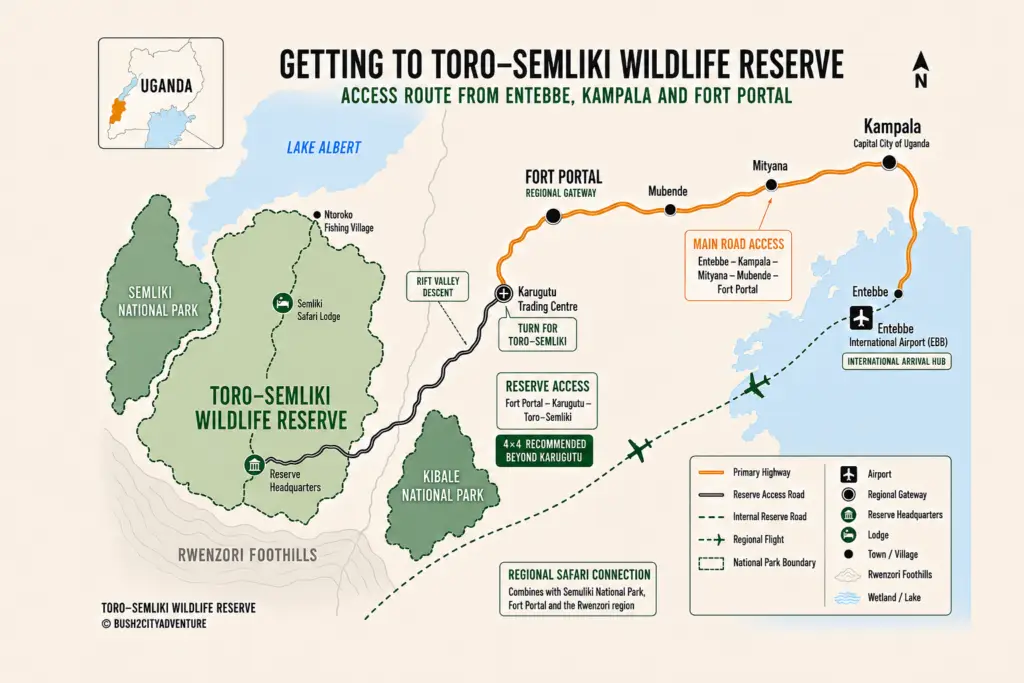
Toro National Park, formerly Toro-Semliki Wildlife Reserve, lies just 60 km (37 mi) by road from Fort Portal, which is also the nearest town to Kibale National Park. The first half of the roughly 1.5-hour drive is along a well-maintained paved road that winds dramatically down the Rwenzori foothills, while the second half follows a flatter murram track that may require a 4×4 vehicle during or after heavy rain. From Kampala, the 350 km (217 mi) journey to Toro typically takes 7 to 8 hours.


Visitors usually enter Uganda via Entebbe International Airport (EBB), located about 46 km (29 mi) from Kampala. Bush 2 City Adventure typically arranges airport transfers and any necessary travel as part of your safari package.

*Driving times are only a rough indication. You should always consider the possibility of significant delays.
Main Park Map
Airlines & Ticket Prices

For booking flights to Entebbe International Airport (EBB) in Uganda, Google Flights is often the quickest option, while Skyscanner and Momondo are useful for finding hidden deals and uncovering less obvious flight options.

Domestic Flights

It is possible to reach Toro National Park via scheduled or charter flights from Entebbe International Airport (EBB) or from Kajjansi Airfield near Kampala. Domestic flights are typically included in your safari package and are arranged by Bush 2 City Adventure. Regularly scheduled flights to Toro are operated by AeroLink, which flies from Entebbe and requires a minimum of two passengers per flight.

Passport, Visa & Other Entry Requirements

Please check our How To Get to Uganda page to learn more about passports, visas, and other entry requirements.

Want To Visit Toro NP
No data was found
​Malaria & Safety – Toro NP
Safety

Toro National Park, formerly Toro-Semliki Wildlife Reserve, is generally considered a safe destination, particularly for travelers on organized tours. For up-to-date safety information in Uganda, consult official government travel advisories (see the ‘Government Travel Advice for Uganda’ link below).

Malaria & Vaccinations

Protecting yourself against malaria is essential. This includes taking antimalarial medication, applying mosquito repellent—preferably those containing DEET—and covering exposed skin in the evenings. Be sure to also receive all recommended vaccinations before traveling.

Wildlife Viewing

Wildlife viewing in Toro National Park is generally safe when you adhere to park regulations and follow your guide’s instructions. Please also review the ‘Wildlife Viewing Safety Precautions’ below. If you plan to go chimpanzee trekking, be sure to read the ‘Chimp Trekking Safety Precautions’ as well.

Want To Visit Toro NP
No data was found
Accommodations – Toro NP
Want To Visit Toro NP
No data was found
Overview – Toro NP
Toro National Park (formerly Toro-Semliki Wildlife Reserve), Uganda’s oldest protected area, maintains a charming, off-the-beaten-track atmosphere. Situated in the scenic Semliki Valley”,”Western Uganda”], framed by the foothills of the Rwenzori Mountains and the waters of Lake Albert, the park offers a remote and peaceful setting. While wildlife densities are generally low, it is one of the country’s best sites to encounter the rare forest elephant and giant forest hog. Birdwatchers will also find it rewarding, with opportunities to spot the iconic shoebill and easily visit the nearby Semuliki National Park.
semliki
Best Time To Go
December to March and June to August (Dry and early Wet seasons)
High Season
June to September (Peak time for Uganda)
Size
543km² / 210mi²
Altitude
619-1,462m / 2,031-4,797ft
Pros & Cons
Outstanding birdwatching opportunities, including the iconic shoebill
Home to seven primate species, among them chimpanzees
The park’s only lodge provides an intimate and exclusive bush experience
Serves as a convenient base for day trips to Semuliki National Park
Offers night drives within the park and boat excursions on Lake Albert
Wildlife densities are generally low, requiring patience for sightings
Accommodation options are limited
Some roads may become impassable during the rainy season
setse flies are present and can be bothersome
Wildlife
Toro National Park is one of the rare places in Africa where both elephant species—plains and forest—coexist. While lions were last confirmed in 2010, leopards are occasionally spotted on night drives. Guided walks through Mugiri Forest may reveal chimpanzees. Other wildlife includes buffalo, Uganda kob, defassa waterbuck, giant forest hog, red-tailed monkey, black-and-white colobus, and olive baboon.
Scenery
Toro National Park enjoys a stunning setting within the Semliki Valley, a low-lying section of the Albertine Rift. The valley is framed by the Rwenzori Mountains to the south, the Rift Valley escarpment to the southeast, Lake Albert to the northeast, and the forested reaches of the Congo Basin to the northwest. The park is primarily covered by woodland and savannah, interspersed with forested river corridors and clusters of borassus palms.
Weather & Climate
Toro National Park experiences a warm climate, with daytime temperatures usually reaching around 29°C (84°F) and falling to about 19°C (66°F) after sunset. The two main wet seasons, from March to May and August to November, bring heavy rainfall but offer little relief from the heat. Rain can still occur during the dry seasons, from December to February and June to July, though it is less frequent.
Best Time To Visit
Toro National Park is most accessible during the dry seasons and the months that follow, from December to March and June to August. Heavy rains can make the terrain muddy and challenging to navigate, so visiting during drier periods is recommended. Of the two dry spells, December to March is ideal for birdwatching, as migratory species are present. June to August, when the forest trees are fruiting, offers the best chance of encountering chimpanzees.
Want To Visit Toro NP
No data was found
​Wildlife & Animals – Toro NP

Wildlife densities in Toro National Park, formerly Toro-Semliki Wildlife Reserve, are generally low. The most frequently seen large mammals include black-and-white colobus monkeys and Uganda kob, while forest elephant, plains elephant, buffalo, defassa waterbuck, and red-tailed monkey are also present. Night drives provide opportunities to spot leopards, spotted hyenas, giant forest hogs, and smaller carnivores such as genets. Animals in the park are typically shy and can be difficult to approach from a vehicle.

Elephant
Giraffe
Hippo
Buffalo
Zebra
Wildebeest
Chimpanzee
Rhino
Lion
Leopard
Cheetah
Wild Dog
Wildlife Highlights

Toro National Park is one of the rare places where visitors may encounter forest elephants. This species is smaller than the plains elephant, which also inhabits the park, and is characterized by straighter tusks. Chimpanzees are frequently observed in Mugiri Forest between June and August, when they gather around fruiting trees rather than ranging widely across the savannah. Other notable primates include black-and-white colobus, red-tailed monkeys, and the very rare de Brazza’s monkey.

Best Time for Wildlife Viewing

The prime time for wildlife viewing in Toro National Park is during the dry seasons, from December to February and June to July, when animals gather around remaining water sources. March and August, immediately following these dry spells, can also offer good sightings. During the wetter months, heavy rain can make some roads difficult or impossible to navigate.

Want To Visit Toro NP
No data was found
Wildlife Photos
semliki (4)
​Birds – Toro NP
Toro National Park, formerly Toro-Semliki Wildlife Reserve, is a haven for birdwatchers, with over 460 species recorded across diverse habitats. Boat excursions on Lake Albert offer the chance to observe shoebills and a breeding colony of the striking red-throated bee-eater. The impressive Abyssinian ground hornbill is often seen striding along the main road. A visit to nearby Semuliki National Park adds opportunities to encounter several highly localized species typical of the Congolese rainforest. Migratory birds are most abundant between November and April.

Notable Birds in Toro NP

Palm-nut vulture
Common
Best Time for Bird Watching

Birdlife in Toro National Park is rewarding throughout the year, but is at its best during the peak breeding season in March, which marks the start of the wet season and follows the driest months of December to February. Birdwatching can be more challenging during the heaviest rains, from April to May and August to November, when roads may become impassable and trails slippery. Migratory species are typically present in the park from November through April.

Want To Visit Toro NP
No data was found
Facts & Figures

Bird Species

450+

Migratory Birds

Nov to Apr

Best Time To Visit – Toro NP

Jan

Feb

Mar

Apr

May

Jun

Jul

Aug

Sep

Oct

Nov

Dec

The ideal times to visit Toro National Park, formerly Toro-Semliki Wildlife Reserve, are during the two dry seasons and the months immediately following them, from December to March and June to August. During the peak wet months, from April to May and September to November, the terrain can become very muddy, and vehicles may struggle to navigate off the main roads. While game drives are still possible along the main thoroughfare, access is more limited, which can restrict the range of wildlife sightings.
Best Time
December to March and June to August (Dry and early Wet seasons)
High Season
June to September (More people visit Uganda since it is the peak time for gorilla trekking)
Low Season
March to May and October to November (Some camps and lodges in Uganda close)
Best Weather
Mid-December to February (Less rainfall)
Worst Weather
Mid-March to May and mid-August to November (High rainfall; roads can become impassable)
December to February & June to July – Dry Season
Thinner vegetation and animals concentrated near water make wildlife easier to observe
Chimpanzee trekking is easier, as trails are drier and more navigable
Abundant sunshine enhances daytime activities
Panoramic views can be somewhat obscured by haze
March to May & August to November – Wet Season
Vibrant, verdant landscapes create a striking natural setting
Peak birdwatching occurs in March, during the start of the wet season
Migratory birds are present from November through April
Some tracks may become difficult to pass, and walking trails slippery, after heavy rainfall
Occasional drizzle can last for several days, with afternoon thunderstorms likely
Want To Visit Toro NP
No data was found
Wildlife Photos
semliki (4)
Weather & Climate – Toro NP
Toro National Park, formerly Toro-Semliki Wildlife Reserve, experiences a consistently warm climate year-round. Daytime temperatures generally reach around 29°C (84°F), cooling to about 19°C (66°F) at night. Rainfall is unpredictable, as the park does not have a clearly defined dry season. However, two wetter periods occur from March to May and August to November.
Dry Season – December to February & June to July
  • December, January & February – Generally dry, although occasional rain showers can still occur.


  • June & July – Relatively dry months, but short periods of rain are possible. Daytime temperatures average around 29°C (84°F), with nighttime lows near 19°C (66°F).
Wet Season – March to May & August to November
  • March, April & May – These are the wettest months, with average temperatures ranging from 30°C (86°F) during the day to 20°C (68°F) at night. Most park roads, including access routes, can become nearly impassable.


August, September, October & November – Rainfall resumes after the relatively drier period in June and July, with conditions similar to those in March through May.

Want To Visit Toro NP
No data was found
Toro National Park
Toro NP Photos
semliki
​Getting There – Toro NP

Toro National Park, formerly Toro-Semliki Wildlife Reserve, lies just 60 km (37 mi) by road from Fort Portal, which is also the nearest town to Kibale National Park. The first half of the roughly 1.5-hour drive is along a well-maintained paved road that winds dramatically down the Rwenzori foothills, while the second half follows a flatter murram track that may require a 4×4 vehicle during or after heavy rain. From Kampala, the 350 km (217 mi) journey to Toro typically takes 7 to 8 hours.


Visitors usually enter Uganda via Entebbe International Airport (EBB), located about 46 km (29 mi) from Kampala. Bush 2 City Adventure typically arranges airport transfers and any necessary travel as part of your safari package.
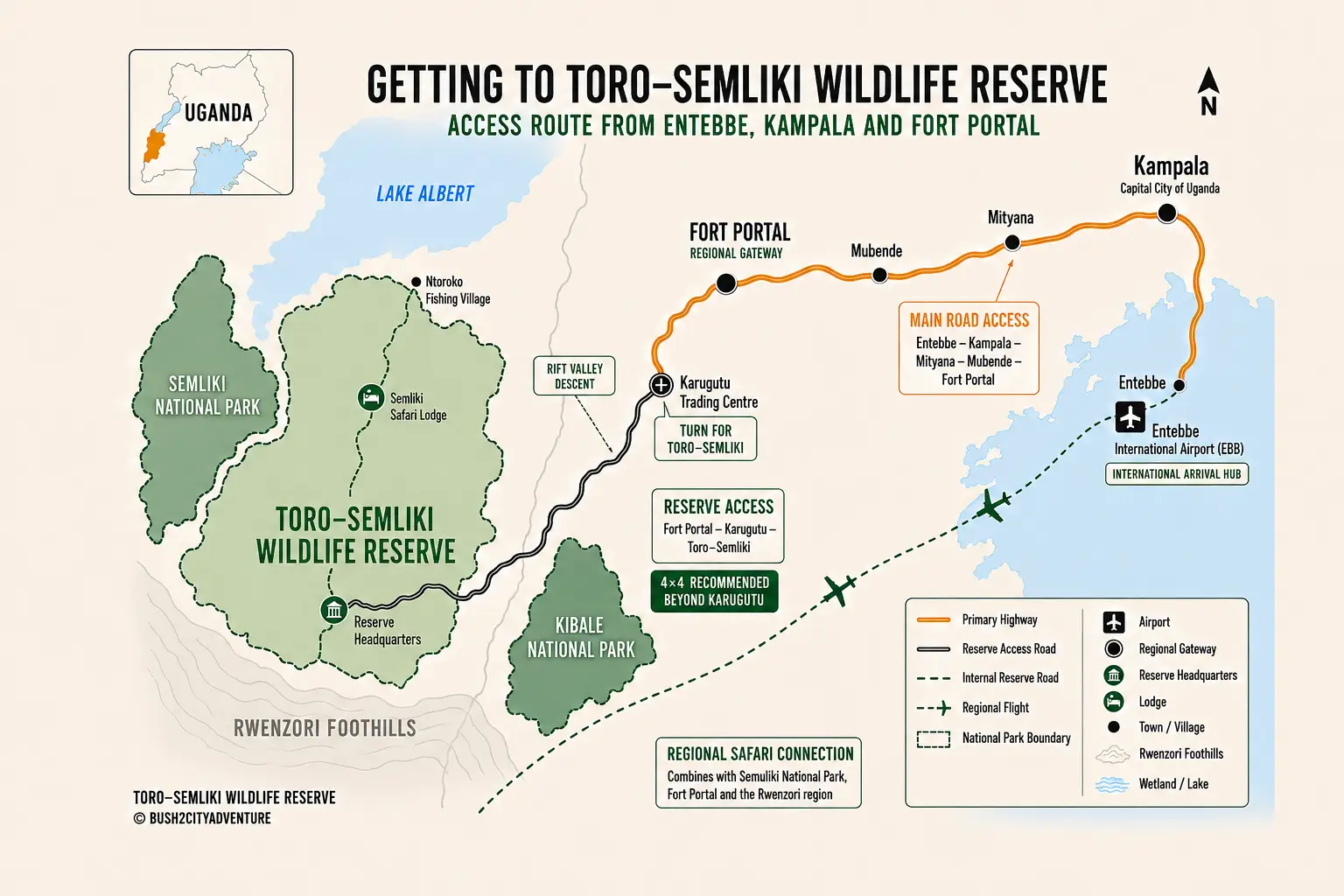
*Driving times are only a rough indication. You should always consider the possibility of significant delays.
Main Park Map
Airlines & Ticket Prices

For booking flights to Entebbe International Airport (EBB) in Uganda, Google Flights is often the quickest option, while Skyscanner and Momondo are useful for finding hidden deals and uncovering less obvious flight options.

Domestic Flights

It is possible to reach Toro National Park via scheduled or charter flights from Entebbe International Airport (EBB) or from Kajjansi Airfield near Kampala. Domestic flights are typically included in your safari package and are arranged by Bush 2 City Adventure. Regularly scheduled flights to Toro are operated by AeroLink, which flies from Entebbe and requires a minimum of two passengers per flight.

Passport, Visa & Other Entry Requirements

Please check our How To Get to Uganda page to learn more about passports, visas, and other entry requirements.

Want To Visit Toro NP
No data was found
​Malaria & Safety – Toro NP
Safety

Toro National Park, formerly Toro-Semliki Wildlife Reserve, is generally considered a safe destination, particularly for travelers on organized tours. For up-to-date safety information in Uganda, consult official government travel advisories (see the ‘Government Travel Advice for Uganda’ link below).

Malaria & Vaccinations

Protecting yourself against malaria is essential. This includes taking antimalarial medication, applying mosquito repellent—preferably those containing DEET—and covering exposed skin in the evenings. Be sure to also receive all recommended vaccinations before traveling.

Wildlife Viewing

Wildlife viewing in Toro National Park is generally safe when you adhere to park regulations and follow your guide’s instructions. Please also review the ‘Wildlife Viewing Safety Precautions’ below. If you plan to go chimpanzee trekking, be sure to read the ‘Chimp Trekking Safety Precautions’ as well.

Want To Visit Toro NP
No data was found

Explore Toro National Park Safari Tours

No data was found

Book your Kilimanjaro trek

Our team is always here to help

General Travel Safety Precautions

Embarking on an African safari promises an adventure of a lifetime, showcasing the continent’s rich wildlife, breathtaking landscapes, and diverse cultures. While safaris are widely considered safe, especially those organized through reputable tour operators, it’s prudent to take certain precautions to ensure a smooth and secure experience. Here are some essential safety tips to consider:

Cities & Urban Areas: Safety Precautions

Traveling through Africa offers an enriching experience filled with breathtaking landscapes, diverse cultures, and unparalleled wildlife encounters. While it’s generally safe, especially on organized tours or safaris, navigating urban environments requires a bit of savvy to ensure your trip remains worry-free. Here are some straightforward tips to keep in mind, whether you’re exploring bustling metropolises or serene landscapes:

Wildlife Viewing Safety Precautions

Exploring the wild through a safari adventure is an exhilarating experience that brings you closer to nature’s most fascinating wildlife. Whether you opt for a guided tour with an experienced professional or decide to navigate the trails on a self-drive journey, safety is paramount to ensure an enjoyable and incident-free adventure. Here are some essential safety guidelines and tips to help you navigate your safari safely:
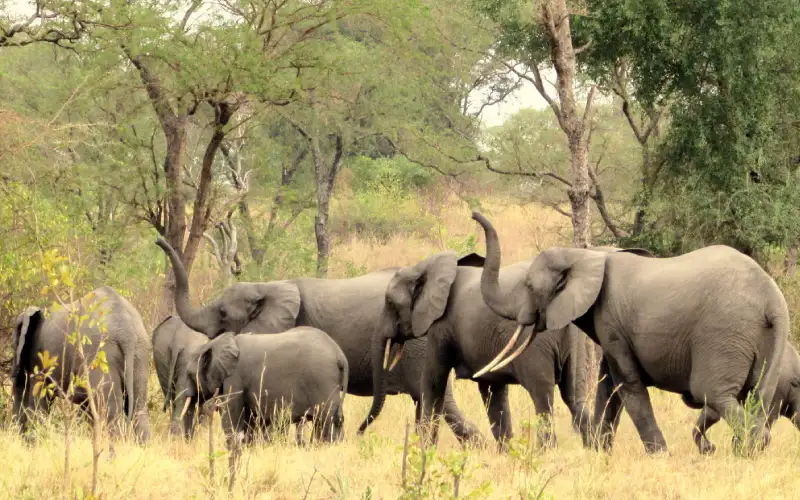
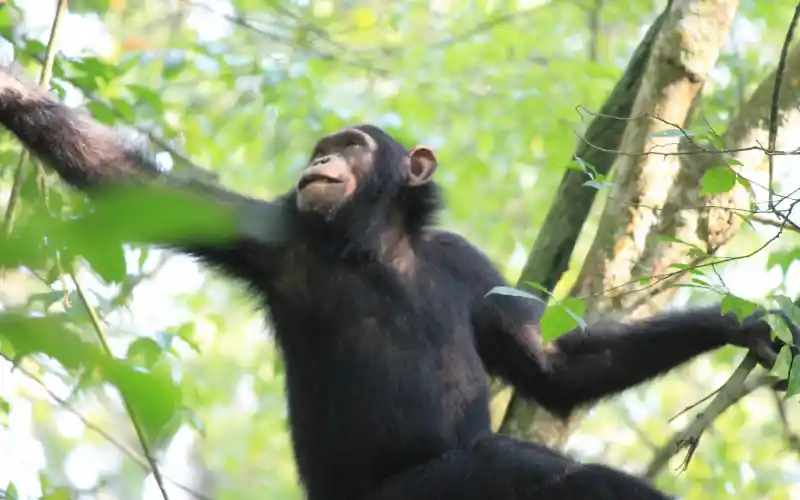
Photo Gallery of Toro National Park

Map of Toro National Park

Photo Gallery of Toro National Park

Main Park Map