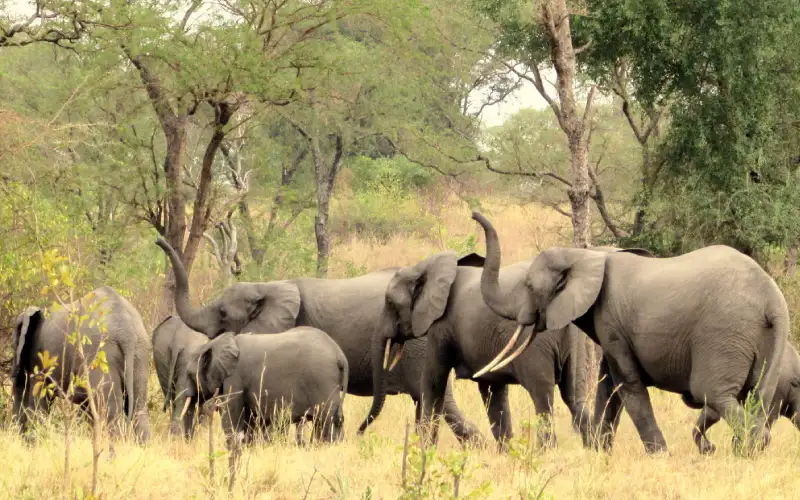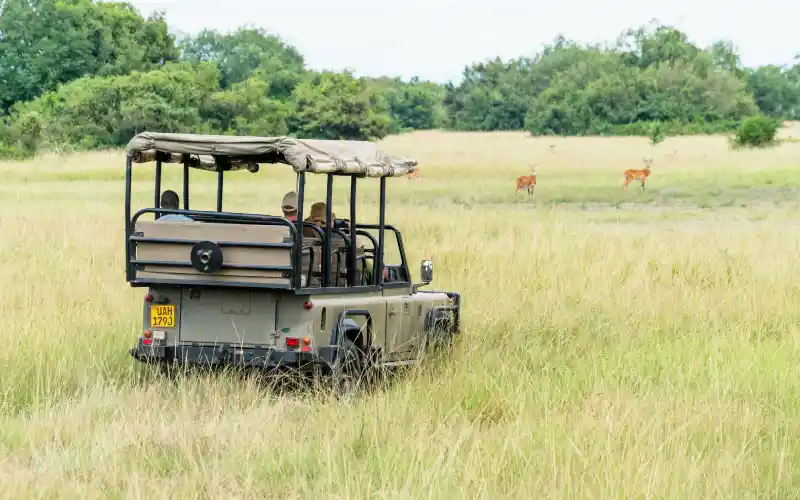

Wildlife densities in Toro National Park, formerly Toro-Semliki Wildlife Reserve, are generally low. The most frequently seen large mammals include black-and-white colobus monkeys and Uganda kob, while forest elephant, plains elephant, buffalo, defassa waterbuck, and red-tailed monkey are also present. Night drives provide opportunities to spot leopards, spotted hyenas, giant forest hogs, and smaller carnivores such as genets. Animals in the park are typically shy and can be difficult to approach from a vehicle.


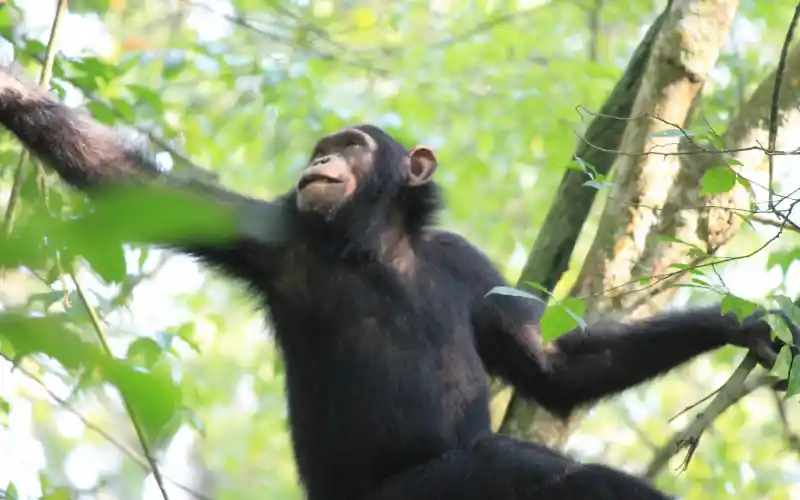
Toro National Park is one of the rare places where visitors may encounter forest elephants. This species is smaller than the plains elephant, which also inhabits the park, and is characterized by straighter tusks. Chimpanzees are frequently observed in Mugiri Forest between June and August, when they gather around fruiting trees rather than ranging widely across the savannah. Other notable primates include black-and-white colobus, red-tailed monkeys, and the very rare de Brazza’s monkey.
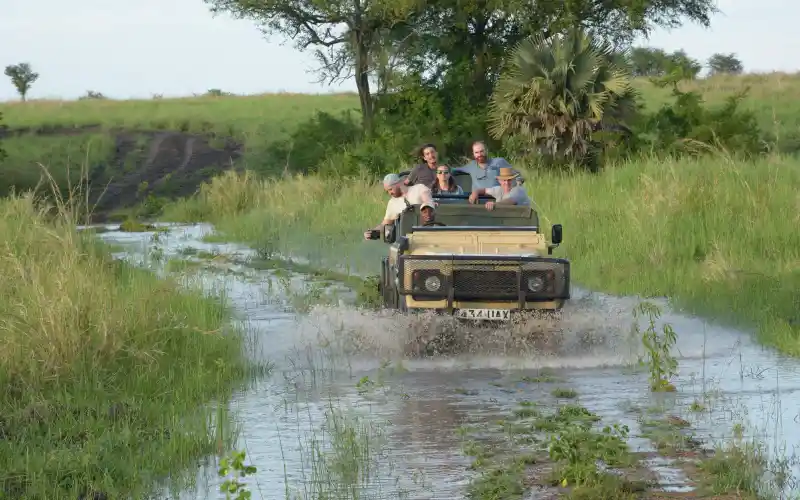
The prime time for wildlife viewing in Toro National Park is during the dry seasons, from December to February and June to July, when animals gather around remaining water sources. March and August, immediately following these dry spells, can also offer good sightings. During the wetter months, heavy rain can make some roads difficult or impossible to navigate.

Birdlife in Toro National Park is rewarding throughout the year, but is at its best during the peak breeding season in March, which marks the start of the wet season and follows the driest months of December to February. Birdwatching can be more challenging during the heaviest rains, from April to May and August to November, when roads may become impassable and trails slippery. Migratory species are typically present in the park from November through April.
450+
Nov to Apr


August, September, October & November – Rainfall resumes after the relatively drier period in June and July, with conditions similar to those in March through May.
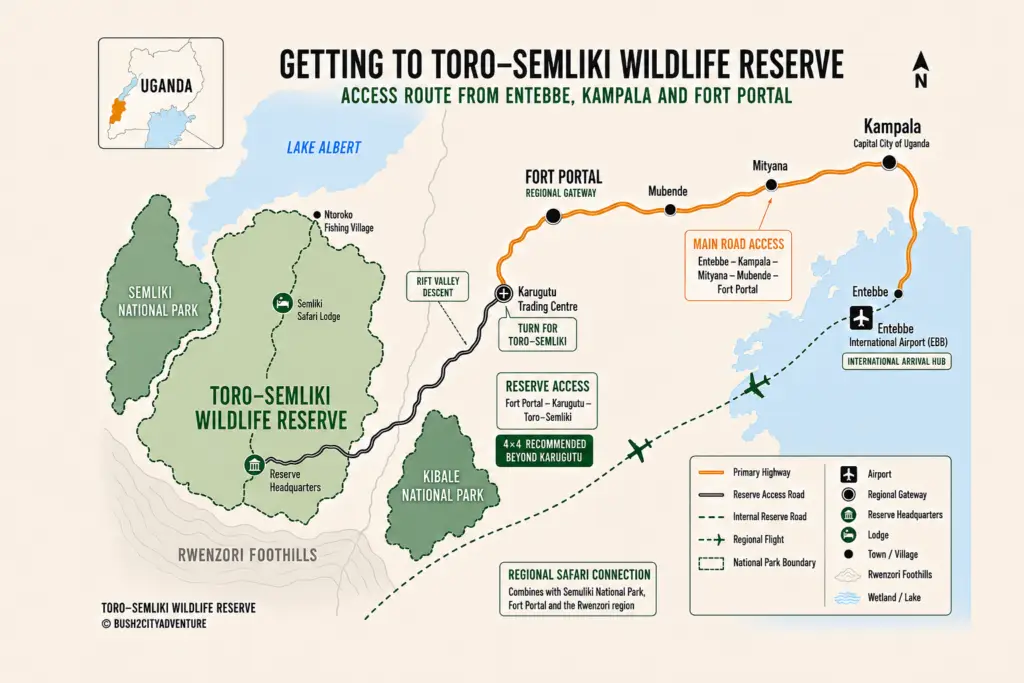
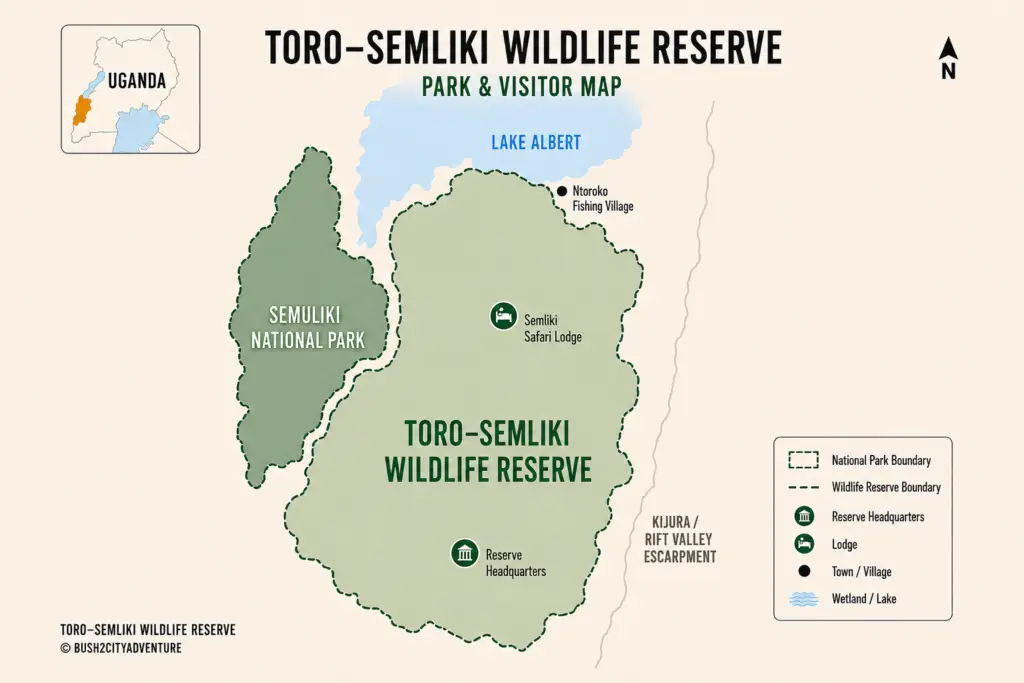
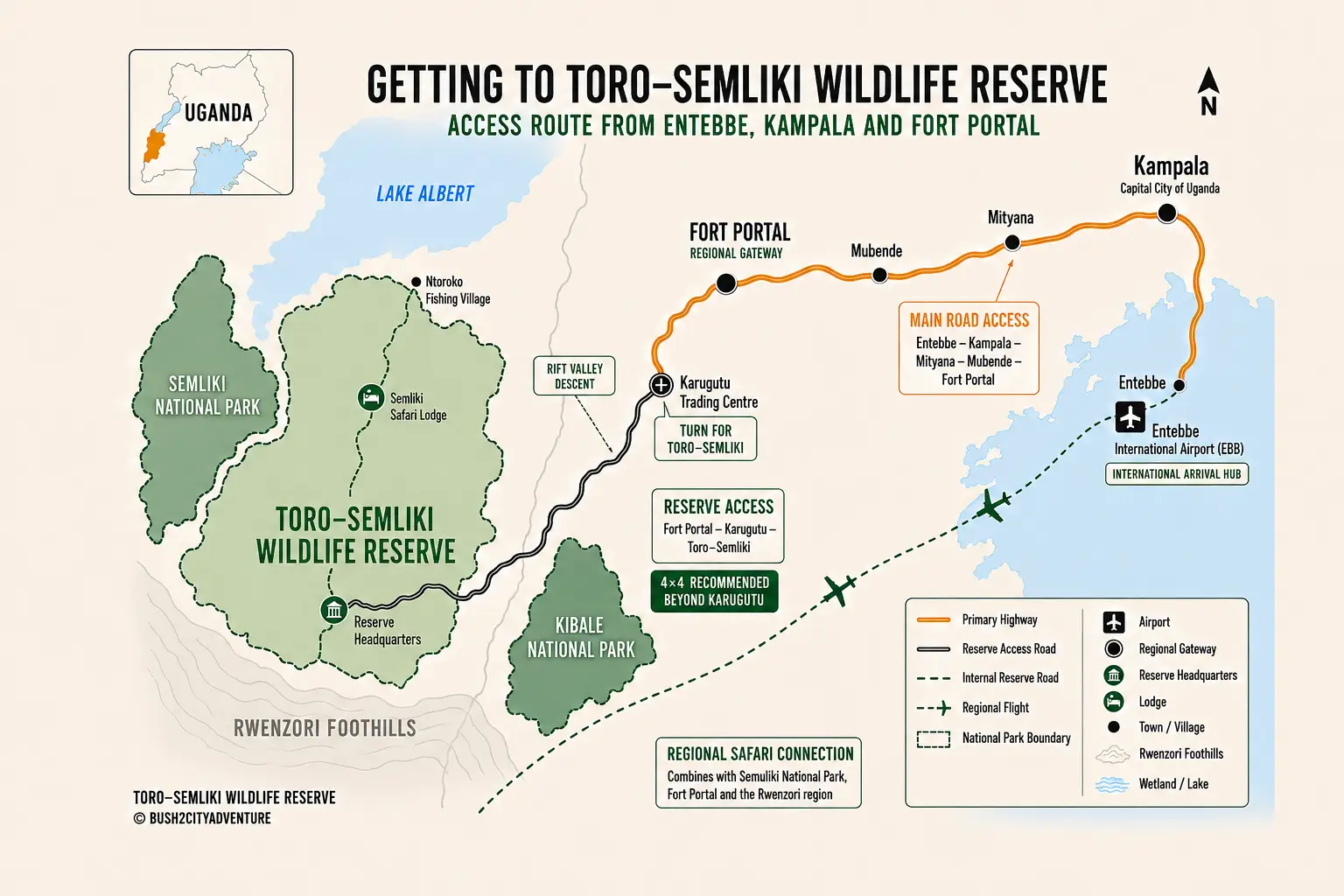
Toro National Park (formerly Toro-Semliki Wildlife Reserve) lies just 60 km (37 mi) by road from Fort Portal, which is also the nearest town to Kibale National Park. The first half of the roughly 1.5-hour drive is along a well-maintained paved road that winds dramatically down the Rwenzori foothills, while the second half follows a flatter murram track that may require a 4×4 vehicle during or after heavy rain. From Kampala, the 350 km (217 mi) journey to Toro typically takes 7 to 8 hours.
Visitors usually enter Uganda via Entebbe International Airport (EBB), located about 46 km (29 mi) from Kampala. Bush 2 City Adventure typically arranges airport transfers and any necessary travel as part of your safari package.
For booking flights to Entebbe International Airport (EBB) in Uganda, Google Flights is often the quickest option, while Skyscanner and Momondo are useful for finding hidden deals and uncovering less obvious flight options.
It is possible to reach Toro National Park via scheduled or charter flights from Entebbe International Airport (EBB) or from Kajjansi Airfield near Kampala. Domestic flights are typically included in your safari package and are arranged by Bush 2 City Adventure. Regularly scheduled flights to Toro are operated by AeroLink, which flies from Entebbe and requires a minimum of two passengers per flight.
Please check our How To Get to Uganda page to learn more about passports, visas, and other entry requirements.
Toro National Park, formerly Toro-Semliki Wildlife Reserve, is generally considered a safe destination, particularly for travelers on organized tours. For up-to-date safety information in Uganda, consult official government travel advisories (see the ‘Government Travel Advice for Uganda’ link below).
Protecting yourself against malaria is essential. This includes taking antimalarial medication, applying mosquito repellent—preferably those containing DEET—and covering exposed skin in the evenings. Be sure to also receive all recommended vaccinations before traveling.
Wildlife viewing in Toro National Park is generally safe when you adhere to park regulations and follow your guide’s instructions. Please also review the ‘Wildlife Viewing Safety Precautions’ below. If you plan to go chimpanzee trekking, be sure to read the ‘Chimp Trekking Safety Precautions’ as well.
Wildlife densities in Toro National Park, formerly Toro-Semliki Wildlife Reserve, are generally low. The most frequently seen large mammals include black-and-white colobus monkeys and Uganda kob, while forest elephant, plains elephant, buffalo, defassa waterbuck, and red-tailed monkey are also present. Night drives provide opportunities to spot leopards, spotted hyenas, giant forest hogs, and smaller carnivores such as genets. Animals in the park are typically shy and can be difficult to approach from a vehicle.
Toro National Park is one of the rare places where visitors may encounter forest elephants. This species is smaller than the plains elephant, which also inhabits the park, and is characterized by straighter tusks. Chimpanzees are frequently observed in Mugiri Forest between June and August, when they gather around fruiting trees rather than ranging widely across the savannah. Other notable primates include black-and-white colobus, red-tailed monkeys, and the very rare de Brazza’s monkey.
The prime time for wildlife viewing in Toro National Park is during the dry seasons, from December to February and June to July, when animals gather around remaining water sources. March and August, immediately following these dry spells, can also offer good sightings. During the wetter months, heavy rain can make some roads difficult or impossible to navigate.
Birdlife in Toro National Park is rewarding throughout the year, but is at its best during the peak breeding season in March, which marks the start of the wet season and follows the driest months of December to February. Birdwatching can be more challenging during the heaviest rains, from April to May and August to November, when roads may become impassable and trails slippery. Migratory species are typically present in the park from November through April.
450+
Nov to Apr
August, September, October & November – Rainfall resumes after the relatively drier period in June and July, with conditions similar to those in March through May.
Toro National Park (formerly Toro-Semliki Wildlife Reserve) lies just 60 km (37 mi) by road from Fort Portal, which is also the nearest town to Kibale National Park. The first half of the roughly 1.5-hour drive is along a well-maintained paved road that winds dramatically down the Rwenzori foothills, while the second half follows a flatter murram track that may require a 4×4 vehicle during or after heavy rain. From Kampala, the 350 km (217 mi) journey to Toro typically takes 7 to 8 hours.
Visitors usually enter Uganda via Entebbe International Airport (EBB), located about 46 km (29 mi) from Kampala. Bush 2 City Adventure typically arranges airport transfers and any necessary travel as part of your safari package.
For booking flights to Entebbe International Airport (EBB) in Uganda, Google Flights is often the quickest option, while Skyscanner and Momondo are useful for finding hidden deals and uncovering less obvious flight options.
It is possible to reach Toro National Park via scheduled or charter flights from Entebbe International Airport (EBB) or from Kajjansi Airfield near Kampala. Domestic flights are typically included in your safari package and are arranged by Bush 2 City Adventure. Regularly scheduled flights to Toro are operated by AeroLink, which flies from Entebbe and requires a minimum of two passengers per flight.
Please check our How To Get to Uganda page to learn more about passports, visas, and other entry requirements.
Toro National Park, formerly Toro-Semliki Wildlife Reserve, is generally considered a safe destination, particularly for travelers on organized tours. For up-to-date safety information in Uganda, consult official government travel advisories (see the ‘Government Travel Advice for Uganda’ link below).
Protecting yourself against malaria is essential. This includes taking antimalarial medication, applying mosquito repellent—preferably those containing DEET—and covering exposed skin in the evenings. Be sure to also receive all recommended vaccinations before traveling.
Wildlife viewing in Toro National Park is generally safe when you adhere to park regulations and follow your guide’s instructions. Please also review the ‘Wildlife Viewing Safety Precautions’ below. If you plan to go chimpanzee trekking, be sure to read the ‘Chimp Trekking Safety Precautions’ as well.
Embarking on an African safari promises an adventure of a lifetime, showcasing the continent’s rich wildlife, breathtaking landscapes, and diverse cultures. While safaris are widely considered safe, especially those organized through reputable tour operators, it’s prudent to take certain precautions to ensure a smooth and secure experience. Here are some essential safety tips to consider:
Traveling through Africa offers an enriching experience filled with breathtaking landscapes, diverse cultures, and unparalleled wildlife encounters. While it’s generally safe, especially on organized tours or safaris, navigating urban environments requires a bit of savvy to ensure your trip remains worry-free. Here are some straightforward tips to keep in mind, whether you’re exploring bustling metropolises or serene landscapes:
Exploring the wild through a safari adventure is an exhilarating experience that brings you closer to nature’s most fascinating wildlife. Whether you opt for a guided tour with an experienced professional or decide to navigate the trails on a self-drive journey, safety is paramount to ensure an enjoyable and incident-free adventure. Here are some essential safety guidelines and tips to help you navigate your safari safely: