You are here:

Semuliki National Park

Semuliki NP

Overview

Wildlife

Birds

Best Time To Visit

Weather & Climate

Getting There

Malaria & Safety

Accommodations

Overview – Semuliki NP
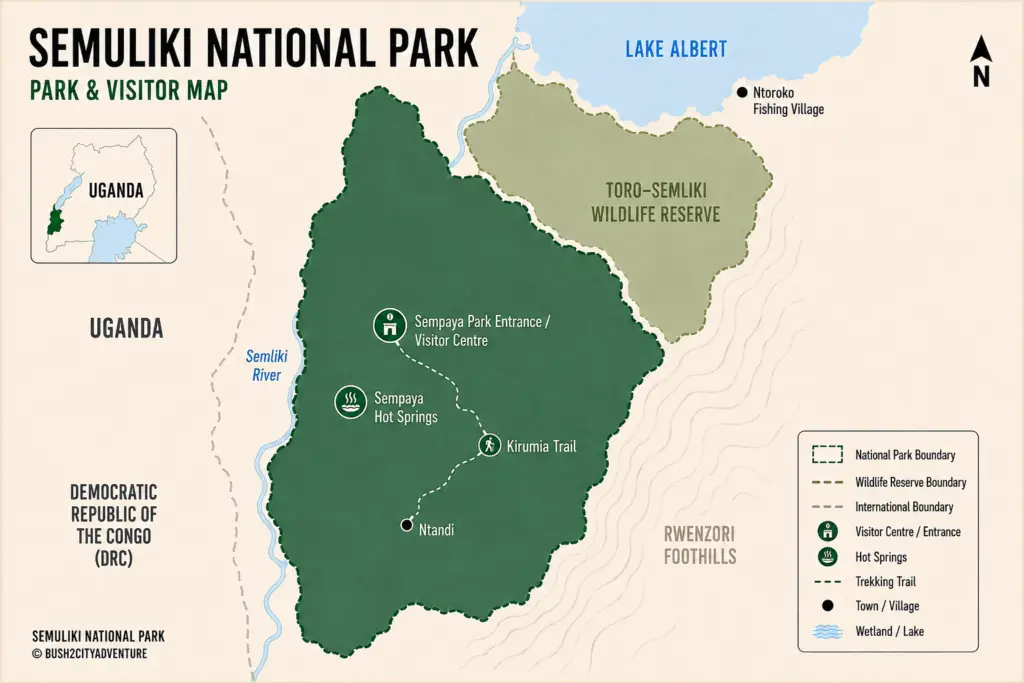
Semuliki National Park preserves one of Uganda’s most ecologically significant forests. As an extension of the Congolese Ituri Forest, it takes its name from the Semuliki River, which flows northeast along the border with the Democratic Republic of Congo. The park harbors numerous species typical of the Congo-Guinea region that have limited distribution in East Africa, making it a prime destination for bird enthusiasts. Other highlights include diverse primate populations and the striking geothermal springs at Sempaya Hot Springs.
semuliki - Bush2City
Best Time To Go
December to March and June to August (Dry and early Wet seasons)
High Season
June to September (But it is never busy)
Size
222km² / 86mi²
Altitude
652-760m / 2,139-2,493ft
Pros & Cons
A rarely visited destination that retains a truly unexplored and remote character
A key refuge in East Africa for the elusive lowland bongo, along with a variety of other forest-dwelling mammal
Outstanding birdlife, including around 35 species not recorded elsewhere in East Africa
Easily reached from Fort Portal via a well-maintained and scenic paved road
Pairs well with a visit to Toro National Park as an enriching extension
Dense forest conditions can make wildlife viewing and birdwatching more challenging and slow-paced
Wildlife
Semuliki National Park is a captivating destination for dedicated bird-watchers and wildlife enthusiasts alike. Its avifauna is remarkable, with a checklist of 435 species, including 35 Congo-Guinea specialties found nowhere else in East Africa. Among the eight diurnal primates, grey-cheeked mangabey, black-and-white colobus, and red-tailed monkey are the most frequently observed. Sightings of larger mammals are rarer, but the park is home to hippo, forest elephant, forest buffalo, lowland bongo, water chevrotain, and sitatunga.
Scenery
The dramatic road from Fort Portal down to Semuliki National Park winds along the foothills of the Rwenzori Mountains, offering some of the most spectacular scenery in Uganda. The park itself is cloaked in dense, jungle-like lowland rainforest, creating a truly immersive wilderness experience. A standout feature is the palm-fringed Sempaya Hot Springs, where the largest spring shoots water up to 2m (6.5ft) high from a naturally formed salt mound.
Activities
The well-loved and easy guided forest walk to Sempaya Hot Springs offers opportunities to spot a variety of birds and monkeys along the way. For serious bird-watchers, the Kirumia River Trail is particularly rewarding. This 15km (9mi) trail follows the Kirumia River past a series of oxbow lakes until it meets the Semuliki River. The first 4km (2.5mi) can be explored as a day walk, but completing the full trail requires preparation for overnight camping.
Weather & Climate
Semuliki National Park is a lowland rainforest located near the equator, resulting in consistently warm temperatures throughout the year and the possibility of rain at any time. The driest months are typically January and February. Overall, the climate closely resembles that of the nearby Toro National Park (formerly Toro-Semliki Wildlife Reserve).
Best Time To Visit
Semuliki National Park is accessible year-round, but wildlife viewing is at its peak during the Dry seasons, from December to February and June to July, as well as in the months immediately following them, March and August.
Want To Visit Semuliki NP
No data was found
​Wildlife & Animals – Semuliki NP
No data was found
Wildlife Highlights
Best Time for Wildlife Viewing
Want To Visit Semuliki NP
No data was found
Wildlife Photos
​Birds – Semuliki NP

Notable Birds in Semuliki NP

No data was found
Birding Specials – Treats for Avid Birders
No data was found
Best Time for Bird Watching
Want To Visit Semuliki NP
No data was found
Facts & Figures

Bird Species

450+

Migratory Birds

Nov to Apr

Best Time To Visit – Semuliki NP

Jan

Feb

Mar

Apr

May

Jun

Jul

Aug

Sep

Oct

Nov

Dec

No data was found
No data was found
No data was found
Want To Visit Semuliki NP
No data was found
Wildlife Photos
Weather & Climate – Semuliki NP
Want To Visit Semuliki NP
No data was found
Semuliki National Park
Semuliki NP Photos
semuliki - Bush2City
​Getting There – Semuliki NP

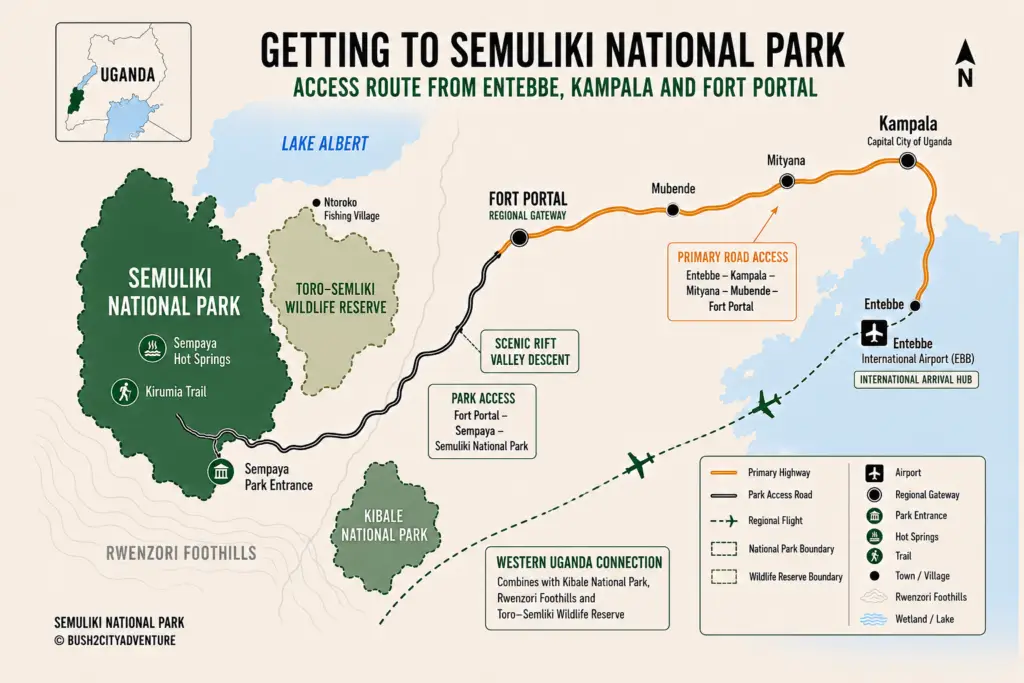
The park headquarters at Sempaya is located about 60 km (37 mi) from Fort Portal along a scenic paved road, typically covered in under 90 minutes*. Fort Portal also serves as the nearest town to Kibale National Park, making Semuliki an easy extension for visitors exploring that park. Another convenient base is Semliki Safari Lodge in Toro National Park, from which the drive to Sempaya is similarly around 90 minutes*.
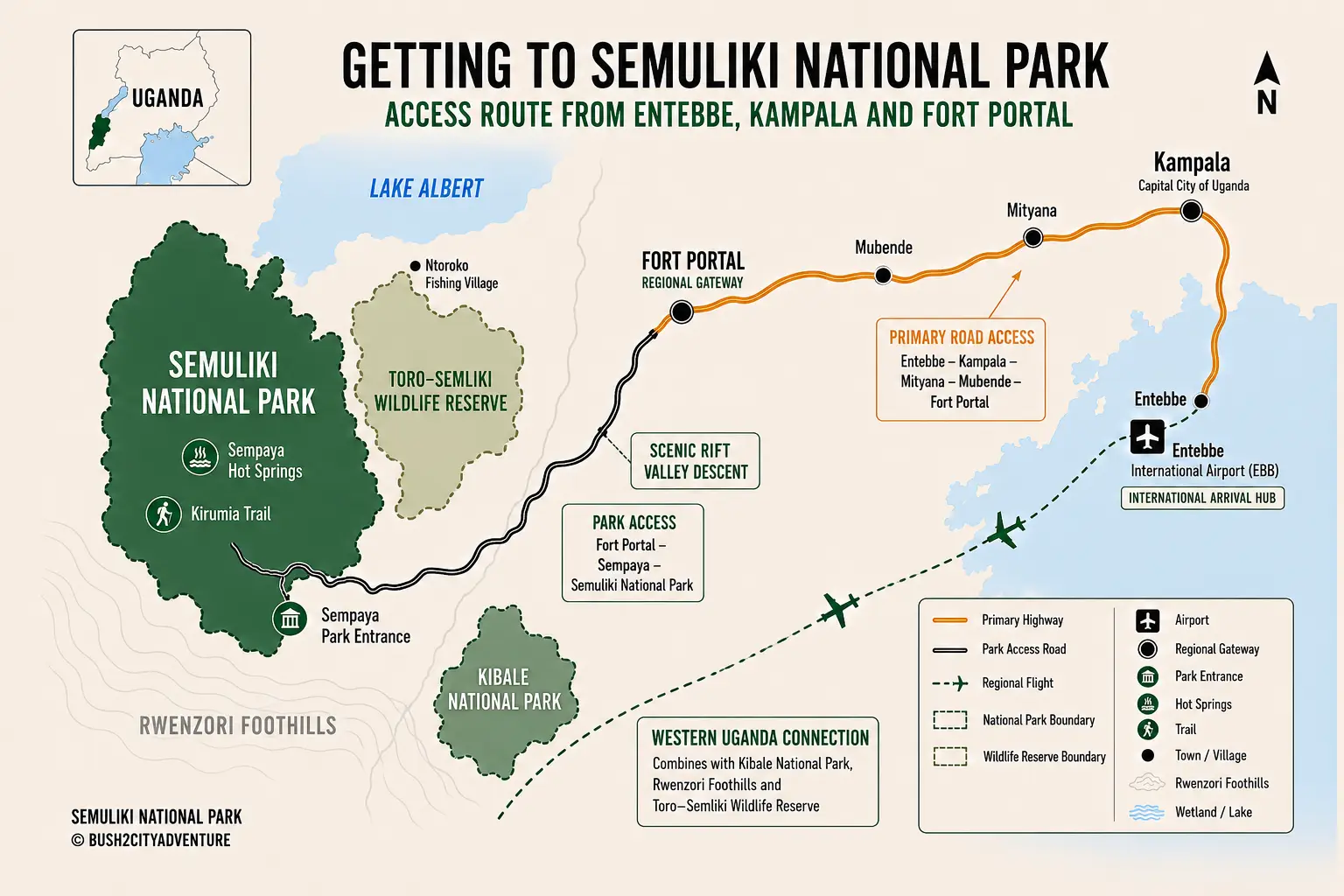
*Driving times are only a rough indication. You should always consider the possibility of significant delays.
Main Park Map
Airlines & Ticket Prices
No data was found
Domestic Flights
No data was found
Passport, Visa & Other Entry Requirements
Want To Visit Semuliki NP
No data was found
​Malaria & Safety – Semuliki NP
Malaria & Vaccinations

Please read our malaria and vaccinations page for Uganda, and our general ‘Wildlife Viewing Safety Precautions’ below for more info:

Want To Visit Semuliki NP
No data was found
Accommodations – Semuliki NP
Want To Visit Semuliki NP
No data was found
Overview – Semuliki NP
Semuliki National Park preserves one of Uganda’s most ecologically significant forests. As an extension of the Congolese Ituri Forest, it takes its name from the Semuliki River, which flows northeast along the border with the Democratic Republic of Congo. The park harbors numerous species typical of the Congo-Guinea region that have limited distribution in East Africa, making it a prime destination for bird enthusiasts. Other highlights include diverse primate populations and the striking geothermal springs at Sempaya Hot Springs.
semuliki - Bush2City
Best Time To Go
December to March and June to August (Dry and early Wet seasons)
High Season
June to September (But it is never busy)
Size
222km² / 86mi²
Altitude
652-760m / 2,139-2,493ft
Pros & Cons
A rarely visited destination that retains a truly unexplored and remote character
A key refuge in East Africa for the elusive lowland bongo, along with a variety of other forest-dwelling mammal
Outstanding birdlife, including around 35 species not recorded elsewhere in East Africa
Easily reached from Fort Portal via a well-maintained and scenic paved road
Pairs well with a visit to Toro National Park as an enriching extension
Dense forest conditions can make wildlife viewing and birdwatching more challenging and slow-paced
Wildlife
Semuliki National Park is a captivating destination for dedicated bird-watchers and wildlife enthusiasts alike. Its avifauna is remarkable, with a checklist of 435 species, including 35 Congo-Guinea specialties found nowhere else in East Africa. Among the eight diurnal primates, grey-cheeked mangabey, black-and-white colobus, and red-tailed monkey are the most frequently observed. Sightings of larger mammals are rarer, but the park is home to hippo, forest elephant, forest buffalo, lowland bongo, water chevrotain, and sitatunga.
Scenery
The dramatic road from Fort Portal down to Semuliki National Park winds along the foothills of the Rwenzori Mountains, offering some of the most spectacular scenery in Uganda. The park itself is cloaked in dense, jungle-like lowland rainforest, creating a truly immersive wilderness experience. A standout feature is the palm-fringed Sempaya Hot Springs, where the largest spring shoots water up to 2m (6.5ft) high from a naturally formed salt mound.
Weather & Climate
Semuliki National Park is a lowland rainforest located near the equator, resulting in consistently warm temperatures throughout the year and the possibility of rain at any time. The driest months are typically January and February. Overall, the climate closely resembles that of the nearby Toro National Park (formerly Toro-Semliki Wildlife Reserve).
Best Time To Visit
Semuliki National Park is accessible year-round, but wildlife viewing is at its peak during the Dry seasons, from December to February and June to July, as well as in the months immediately following them, March and August.
Want To Visit Semuliki NP
No data was found
​Wildlife & Animals – Semuliki NP
No data was found
Wildlife Highlights
Best Time for Wildlife Viewing
Want To Visit Semuliki NP
No data was found
Wildlife Photos
​Birds – Semuliki NP

Notable Birds in Semuliki NP

No data was found
Birding Specials – Treats for Avid Birders
No data was found
Best Time for Bird Watching
Want To Visit Semuliki NP
No data was found
Facts & Figures

Bird Species

450+

Migratory Birds

Nov to Apr

Best Time To Visit – Semuliki NP

Jan

Feb

Mar

Apr

May

Jun

Jul

Aug

Sep

Oct

Nov

Dec

No data was found
No data was found
No data was found
Want To Visit Semuliki NP
No data was found
Wildlife Photos
Weather & Climate – Semuliki NP
Want To Visit Semuliki NP
No data was found
Semuliki National Park
Semuliki NP Photos
semuliki - Bush2City
​Getting There – Semuliki NP

The park headquarters at Sempaya is located about 60 km (37 mi) from Fort Portal along a scenic paved road, typically covered in under 90 minutes*. Fort Portal also serves as the nearest town to Kibale National Park, making Semuliki an easy extension for visitors exploring that park. Another convenient base is Semliki Safari Lodge in Toro National Park, from which the drive to Sempaya is similarly around 90 minutes*.

*Driving times are only a rough indication. You should always consider the possibility of significant delays.
Main Park Map
Airlines & Ticket Prices
No data was found
Domestic Flights
No data was found
Passport, Visa & Other Entry Requirements
Want To Visit Semuliki NP
No data was found
​Malaria & Safety – Semuliki NP
Malaria & Vaccinations

Please read our malaria and vaccinations page for Uganda, and our general ‘Wildlife Viewing Safety Precautions’ below for more info:

Want To Visit Semuliki NP
No data was found

Explore Semuliki National Park Safari Tours

No data was found

Book your Kilimanjaro trek

Our team is always here to help

General Travel Safety Precautions

Embarking on an African safari promises an adventure of a lifetime, showcasing the continent’s rich wildlife, breathtaking landscapes, and diverse cultures. While safaris are widely considered safe, especially those organized through reputable tour operators, it’s prudent to take certain precautions to ensure a smooth and secure experience. Here are some essential safety tips to consider:

Cities & Urban Areas: Safety Precautions

Traveling through Africa offers an enriching experience filled with breathtaking landscapes, diverse cultures, and unparalleled wildlife encounters. While it’s generally safe, especially on organized tours or safaris, navigating urban environments requires a bit of savvy to ensure your trip remains worry-free. Here are some straightforward tips to keep in mind, whether you’re exploring bustling metropolises or serene landscapes:

Wildlife Viewing Safety Precautions

Exploring the wild through a safari adventure is an exhilarating experience that brings you closer to nature’s most fascinating wildlife. Whether you opt for a guided tour with an experienced professional or decide to navigate the trails on a self-drive journey, safety is paramount to ensure an enjoyable and incident-free adventure. Here are some essential safety guidelines and tips to help you navigate your safari safely:
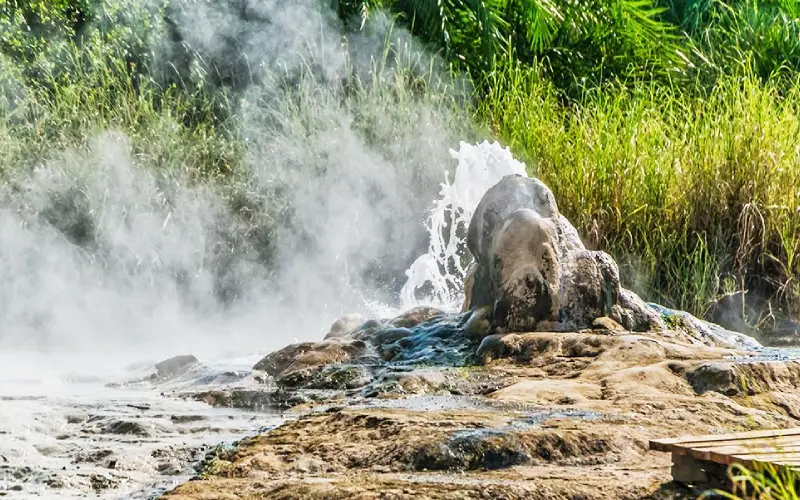
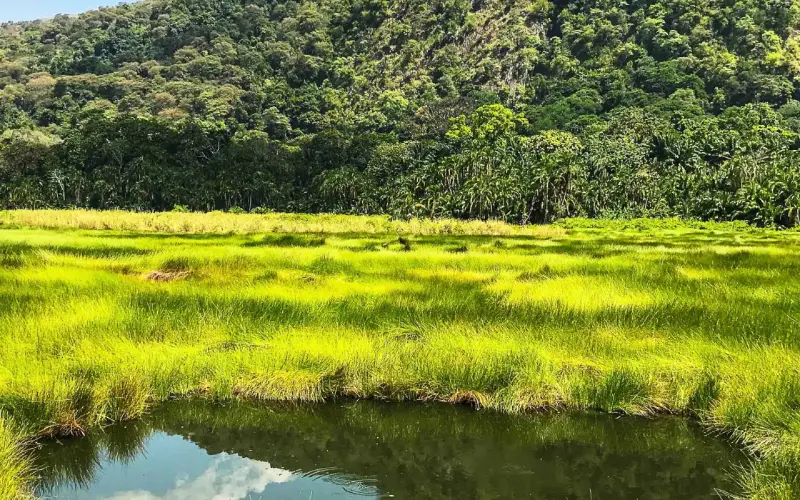
Photo Gallery of Semuliki National Park

Map of Semuliki National Park

Photo Gallery of Semuliki National Park

Main Park Map