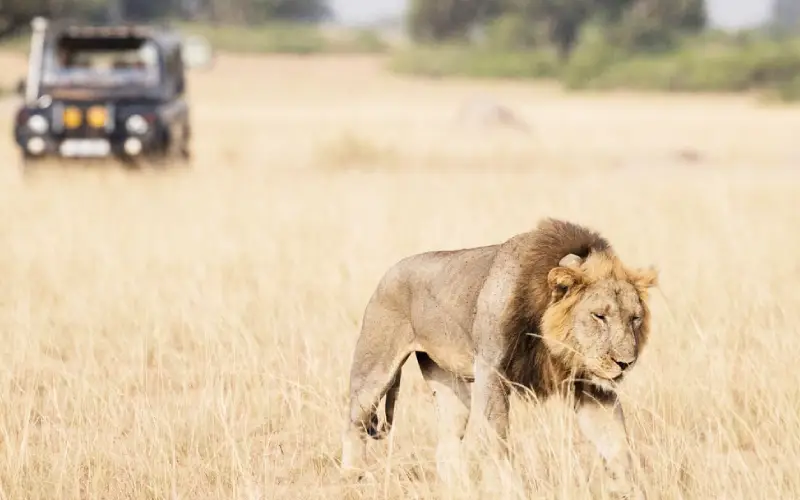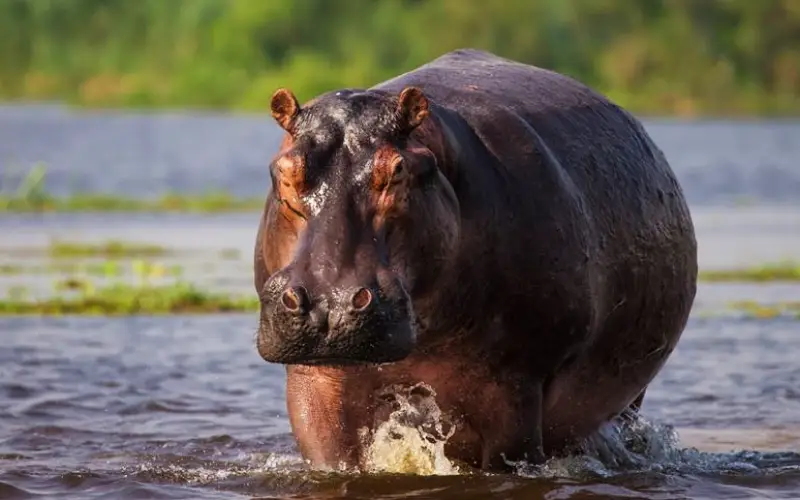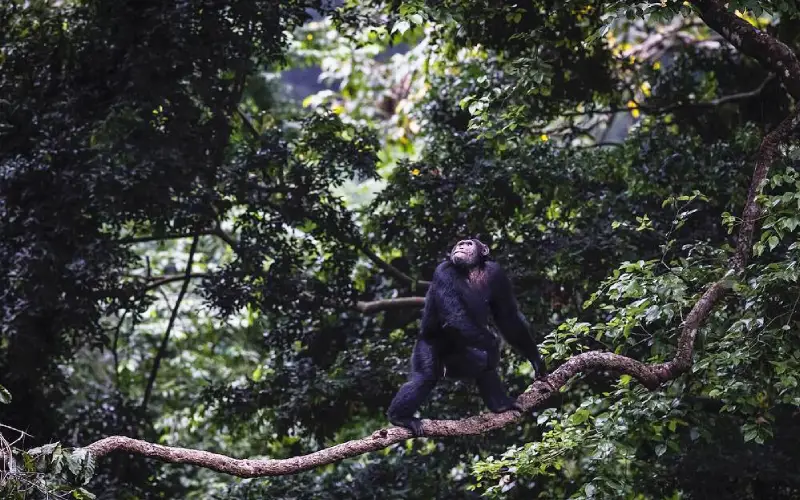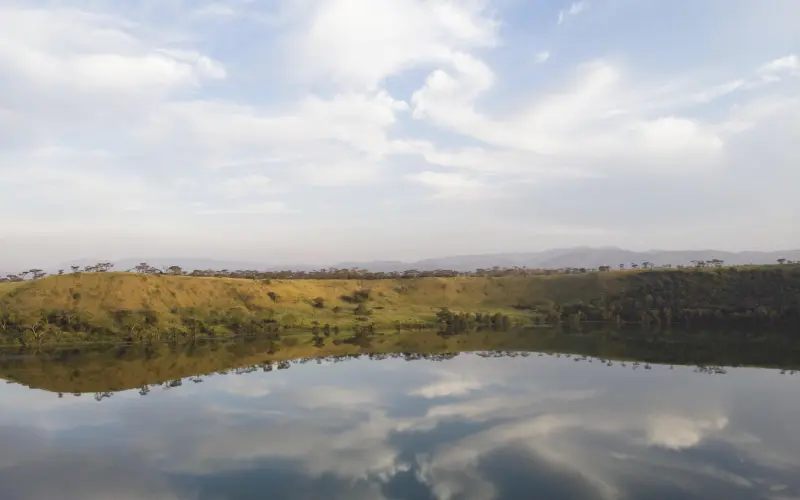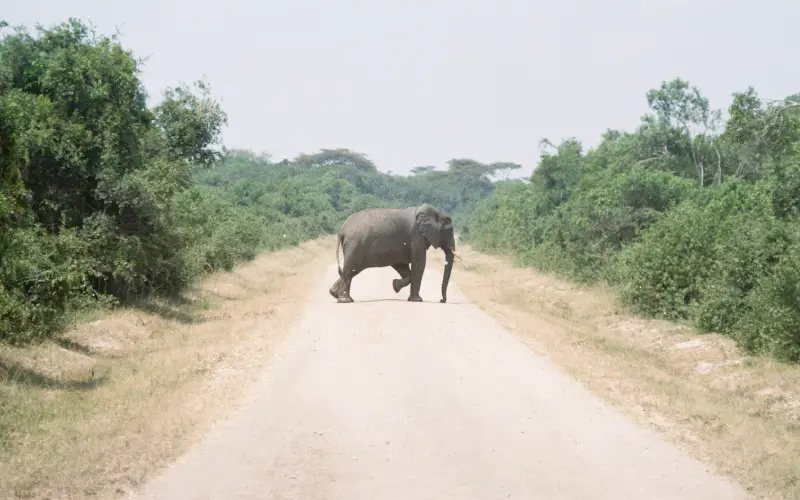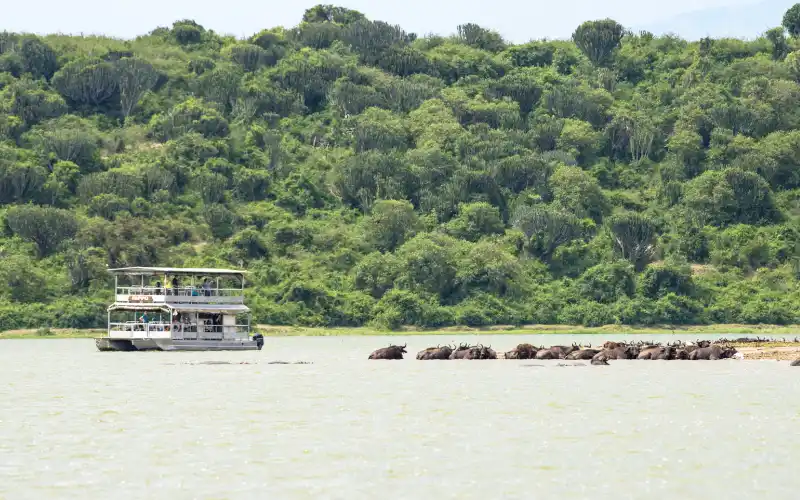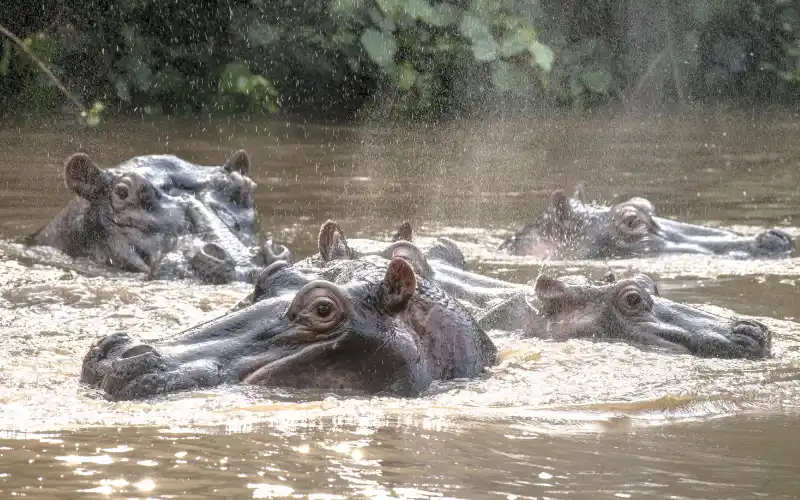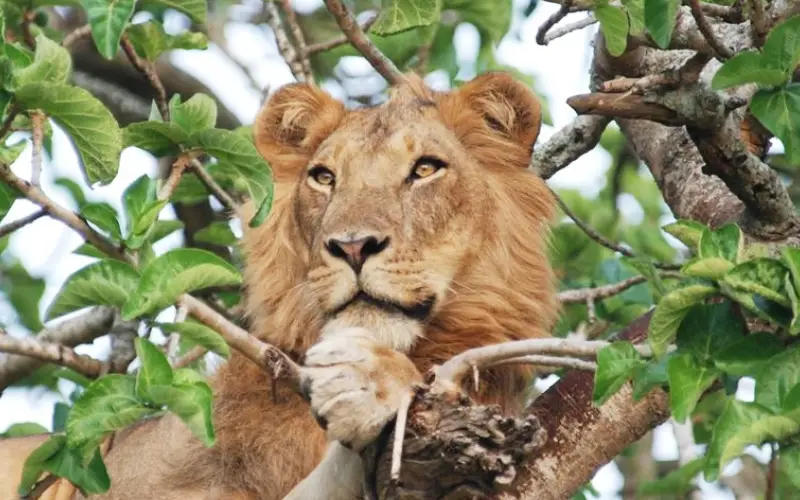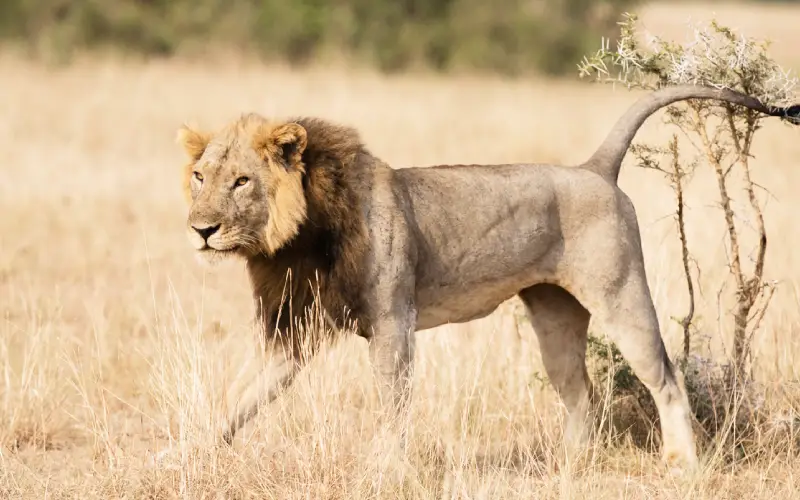


Elephants and buffalo are widespread across Queen Elizabeth National Park, while lions are relatively easy to spot on the Kasenyi and Ishasha Plains. Common antelope species include Uganda kob, defassa waterbuck, bushbuck, and topi, which are mainly found in Ishasha. The Kazinga Channel supports large populations of hippos and crocodiles. The park is also home to a habituated group of chimpanzees for tracking, along with nine other primate species, including the black-and-white colobus monkey.


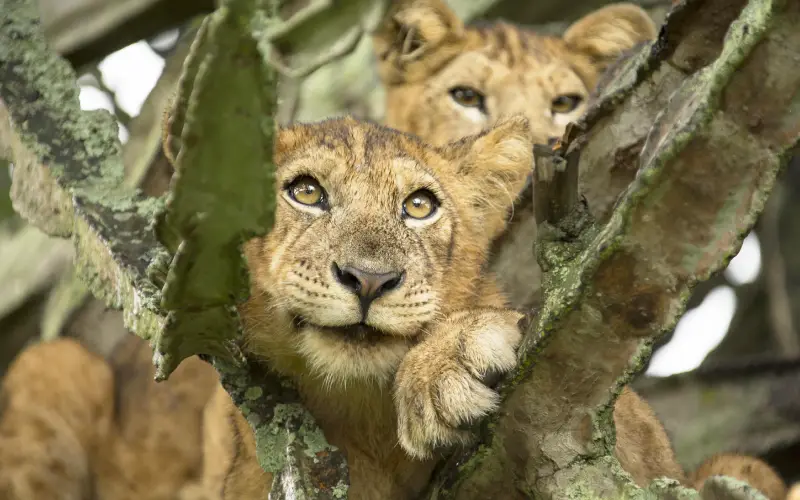
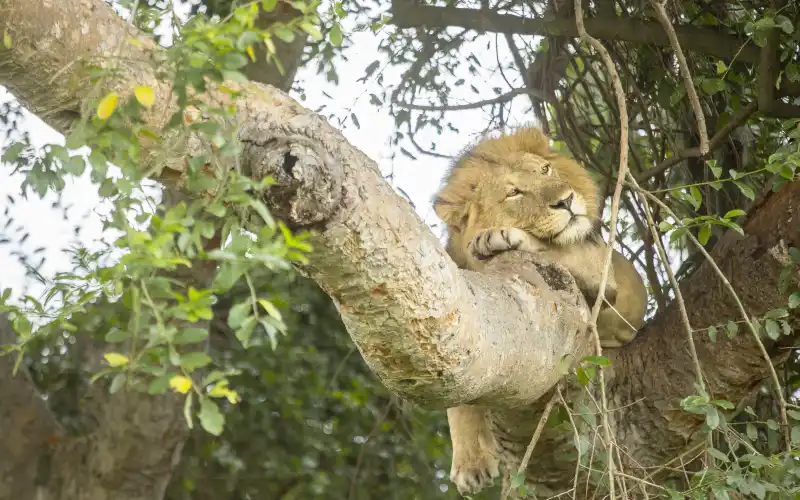
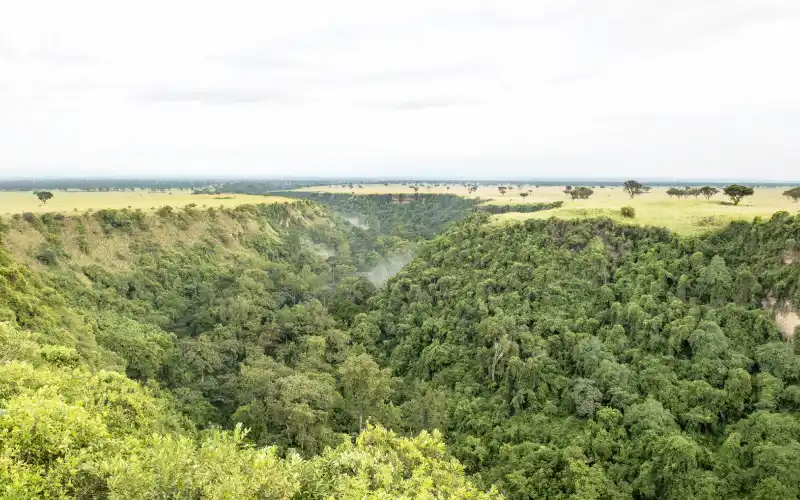
The Ishasha Plains are known for their unique tree-climbing lions, often seen lounging in large fig trees. The rare giant forest hog is frequently spotted around the Kazinga Channel, both on boat safaris and game drives. Buffalo in Queen Elizabeth National Park often appear reddish-brown, a result of interbreeding with forest buffalo from neighboring Democratic Republic of the Congo. Chimpanzee trekking is also available in the humid tropical forest of Kyambura Gorge.
Queen Elizabeth National Park is open to visitors year-round, but wildlife viewing is at its best during the drier months of January to February and June to July, when animals tend to congregate around rivers and lakes. Heavy rains can make some minor roads difficult to navigate, so travel conditions may vary.


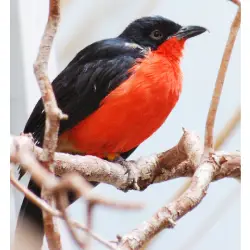
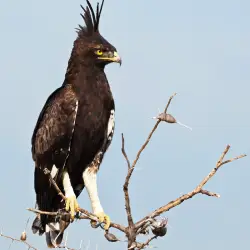
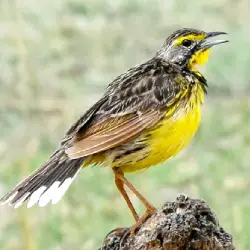
Birdwatching in Queen Elizabeth National Park is excellent throughout the year, but conditions are at their best from late May to September, when rainfall is lighter and food is plentiful. June and July are the driest months, while April to May and September to November experience the heaviest rains. During these wetter periods, some roads and hiking trails may become slippery or impassable, limiting birding opportunities. Migratory species are most commonly seen from November to April.
450+
Nov to Apr


January & February – Although generally drier, rain showers are still possible and can occasionally last for several days.
June & July – These are the driest months, with only a small chance of rain. Daytime temperatures average 28°C (82°F), while nights cool to around 17°C (63°F).
March, April & May – Rainfall is heaviest in April, making these the wettest months. Afternoon temperatures are warm, around 29°C (84°F), while mornings are cooler at about 18°C (64°F). Roads may become difficult to pass, and chimp trekking trails can be slippery.
August to December – Rainfall patterns mirror those of March to May, with the wettest period occurring in November.
Most areas of Queen Elizabeth National Park lie approximately 375–425 km (233–264 mi) west of Uganda’s capital, Kampala, by road. A direct drive typically takes 7–8 hours*, though most itineraries include stops along the way. The Ishasha Plains, while more remote, are about a 2-hour drive* from Buhoma, the main gorilla trekking hub in Bwindi Impenetrable National Park.
Visitors usually enter Uganda via Entebbe International Airport (46 km/29 mi from Kampala). Safari operators, such as Bush 2 City Adventure, typically arrange airport pickups and all additional transport required for the trip.
To book your flight to Entebbe International Airport (EBB), check travel sites such as Skyscanner and also visit airline websites directly. These sources will show available flights, schedules, and current ticket prices.
It is also possible to reach Queen Elizabeth National Park by air, flying into the nearby airstrips at Kasese, Mweya, or Kihihi (for the Ishasha sector) via scheduled or chartered flights from Entebbe International Airport or Kajjansi Airfield. These flights are typically arranged by your safari planner at Bush 2 City Adventure. Scheduled services are offered by the following airline:
Please check our How To Get to Uganda page to learn more about passport, visa and other entry requirements.
Queen Elizabeth National Park is a popular and generally safe destination. On organized tours, your guide will ensure your safety, while self-drive visitors are advised to seek local guidance before exploring. For the latest information on safety in Queen Elizabeth National Park and Uganda overall, consult official government travel advisories (see the “Government Travel Advice for Uganda” link below).
It is recommended to take antimalarial medication and use mosquito repellent—preferably those containing DEET—to reduce the risk of malaria. Wearing long sleeves and covering exposed skin in the evenings also helps protect against mosquito bites. Certain vaccinations are advised for travel to Uganda, so consult your travel clinic or local doctor for up-to-date guidance.
Wildlife viewing in Queen Elizabeth National Park is generally safe when you follow your guide’s instructions. Be sure to review the “Wildlife Viewing Safety Precautions” below. If you plan to trek chimpanzees in Kyambura Gorge, also consult our “Chimp Trekking Safety Precautions.”
Elephants and buffalo are widespread across Queen Elizabeth National Park, while lions are relatively easy to spot on the Kasenyi and Ishasha Plains. Common antelope species include Uganda kob, defassa waterbuck, bushbuck, and topi, which are mainly found in Ishasha. The Kazinga Channel supports large populations of hippos and crocodiles. The park is also home to a habituated group of chimpanzees for tracking, along with nine other primate species, including the black-and-white colobus monkey.
The Ishasha Plains are known for their unique tree-climbing lions, often seen lounging in large fig trees. The rare giant forest hog is frequently spotted around the Kazinga Channel, both on boat safaris and game drives. Buffalo in Queen Elizabeth National Park often appear reddish-brown, a result of interbreeding with forest buffalo from neighboring Democratic Republic of the Congo. Chimpanzee trekking is also available in the humid tropical forest of Kyambura Gorge.
Queen Elizabeth National Park is open to visitors year-round, but wildlife viewing is at its best during the drier months of January to February and June to July, when animals tend to congregate around rivers and lakes. Heavy rains can make some minor roads difficult to navigate, so travel conditions may vary.
Birdwatching in Queen Elizabeth National Park is excellent throughout the year, but conditions are at their best from late May to September, when rainfall is lighter and food is plentiful. June and July are the driest months, while April to May and September to November experience the heaviest rains. During these wetter periods, some roads and hiking trails may become slippery or impassable, limiting birding opportunities. Migratory species are most commonly seen from November to April.
450+
Nov to Apr
January & February – Although generally drier, rain showers are still possible and can occasionally last for several days.
June & July – These are the driest months, with only a small chance of rain. Daytime temperatures average 28°C (82°F), while nights cool to around 17°C (63°F).
March, April & May – Rainfall is heaviest in April, making these the wettest months. Afternoon temperatures are warm, around 29°C (84°F), while mornings are cooler at about 18°C (64°F). Roads may become difficult to pass, and chimp trekking trails can be slippery.
August to December – Rainfall patterns mirror those of March to May, with the wettest period occurring in November.
Most areas of Queen Elizabeth National Park lie approximately 375–425 km (233–264 mi) west of Uganda’s capital, Kampala, by road. A direct drive typically takes 7–8 hours*, though most itineraries include stops along the way. The Ishasha Plains, while more remote, are about a 2-hour drive* from Buhoma, the main gorilla trekking hub in Bwindi Impenetrable National Park.
Visitors usually enter Uganda via Entebbe International Airport (46 km/29 mi from Kampala). Safari operators, such as Bush 2 City Adventure, typically arrange airport pickups and all additional transport required for the trip.
To book your flight to Entebbe International Airport (EBB), check travel sites such as Skyscanner and also visit airline websites directly. These sources will show available flights, schedules, and current ticket prices.
It is also possible to reach Queen Elizabeth National Park by air, flying into the nearby airstrips at Kasese, Mweya, or Kihihi (for the Ishasha sector) via scheduled or chartered flights from Entebbe International Airport or Kajjansi Airfield. These flights are typically arranged by your safari planner at Bush 2 City Adventure. Scheduled services are offered by the following airline:
Please check our How To Get to Uganda page to learn more about passport, visa and other entry requirements.
Queen Elizabeth National Park is a popular and generally safe destination. On organized tours, your guide will ensure your safety, while self-drive visitors are advised to seek local guidance before exploring. For the latest information on safety in Queen Elizabeth National Park and Uganda overall, consult official government travel advisories (see the “Government Travel Advice for Uganda” link below).
It is recommended to take antimalarial medication and use mosquito repellent—preferably those containing DEET—to reduce the risk of malaria. Wearing long sleeves and covering exposed skin in the evenings also helps protect against mosquito bites. Certain vaccinations are advised for travel to Uganda, so consult your travel clinic or local doctor for up-to-date guidance.
Wildlife viewing in Queen Elizabeth National Park is generally safe when you follow your guide’s instructions. Be sure to review the “Wildlife Viewing Safety Precautions” below. If you plan to trek chimpanzees in Kyambura Gorge, also consult our “Chimp Trekking Safety Precautions.”
Embarking on an African safari promises an adventure of a lifetime, showcasing the continent’s rich wildlife, breathtaking landscapes, and diverse cultures. While safaris are widely considered safe, especially those organized through reputable tour operators, it’s prudent to take certain precautions to ensure a smooth and secure experience. Here are some essential safety tips to consider:
Traveling through Africa offers an enriching experience filled with breathtaking landscapes, diverse cultures, and unparalleled wildlife encounters. While it’s generally safe, especially on organized tours or safaris, navigating urban environments requires a bit of savvy to ensure your trip remains worry-free. Here are some straightforward tips to keep in mind, whether you’re exploring bustling metropolises or serene landscapes:
Exploring the wild through a safari adventure is an exhilarating experience that brings you closer to nature’s most fascinating wildlife. Whether you opt for a guided tour with an experienced professional or decide to navigate the trails on a self-drive journey, safety is paramount to ensure an enjoyable and incident-free adventure. Here are some essential safety guidelines and tips to help you navigate your safari safely: