You are here:

Murchison Falls National Park

Murchison Falls

Overview

Wildlife

Birds

Best Time To Visit

Weather & Climate

Getting There

Malaria & Safety

Accommodations

Overview – Murchison Falls
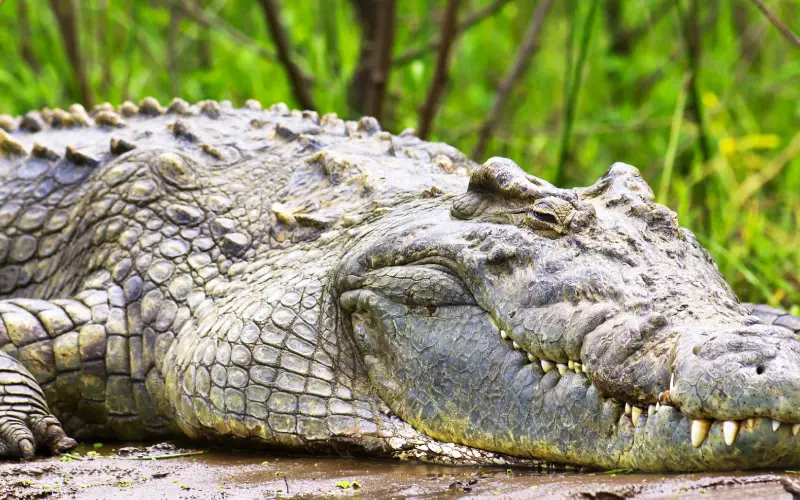
Murchison Falls National Park takes its name from the dramatic waterfall where the Victoria Nile plunges over the Rift Valley escarpment into Lake Albert. As Uganda’s largest national park, it shelters abundant wildlife, including lions, elephants, and buffalo. A standout experience is a boat excursion to the base of the falls, traveling along a striking stretch of the Nile populated by hippos, crocodiles, and a rich variety of birds.
Murchison Falls (2)
Best Time To Go
December to February (Easier to spot animals)
High Season
June to September (Peak time for Uganda)
Size
3,840km² / 1,483mi²
Altitude
615-1,187m / 2,018-3,894ft
Pros & Cons
Excellent opportunities to see four of the Big Five (excluding rhino)
Home to East Africa’s iconic Murchison Falls
Scenic boat excursions along the Nile, reaching the base of the falls and the Lake Albert Delta
One of the region’s best sites for spotting the rare shoebill
Chimpanzee trekking available in Budongo Forest along the park’s southern boundary
Relatively long drive from Kampala and other major Ugandan parks
Some minor roads can become difficult or impassable during the rainy season
Certain areas experience high seasonal concentrations of tsetse flies
Wildlife
Large herds of elephants and buffalo are commonly seen throughout the park, while lions and leopards are frequently spotted in certain areas. The only missing member of the Big Five is the rhino, which can be visited en route at Ziwa Rhino and Wildlife Ranch if traveling from Kampala. Murchison Falls National Park is also the world’s key stronghold for Rothschild’s giraffe, often observed in sizable groups. Other antelope species include Jackson’s hartebeest, defassa waterbuck, and Uganda kob. Chimpanzees can be tracked in Budongo Forest within the broader conservation area.
Scenery
Murchison Falls National Park is divided by the Victoria Nile. A boat journey along this striking river leads to the base of Murchison Falls, where the Nile is funneled through a narrow gorge before plunging into the Devil’s Cauldron. Equally breathtaking is the view from the Top of the Falls, where the roar of the cascading water is impossible to ignore. North of the river, rolling grasslands dotted with towering borassus palms dominate the landscape, while to the south, dense woodlands interspersed with forest patches create a contrasting habitat.
Activities
A boat excursion to the base of Murchison Falls is an essential experience. From there, you can arrange a hike to the Top of the Falls viewpoint, where a vehicle can meet you afterward. Another rewarding boat trip takes you to the Lake Albert Delta, an excellent spot to search for shoebills. The prime game-drive route lies north of the delta, while the quieter Honeymoon Track also offers memorable wildlife encounters. Many visitors combine a Murchison Falls safari with chimpanzee trekking in Budongo Forest or rhino tracking at Ziwa Rhino and Wildlife Ranch.
Weather & Climate
Murchison Falls National Park experiences a consistently warm climate year-round, thanks to its equatorial location. Temperatures rise slightly during the Dry season, from December to February. Light rain is common throughout the Wet season, which runs from March to November, with occasional heavier storms. The peak rainfall occurs from April to May and again from August to October.
Best Time To Visit
Wildlife viewing in Murchison Falls National Park is enjoyable year-round, but it is generally easiest during the Dry season, from December to February, when animals concentrate near water sources and the vegetation is less dense. June and July also offer relatively dry conditions, with slightly cooler temperatures during the peak hours of the day.
Want To Visit Murchison Falls
No data was found
​Wildlife & Animals – Murchison Falls

Murchison Falls National Park is home to four of Africa’s Big Five, with rhinos absent. Elephants and buffalo roam in large numbers, while lions hunt the plentiful Uganda kob. Leopards, though more elusive, are increasingly spotted. Other antelope include oribi, Jackson’s hartebeest, defassa waterbuck, common duiker, and bushbuck. The Victoria Nile supports thriving populations of crocodiles, hippos, and a variety of waterbirds.

Elephant
Giraffe
Hippo
Buffalo
Zebra
Wildebeest
Chimpanzee
Rhino
Lion
Leopard
Cheetah
Wild Dog
Wildlife Highlights

The plains north of the Victoria Nile are famous for large herds of the regionally unique Rothschild’s giraffe, which can now also be spotted farther south. Leopards, though rare, are most often seen near Pakuba Lodge. Patas monkeys may be observed playing on the open grasslands, while black-and-white colobus inhabit the forested riverbanks. Visitors can also enjoy chimpanzee trekking in the nearby Budongo Forest.

Best Time for Wildlife Viewing

Murchison Falls National Park provides excellent wildlife viewing year-round, though the Dry season (December to February) offers the most reliable sightings, as animals congregate near the Victoria Nile and other key water sources.

Want To Visit Murchison Falls
No data was found
Wildlife Photos
Murchison - bush2cit
​Birds – Murchison Falls
Murchison Falls National Park boasts a bird list of over 450 species and is among the top destinations to spot the iconic shoebill, a prehistoric-looking giant related to pelicans. Shoebills are most often observed on early morning boat trips to the Lake Albert Delta. Both this excursion and the popular boat trip to the base of Murchison Falls offer excellent opportunities to see a variety of other waterbirds. Migratory species are typically present from November through April.

Notable Birds in Murchison Falls

Best Time for Bird Watching

Birding in Murchison Falls National Park is rewarding throughout the year, with peak conditions from January to March. December through February generally sees the least rainfall, while April to May and August to October experience heavier rains. These wet periods can make some roads impassable, trails slippery, and may limit bird-watching opportunities. Migratory species are typically present from November to April.

Want To Visit Murchison Falls
No data was found
Facts & Figures

Bird Species

450+

Migratory Birds

Nov to Apr

Best Time To Visit – Murchison Falls

Jan

Feb

Mar

Apr

May

Jun

Jul

Aug

Sep

Oct

Nov

Dec

Murchison Falls National Park offers excellent wildlife viewing year-round, with the Dry season (December to February) providing the easiest opportunities to spot animals. January and February can be particularly hot, while the Wet season from March to November brings lush, vibrant scenery that enhances the park’s natural beauty.
Best Time
December to February (Easier to spot animals)
High Season
June to September (Peak time for gorilla trekking; more people visit Uganda and Murchison Falls NP)
Low Season
March to May and October to November
Best Weather
June and July (Less rain and lower temperatures)
Worst Weather
April to May and August to October (Higher rainfall, but seldom enough to interfere with your safari)
December to February – Dry Season
Wildlife is easier to spot as animals concentrate around water sources.
Clear skies and minimal rainfall create ideal safari conditions.
Fewer mosquitoes reduce the risk of malaria.
Temperatures in January and February can be intensely hot, requiring careful planning for comfort.
March to November – Wet Season
The park’s scenery is vibrant and green, creating a striking backdrop for wildlife.
Being part of the low season, there are fewer visitors, and rates are often more affordable.
Wildlife viewing remains excellent throughout the year.
Murchison Falls NP is in a relatively dry region, so rain seldom disrupts safari activities.
Some minor roads can become challenging or impassable after heavy rains.
Want To Visit Murchison Falls
No data was found
Wildlife Photos
Murchison - bush2cit
Weather & Climate – Murchison Falls
Murchison Falls National Park experiences a hot, tropical climate with fairly consistent temperatures year-round. Daytime highs generally reach around 30°C (86°F), cooling to approximately 19°C (66°F) at night. The Wet season extends from March to November, with a relatively drier spell in June and July. The Dry season, from December to February, sees minimal rainfall.
Dry Season – December to February

Murchison Falls experiences dry and hot conditions during the peak Dry season.


  • December, January & February – These months are the driest of the year, with mostly sunny skies and minimal rainfall. Daytime temperatures average around 31°C (88°F), cooling to approximately 20°C (68°F) at night.
Wet Season – March to November

Murchison Falls is relatively drier than many other parts of Uganda, though heavy storms can still occur.


  • March, April & May – Rain typically begins in March, with skies becoming more overcast. April and May see average monthly rainfall exceeding 130mm (5in). Daytime temperatures hover around 30°C (86°F), dropping to about 20°C (68°F) at night.


  • June & July – These months offer a somewhat drier interval, but occasional rain is still possible. Daytime temperatures average 29°C (84°F).


  • August, September, October & November – This period marks the wettest part of the year, peaking in October. Rainfall is not constant, but storms can be intense when they occur. Temperatures begin to rise gradually by November.
Want To Visit Murchison Falls
No data was found
Murchison Falls National Park
Murchison Falls Photos
Murchison Falls (2)
​Getting There – Murchison Falls

Paraa, the main gateway for visitors to Murchison Falls National Park, lies approximately 300 km (186 mi) north of Kampala. The route via Masindi is now fully paved, with a drive time of around 6 hours*. Along this road, travelers may stop at Ziwa Rhino and Wildlife Ranch to track rhinos. From the southwest, Paraa is about 320 km (199 mi) from Fort Portal, following the paved route through Hoima and Bulisa, which also takes roughly 6 hours*.


International visitors arrive via Entebbe International Airport (EBB), located 46 km (29 mi) from Kampala. Bush 2 City Adventure typically arranges airport pickups and provides all onward transportation as part of the safari package.

*Driving times are only a rough indication. You should always consider the possibility of significant delays.
Main Park Map
Airlines & Ticket Prices

You can look online to find which airlines fly to Entebbe International Airport (EBB) and compare ticket prices.

Domestic Flights

Visitors can also reach Murchison Falls National Park via chartered or scheduled flights from Entebbe International Airport (EBB) or Kajjansi Airfield near Kampala. Pakuba Airfield is the most convenient for accessing the main cluster of camps and lodges near the park headquarters at Paraa. Additional options include Chobe and Bugungu Airfields.


Domestic flights are typically organized by Bush 2 City Adventure as part of your safari package. Regularly scheduled domestic services are operated by the following carrier:

AeroLink (Flies from Entebbe to Pakuba, Chobe and Bugungu Airfields; a minimum of two passengers is required)

Passport, Visa & Other Entry Requirements

Please check our How To Get to Uganda page to learn more about passport, visa and other entry requirements.

Want To Visit Murchison Falls
No data was found
​Malaria & Safety – Murchison Falls
Safety

In our view, Murchison Falls National Park is safe to visit, much like Uganda’s other parks and reserves. Guided tours provide a secure experience, while self-drive visitors are advised to consult local sources before setting out. For the latest updates on safety, refer to the official government travel advisories (see the ‘Government Travel Advice for Uganda’ link below).

Malaria & Vaccinations

Taking precautions against malaria is essential when visiting Murchison Falls National Park. Visitors should use antimalarial medication and apply mosquito repellent, ideally containing DEET. Wearing long sleeves and trousers in the evenings helps protect exposed skin. Additionally, ensure that all recommended vaccinations for travel to Uganda are up to date.

Wildlife Viewing

Wildlife viewing in Murchison Falls National Park is generally very safe when you follow your guide’s instructions. Be sure to review the ‘Wildlife Viewing Safety Precautions’ below. If you plan to go chimp trekking in the nearby Budongo Forest, we also recommend reading the ‘Chimp Trekking Safety Precautions.’

Want To Visit Murchison Falls
No data was found
Accommodations – Murchison Falls
Want To Visit Murchison Falls
No data was found
Overview – Murchison Falls
Murchison Falls National Park takes its name from the dramatic waterfall where the Victoria Nile plunges over the Rift Valley escarpment into Lake Albert. As Uganda’s largest national park, it shelters abundant wildlife, including lions, elephants, and buffalo. A standout experience is a boat excursion to the base of the falls, traveling along a striking stretch of the Nile populated by hippos, crocodiles, and a rich variety of birds.
Murchison Falls (2)
Best Time To Go
December to February (Easier to spot animals)
High Season
June to September (Peak time for Uganda)
Size
3,840km² / 1,483mi²
Altitude
615-1,187m / 2,018-3,894ft
Pros & Cons
Excellent opportunities to see four of the Big Five (excluding rhino)
Home to East Africa’s iconic Murchison Falls
Scenic boat excursions along the Nile, reaching the base of the falls and the Lake Albert Delta
One of the region’s best sites for spotting the rare shoebill
Chimpanzee trekking available in Budongo Forest along the park’s southern boundary
Relatively long drive from Kampala and other major Ugandan parks
Some minor roads can become difficult or impassable during the rainy season
Certain areas experience high seasonal concentrations of tsetse flies
Wildlife
Large herds of elephants and buffalo are commonly seen throughout the park, while lions and leopards are frequently spotted in certain areas. The only missing member of the Big Five is the rhino, which can be visited en route at Ziwa Rhino and Wildlife Ranch if traveling from Kampala. Murchison Falls National Park is also the world’s key stronghold for Rothschild’s giraffe, often observed in sizable groups. Other antelope species include Jackson’s hartebeest, defassa waterbuck, and Uganda kob. Chimpanzees can be tracked in Budongo Forest within the broader conservation area.
Scenery
Murchison Falls National Park is divided by the Victoria Nile. A boat journey along this striking river leads to the base of Murchison Falls, where the Nile is funneled through a narrow gorge before plunging into the Devil’s Cauldron. Equally breathtaking is the view from the Top of the Falls, where the roar of the cascading water is impossible to ignore. North of the river, rolling grasslands dotted with towering borassus palms dominate the landscape, while to the south, dense woodlands interspersed with forest patches create a contrasting habitat.
Weather & Climate
Murchison Falls National Park experiences a consistently warm climate year-round, thanks to its equatorial location. Temperatures rise slightly during the Dry season, from December to February. Light rain is common throughout the Wet season, which runs from March to November, with occasional heavier storms. The peak rainfall occurs from April to May and again from August to October.
Best Time To Visit
Wildlife viewing in Murchison Falls National Park is enjoyable year-round, but it is generally easiest during the Dry season, from December to February, when animals concentrate near water sources and the vegetation is less dense. June and July also offer relatively dry conditions, with slightly cooler temperatures during the peak hours of the day.
Want To Visit Murchison Falls
No data was found
​Wildlife & Animals – Murchison Falls

Murchison Falls National Park is home to four of Africa’s Big Five, with rhinos absent. Elephants and buffalo roam in large numbers, while lions hunt the plentiful Uganda kob. Leopards, though more elusive, are increasingly spotted. Other antelope include oribi, Jackson’s hartebeest, defassa waterbuck, common duiker, and bushbuck. The Victoria Nile supports thriving populations of crocodiles, hippos, and a variety of waterbirds.

Elephant
Giraffe
Hippo
Buffalo
Zebra
Wildebeest
Chimpanzee
Rhino
Lion
Leopard
Cheetah
Wild Dog
Wildlife Highlights

The plains north of the Victoria Nile are famous for large herds of the regionally unique Rothschild’s giraffe, which can now also be spotted farther south. Leopards, though rare, are most often seen near Pakuba Lodge. Patas monkeys may be observed playing on the open grasslands, while black-and-white colobus inhabit the forested riverbanks. Visitors can also enjoy chimpanzee trekking in the nearby Budongo Forest.

Best Time for Wildlife Viewing

Murchison Falls National Park provides excellent wildlife viewing year-round, though the Dry season (December to February) offers the most reliable sightings, as animals congregate near the Victoria Nile and other key water sources.

Want To Visit Murchison Falls
No data was found
Wildlife Photos
Murchison - bush2cit
​Birds – Murchison Falls
Murchison Falls National Park boasts a bird list of over 450 species and is among the top destinations to spot the iconic shoebill, a prehistoric-looking giant related to pelicans. Shoebills are most often observed on early morning boat trips to the Lake Albert Delta. Both this excursion and the popular boat trip to the base of Murchison Falls offer excellent opportunities to see a variety of other waterbirds. Migratory species are typically present from November through April.

Notable Birds in Murchison Falls

Best Time for Bird Watching

Birding in Murchison Falls National Park is rewarding throughout the year, with peak conditions from January to March. December through February generally sees the least rainfall, while April to May and August to October experience heavier rains. These wet periods can make some roads impassable, trails slippery, and may limit bird-watching opportunities. Migratory species are typically present from November to April.

Want To Visit Murchison Falls
No data was found
Facts & Figures

Bird Species

450+

Migratory Birds

Nov to Apr

Best Time To Visit – Murchison Falls

Jan

Feb

Mar

Apr

May

Jun

Jul

Aug

Sep

Oct

Nov

Dec

Murchison Falls National Park offers excellent wildlife viewing year-round, with the Dry season (December to February) providing the easiest opportunities to spot animals. January and February can be particularly hot, while the Wet season from March to November brings lush, vibrant scenery that enhances the park’s natural beauty.
Best Time
December to February (Easier to spot animals)
High Season
June to September (Peak time for gorilla trekking; more people visit Uganda and Murchison Falls NP)
Low Season
March to May and October to November
Best Weather
June and July (Less rain and lower temperatures)
Worst Weather
April to May and August to October (Higher rainfall, but seldom enough to interfere with your safari)
December to February – Dry Season
Wildlife is easier to spot as animals concentrate around water sources.
Clear skies and minimal rainfall create ideal safari conditions.
Fewer mosquitoes reduce the risk of malaria.
Temperatures in January and February can be intensely hot, requiring careful planning for comfort.
March to November – Wet Season
The park’s scenery is vibrant and green, creating a striking backdrop for wildlife.
Being part of the low season, there are fewer visitors, and rates are often more affordable.
Wildlife viewing remains excellent throughout the year.
Murchison Falls NP is in a relatively dry region, so rain seldom disrupts safari activities.
Some minor roads can become challenging or impassable after heavy rains.
Want To Visit Murchison Falls
No data was found
Wildlife Photos
Murchison - bush2cit
Weather & Climate – Murchison Falls
Murchison Falls National Park experiences a hot, tropical climate with fairly consistent temperatures year-round. Daytime highs generally reach around 30°C (86°F), cooling to approximately 19°C (66°F) at night. The Wet season extends from March to November, with a relatively drier spell in June and July. The Dry season, from December to February, sees minimal rainfall.
Dry Season – December to February

Murchison Falls experiences dry and hot conditions during the peak Dry season.


  • December, January & February – These months are the driest of the year, with mostly sunny skies and minimal rainfall. Daytime temperatures average around 31°C (88°F), cooling to approximately 20°C (68°F) at night.
Wet Season – March to November

Murchison Falls is relatively drier than many other parts of Uganda, though heavy storms can still occur.


  • March, April & May – Rain typically begins in March, with skies becoming more overcast. April and May see average monthly rainfall exceeding 130mm (5in). Daytime temperatures hover around 30°C (86°F), dropping to about 20°C (68°F) at night.


  • June & July – These months offer a somewhat drier interval, but occasional rain is still possible. Daytime temperatures average 29°C (84°F).


  • August, September, October & November – This period marks the wettest part of the year, peaking in October. Rainfall is not constant, but storms can be intense when they occur. Temperatures begin to rise gradually by November.
Want To Visit Murchison Falls
No data was found
Murchison Falls National Park
Murchison Falls Photos
Murchison Falls (2)
​Getting There – Murchison Falls

Paraa, the main gateway for visitors to Murchison Falls National Park, lies approximately 300 km (186 mi) north of Kampala. The route via Masindi is now fully paved, with a drive time of around 6 hours*. Along this road, travelers may stop at Ziwa Rhino and Wildlife Ranch to track rhinos. From the southwest, Paraa is about 320 km (199 mi) from Fort Portal, following the paved route through Hoima and Bulisa, which also takes roughly 6 hours*.


International visitors arrive via Entebbe International Airport (EBB), located 46 km (29 mi) from Kampala. Bush 2 City Adventure typically arranges airport pickups and provides all onward transportation as part of the safari package.

*Driving times are only a rough indication. You should always consider the possibility of significant delays.
Main Park Map
Airlines & Ticket Prices

You can look online to find which airlines fly to Entebbe International Airport (EBB) and compare ticket prices.

Domestic Flights

Visitors can also reach Murchison Falls National Park via chartered or scheduled flights from Entebbe International Airport (EBB) or Kajjansi Airfield near Kampala. Pakuba Airfield is the most convenient for accessing the main cluster of camps and lodges near the park headquarters at Paraa. Additional options include Chobe and Bugungu Airfields.


Domestic flights are typically organized by Bush 2 City Adventure as part of your safari package. Regularly scheduled domestic services are operated by the following carrier:

AeroLink (Flies from Entebbe to Pakuba, Chobe and Bugungu Airfields; a minimum of two passengers is required)

Passport, Visa & Other Entry Requirements

Please check our How To Get to Uganda page to learn more about passport, visa and other entry requirements.

Want To Visit Murchison Falls
No data was found
​Malaria & Safety – Murchison Falls
Safety

In our view, Murchison Falls National Park is safe to visit, much like Uganda’s other parks and reserves. Guided tours provide a secure experience, while self-drive visitors are advised to consult local sources before setting out. For the latest updates on safety, refer to the official government travel advisories (see the ‘Government Travel Advice for Uganda’ link below).

Malaria & Vaccinations

Taking precautions against malaria is essential when visiting Murchison Falls National Park. Visitors should use antimalarial medication and apply mosquito repellent, ideally containing DEET. Wearing long sleeves and trousers in the evenings helps protect exposed skin. Additionally, ensure that all recommended vaccinations for travel to Uganda are up to date.

Wildlife Viewing

Wildlife viewing in Murchison Falls National Park is generally very safe when you follow your guide’s instructions. Be sure to review the ‘Wildlife Viewing Safety Precautions’ below. If you plan to go chimp trekking in the nearby Budongo Forest, we also recommend reading the ‘Chimp Trekking Safety Precautions.’

Want To Visit Murchison Falls
No data was found

Explore Murchison Falls National Park Safari Tours

No data was found

Book your Kilimanjaro trek

Our team is always here to help

General Travel Safety Precautions

Embarking on an African safari promises an adventure of a lifetime, showcasing the continent’s rich wildlife, breathtaking landscapes, and diverse cultures. While safaris are widely considered safe, especially those organized through reputable tour operators, it’s prudent to take certain precautions to ensure a smooth and secure experience. Here are some essential safety tips to consider:

Cities & Urban Areas: Safety Precautions

Traveling through Africa offers an enriching experience filled with breathtaking landscapes, diverse cultures, and unparalleled wildlife encounters. While it’s generally safe, especially on organized tours or safaris, navigating urban environments requires a bit of savvy to ensure your trip remains worry-free. Here are some straightforward tips to keep in mind, whether you’re exploring bustling metropolises or serene landscapes:

Wildlife Viewing Safety Precautions

Exploring the wild through a safari adventure is an exhilarating experience that brings you closer to nature’s most fascinating wildlife. Whether you opt for a guided tour with an experienced professional or decide to navigate the trails on a self-drive journey, safety is paramount to ensure an enjoyable and incident-free adventure. Here are some essential safety guidelines and tips to help you navigate your safari safely:

Photo Gallery of Murchison Falls National Park

Map of Murchison Falls National Park

Photo Gallery of Murchison Falls National Park

Main Park Map

Photo Gallery of Murchison Falls National Park

Map of Murchison Falls National Park

Photo Gallery

Photo Gallery

Photo Gallery