You are here:

Lake Mburo National Park

Lake Mburo NP

Overview

Wildlife

Birds

Best Time To Visit

Weather & Climate

Getting There

Malaria & Safety

Accommodations

Overview – Lake Mburo NP
Lake Mburo National Park may be one of Uganda’s smaller parks, but it offers beautiful scenery and a convenient stopover for travelers heading from Kampala to Bwindi Impenetrable National Park. Despite its size, the park is notable for hosting species that are uncommon in other parts of the country, such as plains zebras, eland, and impala. While elephants, rhinos, and lions are not found here, visitors can still encounter a variety of wildlife, including Rothschild’s giraffes, buffalo, hippos, and leopards, making it a rewarding destination for a short safari experience.
lake mburo (7)
Best Time To Go
January to February and June to August (Dry seasons)
High Season
June to September (Peak time for Uganda)
Size
260km² / 100mi²
Altitude
1,239-1,607m / 4,065-5,272ft
Pros & Cons
Enjoy scenic boat trips on Lake Mburo
Wide range of comfortable accommodation options
Guided walks and horseback safaris available
Night drives provide a good chance to spot leopards
Convenient stop between Kampala and Bwindi
- No elephants, lions, or rhinos
- Limited routes for wildlife viewing
Wildlife
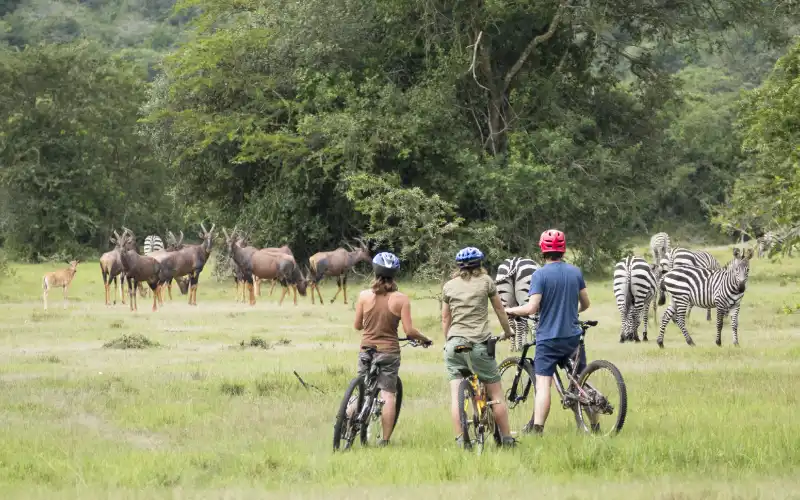
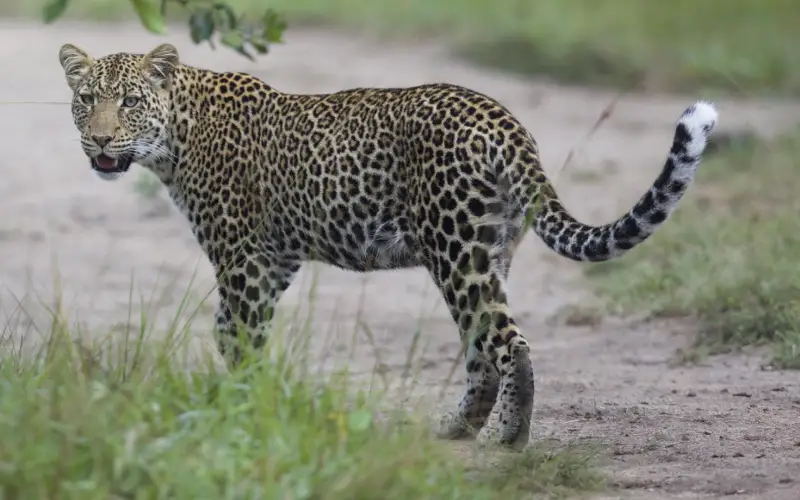
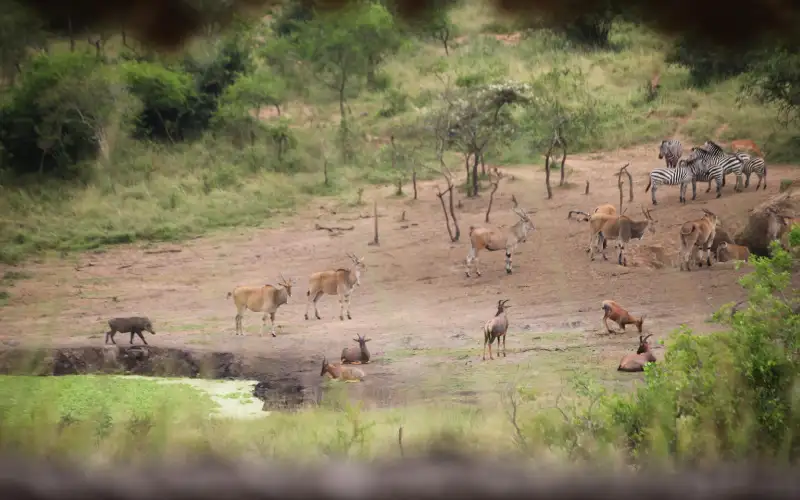
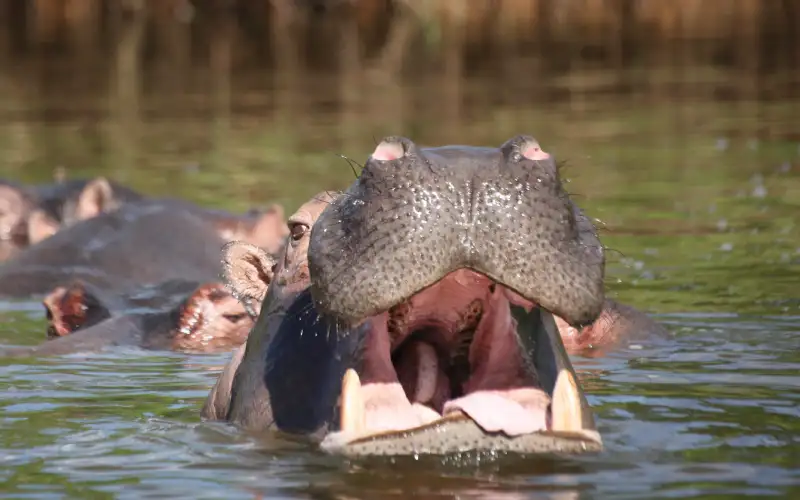
Lake Mburo National Park offers rich and varied wildlife viewing. Several antelope species can be spotted, including impala, defassa waterbuck, bushbuck, topi, oribi, klipspringer, and eland. Visitors are also likely to encounter plains zebra, warthog, and the endangered Rothschild’s giraffe, which was reintroduced to the park in 2015. The lake itself is home to large groups of hippos, often seen resting in the water. While elephants, rhinos, and lions are not found in the park, it still supports healthy buffalo herds, and lucky visitors may catch sight of a leopard, especially during night drives.
Scenery
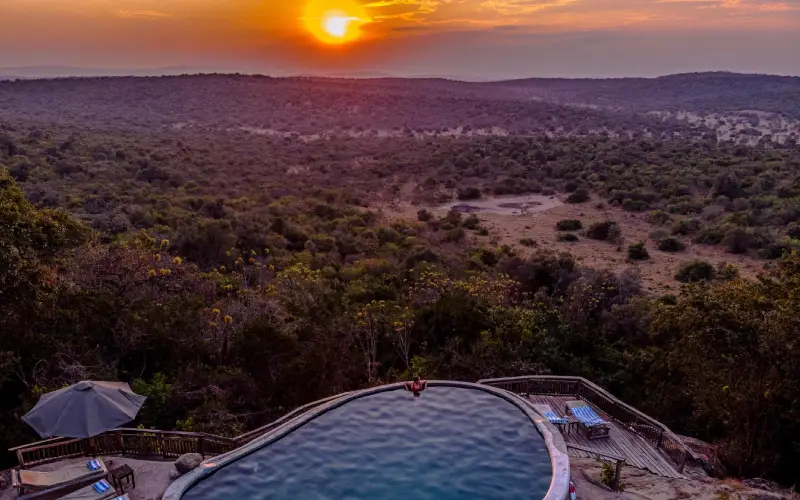
Lake Mburo National Park is centered around Lake Mburo itself, along with four smaller lakes that together form a wetland system stretching about 50km. One of the best viewpoints in the park is Kazuma Lookout, which offers sweeping views of these lakes and the surrounding landscape. The park is mainly made up of open savannah, though increasing woodland cover is changing the scenery, partly due to the absence of elephants. The grasslands are dotted with small forest patches and rocky hills, while papyrus swamps and wooded areas fringe the lakes, adding to the park’s natural diversity.
Activities
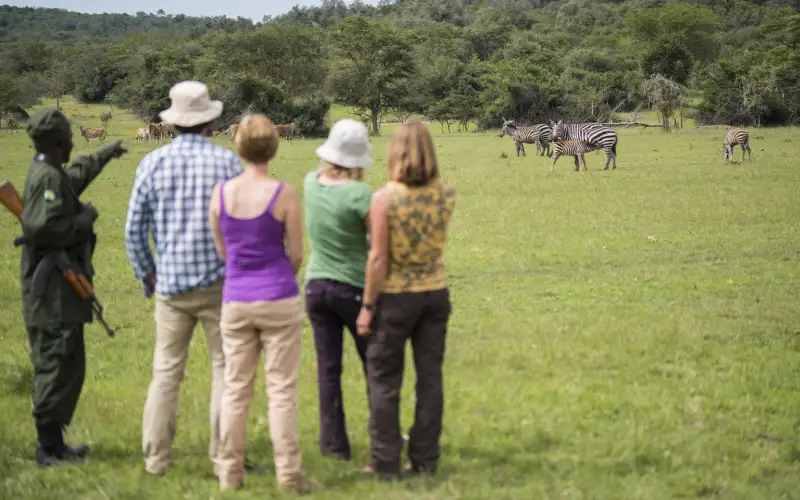
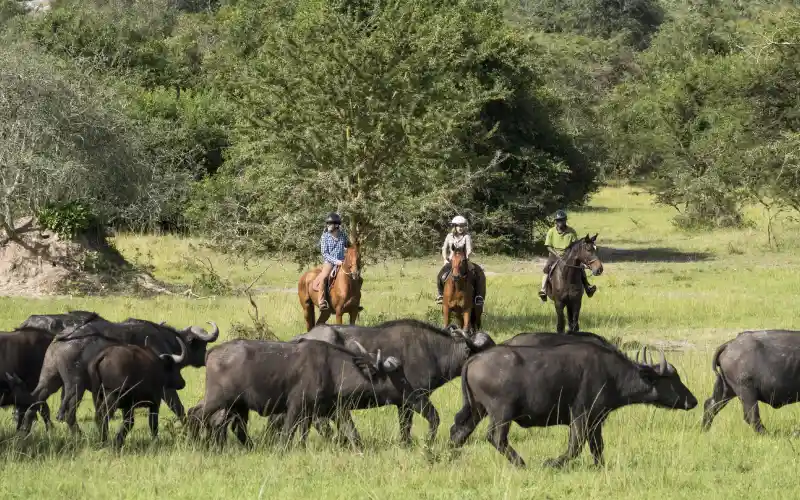
Whether you explore with a guide or on your own, daytime game drives are an excellent way to get familiar with the park and its wildlife. Guided night drives add excitement, often offering a good chance to spot elusive leopards. Boat trips on Lake Mburo provide close views of hippos along with a rich variety of waterbirds. For a more immersive experience, walking safaris are also available. Uniquely, this is the only park in Uganda where visitors can enjoy a safari on horseback.
Weather & Climate
Lake Mburo National Park experiences two rainy seasons, from March to May and again from September to December, with the heaviest rainfall typically occurring in April and November. The main dry period runs from June to August, while January and February are generally drier as well, making them suitable for travel.
Best Time To Visit
Lake Mburo National Park is a year-round destination, with reliable wildlife viewing in every season. The drier months—from January to February and June to August—offer the most comfortable weather and are often considered the best time to visit. However, June to August is also the peak travel period, meaning more visitors and higher prices. The wetter seasons, from March to May and September to December, shouldn’t be overlooked. During these months, the landscape becomes lush and green, and the clearer air enhances the park’s scenic beauty, creating a rewarding and more tranquil experience.
Want To Visit Lake Mburo NP
No data was found
​Wildlife & Animals – Lake Mburo NP

Lake Mburo National Park supports a diverse range of wildlife, offering rewarding sightings throughout the area. Although lions are no longer found here, the park is home to stable populations of leopard and spotted hyena. A wide variety of antelope can be seen, including impala, defassa waterbuck, eland, topi, duiker, oribi, bohor reedbuck, and klipspringer.

Large herds of buffalo—sometimes numbering up to 100—are commonly encountered, and Rothschild’s giraffe has been successfully reintroduced to the park. Other frequently seen animals include plains zebra, warthog, olive baboon, and vervet monkey. The lakes within the park provide habitat for hippos and crocodiles, adding to the richness of its wildlife experience.

Elephant
Giraffe
Hippo
Buffalo
Zebra
Wildebeest
Rhino
Lion
Leopard
Cheetah
Hyena
Wild Dog
Wildlife Highlights

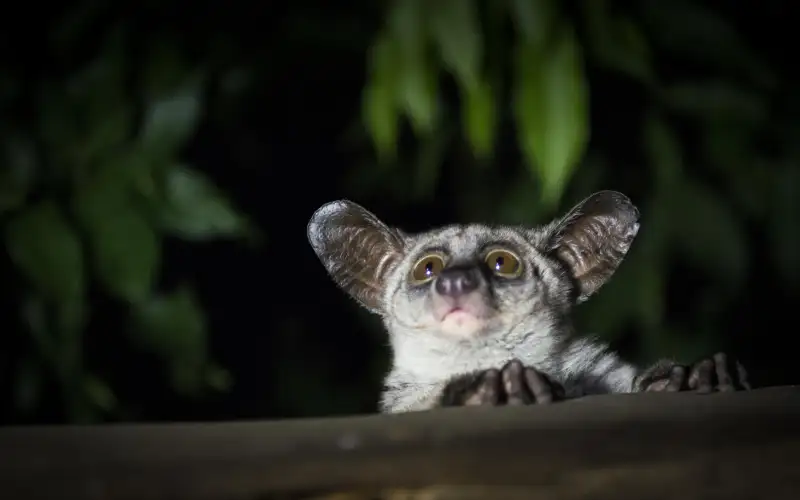
Lake Mburo National Park is one of Uganda’s best spots to see leopards, which are often observed during night drives, though sightings may be less common around the full moon. The park is unique in Uganda as the only natural home for impala, while plains zebra and eland are otherwise found only in Kidepo Valley National Park. An interesting behavior of the park’s bushbuck is their tendency to stand atop termite mounds, providing excellent wildlife-viewing opportunities.

Best Time for Wildlife Viewing

Lake Mburo National Park is a year-round destination, offering steady wildlife viewing throughout all seasons. The dry months, from January to February and June to August, are ideal for spotting animals congregating around rivers and waterholes. In the wet seasons, from March to May and September to December, wildlife is often visible in the open valleys, taking advantage of the lush, green landscapes.

Want To Visit Lake Mburo NP
No data was found
Wildlife Photos
lake mburo (8)
​Birds – Lake Mburo NP
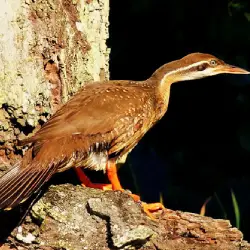
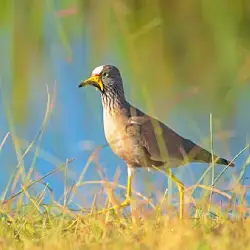
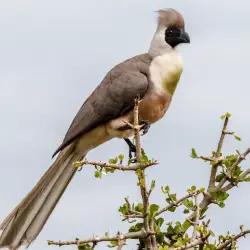
Lake Mburo National Park is home to over 310 bird species, making it a top destination for birdwatching in Uganda. It is especially notable for acacia-dwelling species like the black-collared barbet and the bare-faced go-away-bird, both found here at the northern edge of their range.Boat trips often reveal elusive birds such as the African finfoot and the striking Ross’s turaco. The park’s swamps provide habitat for papyrus specialists, including the papyrus gonolek, blue-headed coucal, and the rare shoebill, which appears only occasionally. Migratory birds also visit the park between November and April, adding to its rich avian diversity.

Notable Birds in Lake Mburo NP

Bateleur
Common
Black-bellied bustard
Common
African finfoot
Locally Common
African wattled
Common
Bare-faced go-away-bird
Common
Best Time for Bird Watching

Birdwatching in Lake Mburo National Park is rewarding throughout the year. The driest months, June and July, offer the most reliable conditions, while March and April experience the heaviest rainfall. During these wet months, some roads may become difficult to pass, which can limit time for birding. Migratory species are typically present between November and April, adding to the park’s year-round avian variety.

Want To Visit Lake Mburo NP
No data was found
Facts & Figures

Bird Species

450+

Migratory Birds

Nov to Apr

Best Time To Visit – Lake Mburo NP

Jan

Feb

Mar

Apr

May

Jun

Jul

Aug

Sep

Oct

Nov

Dec

Lake Mburo National Park provides reliable wildlife viewing throughout the year, but the dry seasons—from January to February and June to August—are ideal, as animals concentrate around the lakes and other permanent water sources. Wildlife can still be seen during the wet seasons, from March to May and September to December, when the park is at its greenest and most scenic. For night drives targeting leopards, it is best to avoid periods around the full moon, as sightings are less frequent then.
Best Time
January to February and June to August (Dry seasons)
High Season
June to September (The peak of the gorilla trekking season, which brings more people to Lake Mburo as well)
Low Season
April to May and October to November
Best Weather
June to August and January to February (Little rainfall)
Worst Weather
March to May and September to November (High rainfall; traveling on roads may become challenging)
January to February & June to August – Dry Season
Excellent wildlife viewing as vegetation thins and animals gather near the lake
More sunny days provide better weather for activities
- Hazy air can reduce visibility and make the scenery less striking
March to May & September to December – Wet Season
Wildlife can still be easily spotted in the open valleys during the wet seasons
Fewer visitors and potentially lower rates make for a quieter experience
Migratory birds are active and add to the park’s diversity
Clear air and lush green landscapes enhance the scenery
- Wet roads may be challenging to navigate
- Occasional rainstorms can disrupt game drives
Want To Visit Lake Mburo NP
No data was found
Wildlife Photos
lake mburo (8)
Weather & Climate – Lake Mburo NP
Lake Mburo National Park enjoys a mild and comfortable climate. Daytime temperatures average around 26°C (79°F), while nighttime temperatures drop to about 16°C (61°F). The driest months are typically June and July, with January and February also experiencing relatively low rainfall. The park experiences two distinct wet seasons: from March to May and again from September to December.
Dry Season – January to February & June to August

January & February – These months experience moderate rainfall, more than June or July but less than the wetter periods of the year. Typical daytime temperatures reach around 27°C (81°F), while mornings are cooler, averaging 15°C (59°F).

June, July & August – June and July are generally very dry, though occasional showers can occur. August marks the transition from the dry to the wet season, with rainfall gradually increasing. Afternoon temperatures average 26°C (79°F), and mornings remain cool at about 15°C (59°F).

Wet Season – March to May & September to December

March, April & May – This is the wettest season in Lake Mburo, with April receiving the highest rainfall. Daytime temperatures typically average 27°C (81°F), while mornings are cooler at around 15°C (59°F).

September, October, November & December – Rainfall during these months is slightly less intense than in the March–May period, though November often sees a peak in showers. Daytime temperatures hover around 26°C (79°F), dropping to approximately 16°C (61°F) at night.

Want To Visit Lake Mburo NP
No data was found
Lake Mburo National Park
Lake Mburo NP Photos
lake mburo (7)
​Getting There – Lake Mburo NP

Lake Mburo National Park is situated in western Uganda and is typically visited as part of a gorilla trekking tour. It is commonly included as a one- or two-night stop when traveling between the capital, Kampala, or nearby Entebbe, and Bwindi Impenetrable National Park. The park lies about 230 km (140 mi) from Kampala and 250 km (155 mi) from Entebbe, which is roughly a 5–6 hour drive. From Lake Mburo, the distance to Bwindi ranges from 225 km to 275 km (140–170 mi), depending on the gorilla trekking base, with driving times of approximately 5–7 hours.

Most international visitors arrive at Entebbe International Airport (EBB), located 46 km (29 mi) from Kampala. Local tour operators typically handle airport or hotel pick-up and provide all transportation throughout the safari as part of the package.

*Driving times are only a rough indication. You should always consider the possibility of significant delays.
Main Park Map
Airlines & Ticket Prices

To book your flight to Entebbe International Airport (EBB), check travel sites such as Skyscanner and also visit airline websites directly. These sources will show available flights, schedules, and current ticket prices.

Domestic Flights

As part of your safari package, Bush 2 City Adventure typically arranges domestic flights within Uganda. While most visitors do not usually fly to Mbarara—the nearest town to Lake Mburo—scheduled flights are available directly through AeroLink. From Mbarara, the journey to Lake Mburo covers 55 km (34 mi) and takes just over one hour by road.

Passport, Visa & Other Entry Requirements

Please check our How To Get to Uganda page to learn more about passport, visa and other entry requirements.

Want To Visit Lake Mburo NP
No data was found
​Malaria & Safety – Lake Mburo NP
Safety

In our experience, most wildlife reserves and national parks in Uganda, including Lake Mburo National Park, can be visited safely—particularly when traveling on a guided tour. For the latest safety information, it is recommended to consult official government travel advisories (see the “Government Travel Advice for Uganda” link below).

Malaria & Vaccinations

Before traveling to Uganda, it is strongly recommended to ensure you are up to date on certain vaccinations. Protecting yourself against malaria is also essential, so taking antimalarial medication is advised. Additionally, use mosquito repellent—preferably those containing DEET—especially in the evenings when the risk of mosquito bites is highest.

Wildlife Viewing

Wildlife viewing in Lake Mburo National Park is generally very safe when you follow park regulations and heed your guide’s instructions. Be sure to also review the “Wildlife Viewing Safety Precautions” listed below for a secure and enjoyable experience.

Want To Visit Lake Mburo NP
No data was found
Accommodations – Lake Mburo NP
Want To Visit Lake Mburo NP
No data was found
Overview – Lake Mburo NP
Lake Mburo National Park may be one of Uganda’s smaller parks, but it offers beautiful scenery and a convenient stopover for travelers heading from Kampala to Bwindi Impenetrable National Park. Despite its size, the park is notable for hosting species that are uncommon in other parts of the country, such as plains zebras, eland, and impala. While elephants, rhinos, and lions are not found here, visitors can still encounter a variety of wildlife, including Rothschild’s giraffes, buffalo, hippos, and leopards, making it a rewarding destination for a short safari experience.
lake mburo (7)
Best Time To Go
January to February and June to August (Dry seasons)
High Season
June to September (Peak time for Uganda)
Size
260km² / 100mi²
Altitude
1,239-1,607m / 4,065-5,272ft
Pros & Cons
Enjoy scenic boat trips on Lake Mburo
Wide range of comfortable accommodation options
Guided walks and horseback safaris available
Night drives provide a good chance to spot leopards
Convenient stop between Kampala and Bwindi
- No elephants, lions, or rhinos
- Limited routes for wildlife viewing
Wildlife
Lake Mburo National Park offers rich and varied wildlife viewing. Several antelope species can be spotted, including impala, defassa waterbuck, bushbuck, topi, oribi, klipspringer, and eland. Visitors are also likely to encounter plains zebra, warthog, and the endangered Rothschild’s giraffe, which was reintroduced to the park in 2015. The lake itself is home to large groups of hippos, often seen resting in the water. While elephants, rhinos, and lions are not found in the park, it still supports healthy buffalo herds, and lucky visitors may catch sight of a leopard, especially during night drives.
Scenery
Lake Mburo National Park is centered around Lake Mburo itself, along with four smaller lakes that together form a wetland system stretching about 50km. One of the best viewpoints in the park is Kazuma Lookout, which offers sweeping views of these lakes and the surrounding landscape. The park is mainly made up of open savannah, though increasing woodland cover is changing the scenery, partly due to the absence of elephants. The grasslands are dotted with small forest patches and rocky hills, while papyrus swamps and wooded areas fringe the lakes, adding to the park’s natural diversity.
Weather & Climate
Lake Mburo National Park experiences two rainy seasons, from March to May and again from September to December, with the heaviest rainfall typically occurring in April and November. The main dry period runs from June to August, while January and February are generally drier as well, making them suitable for travel.
Best Time To Visit
Lake Mburo National Park is a year-round destination, with reliable wildlife viewing in every season. The drier months—from January to February and June to August—offer the most comfortable weather and are often considered the best time to visit. However, June to August is also the peak travel period, meaning more visitors and higher prices. The wetter seasons, from March to May and September to December, shouldn’t be overlooked. During these months, the landscape becomes lush and green, and the clearer air enhances the park’s scenic beauty, creating a rewarding and more tranquil experience.
Want To Visit Lake Mburo NP
No data was found
​Wildlife & Animals – Lake Mburo NP

Lake Mburo National Park supports a diverse range of wildlife, offering rewarding sightings throughout the area. Although lions are no longer found here, the park is home to stable populations of leopard and spotted hyena. A wide variety of antelope can be seen, including impala, defassa waterbuck, eland, topi, duiker, oribi, bohor reedbuck, and klipspringer.

Large herds of buffalo—sometimes numbering up to 100—are commonly encountered, and Rothschild’s giraffe has been successfully reintroduced to the park. Other frequently seen animals include plains zebra, warthog, olive baboon, and vervet monkey. The lakes within the park provide habitat for hippos and crocodiles, adding to the richness of its wildlife experience.

Elephant
Giraffe
Hippo
Buffalo
Zebra
Wildebeest
Rhino
Lion
Leopard
Cheetah
Hyena
Wild Dog
Wildlife Highlights

Lake Mburo National Park is one of Uganda’s best spots to see leopards, which are often observed during night drives, though sightings may be less common around the full moon. The park is unique in Uganda as the only natural home for impala, while plains zebra and eland are otherwise found only in Kidepo Valley National Park. An interesting behavior of the park’s bushbuck is their tendency to stand atop termite mounds, providing excellent wildlife-viewing opportunities.

Best Time for Wildlife Viewing

Lake Mburo National Park is a year-round destination, offering steady wildlife viewing throughout all seasons. The dry months, from January to February and June to August, are ideal for spotting animals congregating around rivers and waterholes. In the wet seasons, from March to May and September to December, wildlife is often visible in the open valleys, taking advantage of the lush, green landscapes.

Want To Visit Lake Mburo NP
No data was found
Wildlife Photos
lake mburo (8)
​Birds – Lake Mburo NP
Lake Mburo National Park is home to over 310 bird species, making it a top destination for birdwatching in Uganda. It is especially notable for acacia-dwelling species like the black-collared barbet and the bare-faced go-away-bird, both found here at the northern edge of their range.Boat trips often reveal elusive birds such as the African finfoot and the striking Ross’s turaco. The park’s swamps provide habitat for papyrus specialists, including the papyrus gonolek, blue-headed coucal, and the rare shoebill, which appears only occasionally. Migratory birds also visit the park between November and April, adding to its rich avian diversity.

Notable Birds in Lake Mburo NP

Bateleur
Common
Black-bellied bustard
Common
African finfoot
Locally Common
African wattled
Common
Bare-faced go-away-bird
Common
Best Time for Bird Watching

Birdwatching in Lake Mburo National Park is rewarding throughout the year. The driest months, June and July, offer the most reliable conditions, while March and April experience the heaviest rainfall. During these wet months, some roads may become difficult to pass, which can limit time for birding. Migratory species are typically present between November and April, adding to the park’s year-round avian variety.

Want To Visit Lake Mburo NP
No data was found
Facts & Figures

Bird Species

450+

Migratory Birds

Nov to Apr

Best Time To Visit – Lake Mburo NP

Jan

Feb

Mar

Apr

May

Jun

Jul

Aug

Sep

Oct

Nov

Dec

Lake Mburo National Park provides reliable wildlife viewing throughout the year, but the dry seasons—from January to February and June to August—are ideal, as animals concentrate around the lakes and other permanent water sources. Wildlife can still be seen during the wet seasons, from March to May and September to December, when the park is at its greenest and most scenic. For night drives targeting leopards, it is best to avoid periods around the full moon, as sightings are less frequent then.
Best Time
January to February and June to August (Dry seasons)
High Season
June to September (The peak of the gorilla trekking season, which brings more people to Lake Mburo as well)
Low Season
April to May and October to November
Best Weather
June to August and January to February (Little rainfall)
Worst Weather
March to May and September to November (High rainfall; traveling on roads may become challenging)
January to February & June to August – Dry Season
Excellent wildlife viewing as vegetation thins and animals gather near the lake
More sunny days provide better weather for activities
- Hazy air can reduce visibility and make the scenery less striking
March to May & September to December – Wet Season
Wildlife can still be easily spotted in the open valleys during the wet seasons
Fewer visitors and potentially lower rates make for a quieter experience
Migratory birds are active and add to the park’s diversity
Clear air and lush green landscapes enhance the scenery
- Wet roads may be challenging to navigate
- Occasional rainstorms can disrupt game drives
Want To Visit Lake Mburo NP
No data was found
Wildlife Photos
lake mburo (8)
Weather & Climate – Lake Mburo NP
Lake Mburo National Park enjoys a mild and comfortable climate. Daytime temperatures average around 26°C (79°F), while nighttime temperatures drop to about 16°C (61°F). The driest months are typically June and July, with January and February also experiencing relatively low rainfall. The park experiences two distinct wet seasons: from March to May and again from September to December.
Dry Season – January to February & June to August

January & February – These months experience moderate rainfall, more than June or July but less than the wetter periods of the year. Typical daytime temperatures reach around 27°C (81°F), while mornings are cooler, averaging 15°C (59°F).

June, July & August – June and July are generally very dry, though occasional showers can occur. August marks the transition from the dry to the wet season, with rainfall gradually increasing. Afternoon temperatures average 26°C (79°F), and mornings remain cool at about 15°C (59°F).

Wet Season – March to May & September to December

March, April & May – This is the wettest season in Lake Mburo, with April receiving the highest rainfall. Daytime temperatures typically average 27°C (81°F), while mornings are cooler at around 15°C (59°F).

September, October, November & December – Rainfall during these months is slightly less intense than in the March–May period, though November often sees a peak in showers. Daytime temperatures hover around 26°C (79°F), dropping to approximately 16°C (61°F) at night.

Want To Visit Lake Mburo NP
No data was found
Lake Mburo National Park
Lake Mburo NP Photos
lake mburo (7)
​Getting There – Lake Mburo NP

Lake Mburo National Park is situated in western Uganda and is typically visited as part of a gorilla trekking tour. It is commonly included as a one- or two-night stop when traveling between the capital, Kampala, or nearby Entebbe, and Bwindi Impenetrable National Park. The park lies about 230 km (140 mi) from Kampala and 250 km (155 mi) from Entebbe, which is roughly a 5–6 hour drive. From Lake Mburo, the distance to Bwindi ranges from 225 km to 275 km (140–170 mi), depending on the gorilla trekking base, with driving times of approximately 5–7 hours.

Most international visitors arrive at Entebbe International Airport (EBB), located 46 km (29 mi) from Kampala. Local tour operators typically handle airport or hotel pick-up and provide all transportation throughout the safari as part of the package.

*Driving times are only a rough indication. You should always consider the possibility of significant delays.
Main Park Map
Airlines & Ticket Prices

To book your flight to Entebbe International Airport (EBB), check travel sites such as Skyscanner and also visit airline websites directly. These sources will show available flights, schedules, and current ticket prices.

Domestic Flights

As part of your safari package, Bush 2 City Adventure typically arranges domestic flights within Uganda. While most visitors do not usually fly to Mbarara—the nearest town to Lake Mburo—scheduled flights are available directly through AeroLink. From Mbarara, the journey to Lake Mburo covers 55 km (34 mi) and takes just over one hour by road.

Passport, Visa & Other Entry Requirements

Please check our How To Get to Uganda page to learn more about passport, visa and other entry requirements.

Want To Visit Lake Mburo NP
No data was found
​Malaria & Safety – Lake Mburo NP
Safety

In our experience, most wildlife reserves and national parks in Uganda, including Lake Mburo National Park, can be visited safely—particularly when traveling on a guided tour. For the latest safety information, it is recommended to consult official government travel advisories (see the “Government Travel Advice for Uganda” link below).

Malaria & Vaccinations

Before traveling to Uganda, it is strongly recommended to ensure you are up to date on certain vaccinations. Protecting yourself against malaria is also essential, so taking antimalarial medication is advised. Additionally, use mosquito repellent—preferably those containing DEET—especially in the evenings when the risk of mosquito bites is highest.

Wildlife Viewing

Wildlife viewing in Lake Mburo National Park is generally very safe when you follow park regulations and heed your guide’s instructions. Be sure to also review the “Wildlife Viewing Safety Precautions” listed below for a secure and enjoyable experience.

Want To Visit Lake Mburo NP
No data was found

Explore Lake Mburo National Park Safari Tours

No data was found

Book your Kilimanjaro trek

Our team is always here to help

General Travel Safety Precautions

Embarking on an African safari promises an adventure of a lifetime, showcasing the continent’s rich wildlife, breathtaking landscapes, and diverse cultures. While safaris are widely considered safe, especially those organized through reputable tour operators, it’s prudent to take certain precautions to ensure a smooth and secure experience. Here are some essential safety tips to consider:

Cities & Urban Areas: Safety Precautions

Traveling through Africa offers an enriching experience filled with breathtaking landscapes, diverse cultures, and unparalleled wildlife encounters. While it’s generally safe, especially on organized tours or safaris, navigating urban environments requires a bit of savvy to ensure your trip remains worry-free. Here are some straightforward tips to keep in mind, whether you’re exploring bustling metropolises or serene landscapes:

Wildlife Viewing Safety Precautions

Exploring the wild through a safari adventure is an exhilarating experience that brings you closer to nature’s most fascinating wildlife. Whether you opt for a guided tour with an experienced professional or decide to navigate the trails on a self-drive journey, safety is paramount to ensure an enjoyable and incident-free adventure. Here are some essential safety guidelines and tips to help you navigate your safari safely:
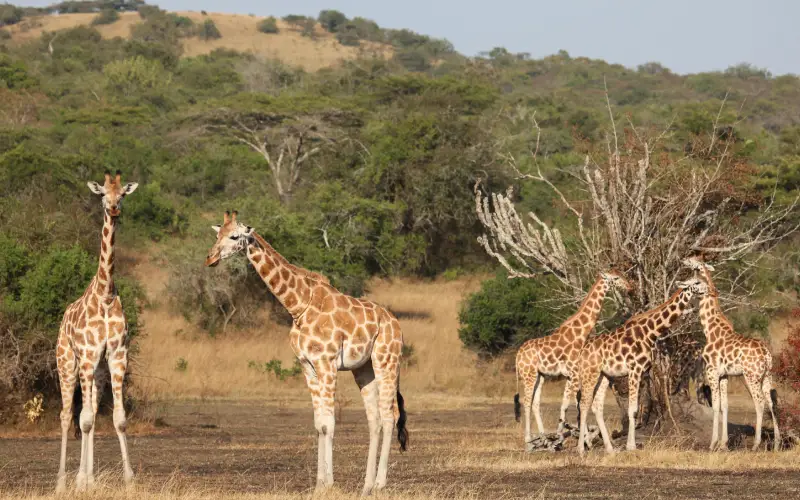
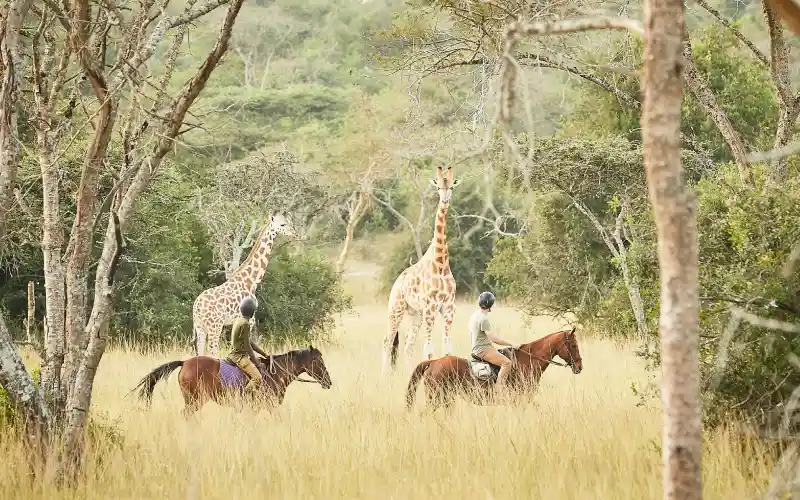
Photo Gallery of Lake Mburo National Park

Map of Lake Mburo National Park

Photo Gallery of Lake Mburo National Park

Main Park Map