
Jackson is a distinguished expert on Africa and a seasoned trip planner, specializing in safaris across Tanzania, Kenya, Botswana, Zambia, and Zimbabwe. He also manages safari operations in Rwanda, Uganda, and South Africa.

Jackson is a distinguished expert on Africa and a seasoned trip planner, specializing in safaris across Tanzania, Kenya, Botswana, Zambia, and Zimbabwe. He also manages safari operations in Rwanda, Uganda, and South Africa.
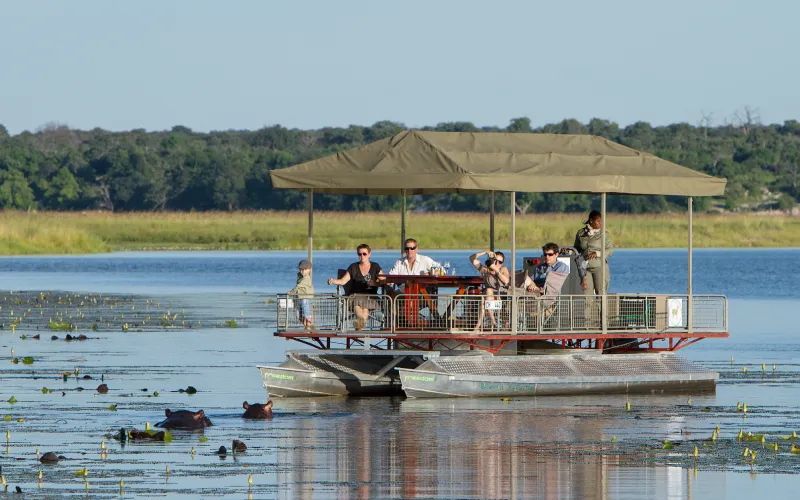
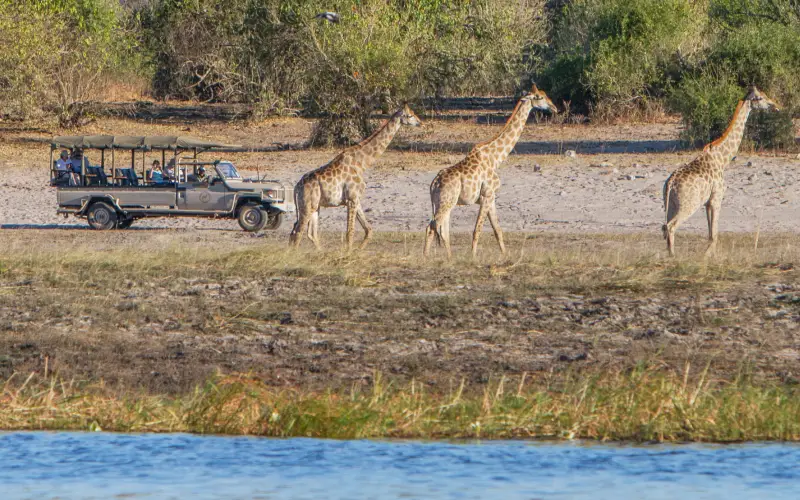
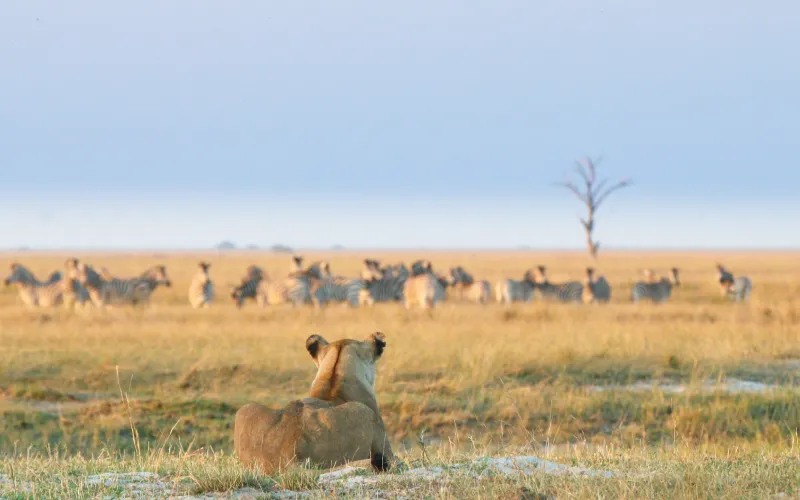
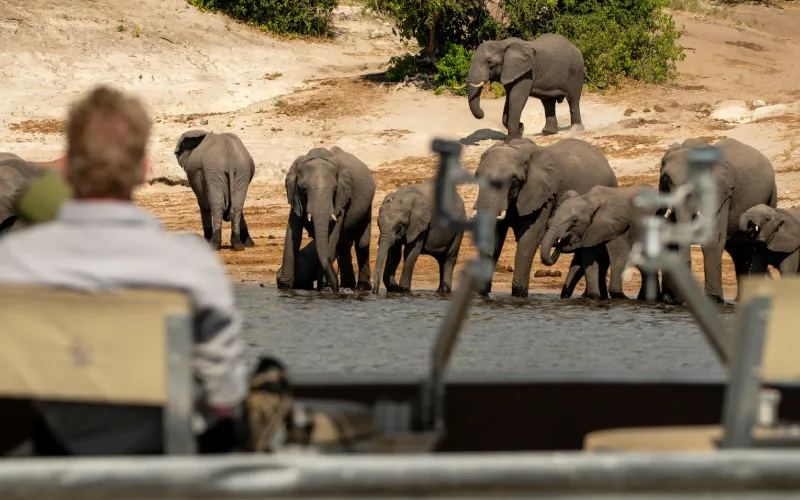
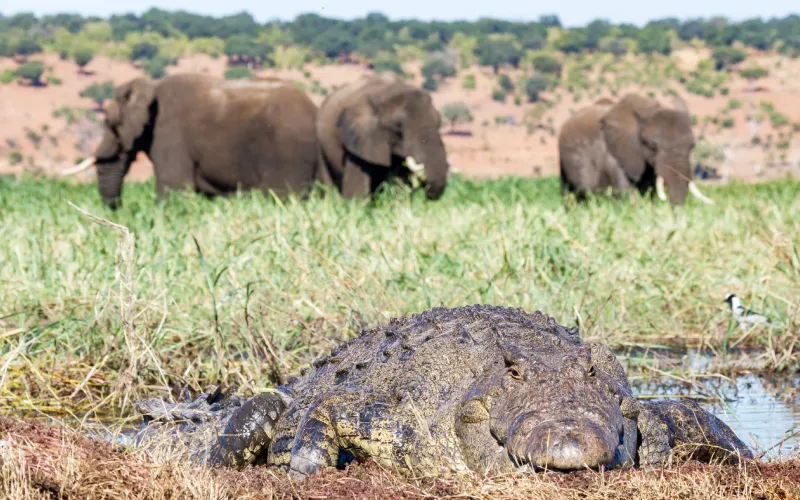
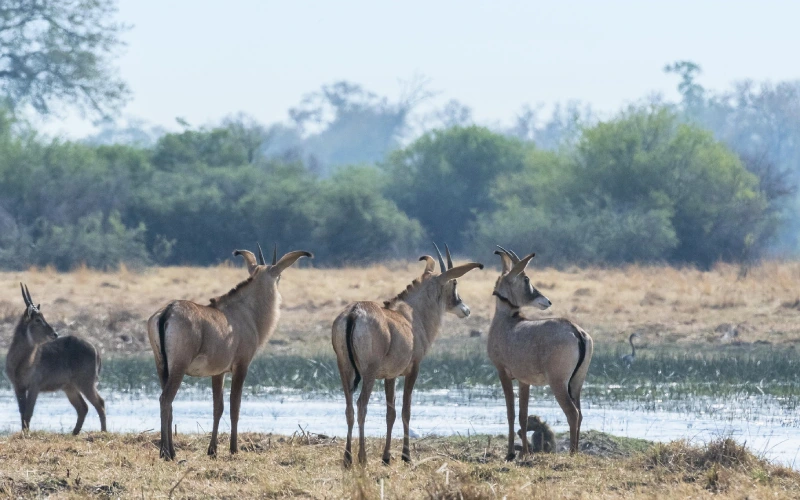
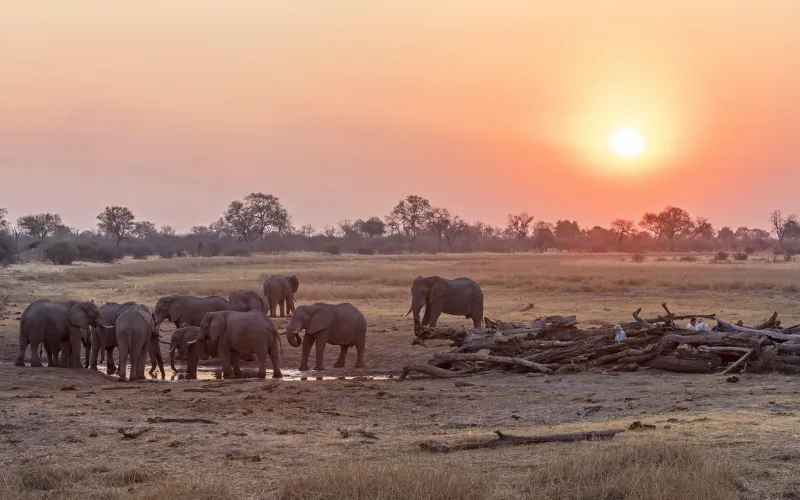
Chobe National Park is a wildlife haven teeming with diversity. During the dry months, you can often find elephants and buffalo gathering along the riverbanks. The park is also rich in plains zebra, puku, and impala, while smaller numbers of greater kudu and sable antelope roam the interior. Lions are a common sight, and if you’re fortunate, you might spot the elusive wild dogs as they traverse the terrain.


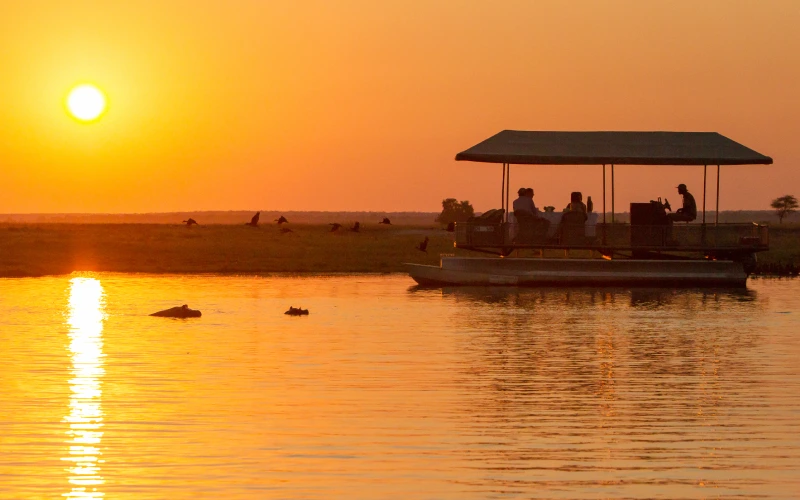
As countless animals traverse the floodplains, their movement kicks up clouds of dust, making for dramatic and breathtaking photo opportunities, particularly at sunset. Though the larger wildlife often captures the spotlight, the park also shelters more elusive residents, like the Chobe subspecies of bushbuck. In the marshy areas, red lechwes are a common sight, enhancing the park’s rich biodiversity. Smaller predators, including Selous’ mongoose, serval, and wild cats, also inhabit the landscape, subtly enriching the vibrant tapestry of life in this extraordinary region.
Wildlife viewing at Chobe is a seasonal spectacle, with each period offering unique encounters. During the dry months from May to October, the Chobe River in the north transforms into a wildlife haven, drawing animals to its vital water source. Conversely, in the wet season from December to April, the park’s interior pans become the focal point, teeming with a variety of species attracted to the lush greenery. Each season unveils a distinct aspect of Chobe’s rich ecosystem, making it a captivating destination for nature enthusiasts throughout the year.

Jackson is a distinguished expert on Africa and a seasoned trip planner, specializing in safaris across Tanzania, Kenya, Botswana, Zambia, and Zimbabwe. He also manages safari operations in Rwanda, Uganda, and South Africa.


Chobe is an exceptional bird-watching destination throughout the year, but the peak birding months are from November to April. During this period, migratory species flock to the park, and many birds enter their breeding season. This results in large colonies of waterbirds nesting on the river’s sandbanks, creating a mesmerizing spectacle. For those interested in mammal viewing, the dry months from May to October are ideal, as animals congregate around water sources, making them easier to observe.
450+
Nov to Apr

Jackson is a distinguished expert on Africa and a seasoned trip planner, specializing in safaris across Tanzania, Kenya, Botswana, Zambia, and Zimbabwe. He also manages safari operations in Rwanda, Uganda, and South Africa.


Jackson is a distinguished expert on Africa and a seasoned trip planner, specializing in safaris across Tanzania, Kenya, Botswana, Zambia, and Zimbabwe. He also manages safari operations in Rwanda, Uganda, and South Africa.
The last showers marking the end of the Wet season normally fall in April. From May, the park becomes drier and drier. June and July are the coolest months; however, temperatures begin increasing in August and peak in October.
The first rains bring relief. It doesn’t usually rain all day, but thunderstorms in the afternoon are common. It’s hot throughout the season with afternoon temperatures of around 32°C/90°F. Mornings are pleasant.
Jackson is a distinguished expert on Africa and a seasoned trip planner, specializing in safaris across Tanzania, Kenya, Botswana, Zambia, and Zimbabwe. He also manages safari operations in Rwanda, Uganda, and South Africa.
Chobe National Park has several areas that can be visited. The most popular and accessible area is the riverfront, which is just outside Kasane. Chobe Gate is located 6km/3mi west of Kasane and 80km/49mi west of Victoria Falls. The drive from Kasane takes 10 minutes and from Victoria Falls it’s just over an hour*.
Visitors to this area usually fly into Kasane Airport (BBK), and self-drive visitors can pick up their 4×4 there.
The Savuti and Linyanti areas can be reached by 4×4 in the Dry season, but most people fly in by chartered plane to their lodge.
Another popular point of entry to the country is Maun Airport (MUB). From here you can fly on to Kasane. Driving is also possible – it’s about 600km/370mi and it takes about 7 hours*.
If you arrange your flights, we will happily handle all the ground arrangements for you.
Starting from London
Starting from London, the easiest and most direct route to Botswana is to fly to Johannesburg, often with British Airways, and then connect to one of Botswana’s four gateway airports: Maun or Kasane in Botswana, or Livingstone or Victoria Falls, located near the Victoria Falls in Zambia or Zimbabwe, respectively.
These flights depart from Heathrow every day of the week.
Starting from the USA
Starting from the USA, you have several options for your flight arrangements. Broadly speaking, your two main choices are:
Direct Flights to Johannesburg: You can fly directly from major US cities such as New York, Atlanta, or Washington D.C. to Johannesburg, South Africa, with airlines like Delta or South African Airways. From Johannesburg, you can connect to Botswana’s gateway airports—Maun or Kasane in Botswana, or Livingstone or Victoria Falls near the Victoria Falls in Zambia or Zimbabwe.
Connecting Flights via Europe: Alternatively, you can opt for a connecting flight through major European hubs such as London, Paris, or Frankfurt. You can take a flight from these cities to Johannesburg, then proceed to one of the gateway airports in Botswana or near Victoria Falls.
You can arrange your flights from the USA to Botswana and back via London or another route and simply inform us of the flight times and carriers. Bush 2 City Adventure will handle all your arrangements within Botswana, including smaller flights and any plans in Livingstone.
This approach is particularly sensible if you are flying directly from the USA, such as on the route linking Atlanta to Johannesburg. If you decide to arrange your intercontinental flights, it’s advisable to book any regional connecting flights at the same time with the same company that handles your intercontinental travel. For example, flights between Johannesburg and Maun, Kasane, Livingstone, or Victoria Falls. This way, you avoid the risk of having two unconnected flights in case of schedule changes.
We arrange chartered flights and helicopter transfers, which are often included in our tour packages.
Domestic flights to Kasane can be booked through:
For detailed information on passports, visas, vaccinations, and other entry requirements, please visit our “Getting There – Botswana” page. This resource will help ensure you’re fully prepared for your journey.
Jackson is a distinguished expert on Africa and a seasoned trip planner, specializing in safaris across Tanzania, Kenya, Botswana, Zambia, and Zimbabwe. He also manages safari operations in Rwanda, Uganda, and South Africa.
Botswana offers a secure and unforgettable safari experience, particularly in the renowned Chobe National Park. Air travel between lodges is a convenient and safe way to explore the country’s diverse landscapes.
For those seeking a more independent adventure, self-driving in Botswana is a popular and safe option. Kasane, a well-connected town, serves as an excellent base for self-drive safaris. However, it’s advisable to check road conditions before venturing to remote areas like Savuti or Linyanti.
To stay informed, it’s recommended to review the latest travel advisories for Botswana.
Before visiting Botswana, it’s crucial to consult with your travel clinic or local doctor for advice on necessary vaccinations. Chobe National Park is located in a high-risk malaria zone, so taking antimalarial medication is strongly recommended. Additionally, it’s wise to use insect repellent with at least 30% DEET and wear protective clothing in the evenings to minimize mosquito bites. The risk of malaria is highest during the rainy season, so extra precautions should be taken during this time.
Animal incidents are exceptionally rare. Rest assured, you’ll be safe as long as you pay attention to the safety briefing provided during your lodge check-ins.
For more information, please read the ‘Wildlife Viewing Safety Precautions’ below.
Jackson is a distinguished expert on Africa and a seasoned trip planner, specializing in safaris across Tanzania, Kenya, Botswana, Zambia, and Zimbabwe. He also manages safari operations in Rwanda, Uganda, and South Africa.
Jackson is a distinguished expert on Africa and a seasoned trip planner, specializing in safaris across Tanzania, Kenya, Botswana, Zambia, and Zimbabwe. He also manages safari operations in Rwanda, Uganda, and South Africa.
Jackson is a distinguished expert on Africa and a seasoned trip planner, specializing in safaris across Tanzania, Kenya, Botswana, Zambia, and Zimbabwe. He also manages safari operations in Rwanda, Uganda, and South Africa.
Chobe National Park is a wildlife haven teeming with diversity. During the dry months, you can often find elephants and buffalo gathering along the riverbanks. The park is also rich in plains zebra, puku, and impala, while smaller numbers of greater kudu and sable antelope roam the interior. Lions are a common sight, and if you’re fortunate, you might spot the elusive wild dogs as they traverse the terrain.
As countless animals traverse the floodplains, their movement kicks up clouds of dust, making for dramatic and breathtaking photo opportunities, particularly at sunset. Though the larger wildlife often captures the spotlight, the park also shelters more elusive residents, like the Chobe subspecies of bushbuck. In the marshy areas, red lechwes are a common sight, enhancing the park’s rich biodiversity. Smaller predators, including Selous’ mongoose, serval, and wild cats, also inhabit the landscape, subtly enriching the vibrant tapestry of life in this extraordinary region.
Wildlife viewing at Chobe is a seasonal spectacle, with each period offering unique encounters. During the dry months from May to October, the Chobe River in the north transforms into a wildlife haven, drawing animals to its vital water source. Conversely, in the wet season from December to April, the park’s interior pans become the focal point, teeming with a variety of species attracted to the lush greenery. Each season unveils a distinct aspect of Chobe’s rich ecosystem, making it a captivating destination for nature enthusiasts throughout the year.
Jackson is a distinguished expert on Africa and a seasoned trip planner, specializing in safaris across Tanzania, Kenya, Botswana, Zambia, and Zimbabwe. He also manages safari operations in Rwanda, Uganda, and South Africa.
Chobe is an exceptional bird-watching destination throughout the year, but the peak birding months are from November to April. During this period, migratory species flock to the park, and many birds enter their breeding season. This results in large colonies of waterbirds nesting on the river’s sandbanks, creating a mesmerizing spectacle. For those interested in mammal viewing, the dry months from May to October are ideal, as animals congregate around water sources, making them easier to observe.
450+
Nov to Apr
Jackson is a distinguished expert on Africa and a seasoned trip planner, specializing in safaris across Tanzania, Kenya, Botswana, Zambia, and Zimbabwe. He also manages safari operations in Rwanda, Uganda, and South Africa.
Jackson is a distinguished expert on Africa and a seasoned trip planner, specializing in safaris across Tanzania, Kenya, Botswana, Zambia, and Zimbabwe. He also manages safari operations in Rwanda, Uganda, and South Africa.
The last showers marking the end of the Wet season normally fall in April. From May, the park becomes drier and drier. June and July are the coolest months; however, temperatures begin increasing in August and peak in October.
The first rains bring relief. It doesn’t usually rain all day, but thunderstorms in the afternoon are common. It’s hot throughout the season with afternoon temperatures of around 32°C/90°F. Mornings are pleasant.
Jackson is a distinguished expert on Africa and a seasoned trip planner, specializing in safaris across Tanzania, Kenya, Botswana, Zambia, and Zimbabwe. He also manages safari operations in Rwanda, Uganda, and South Africa.
Chobe National Park has several areas that can be visited. The most popular and accessible area is the riverfront, which is just outside Kasane. Chobe Gate is located 6km/3mi west of Kasane and 80km/49mi west of Victoria Falls. The drive from Kasane takes 10 minutes and from Victoria Falls it’s just over an hour*.
Visitors to this area usually fly into Kasane Airport (BBK), and self-drive visitors can pick up their 4×4 there.
The Savuti and Linyanti areas can be reached by 4×4 in the Dry season, but most people fly in by chartered plane to their lodge.
Another popular point of entry to the country is Maun Airport (MUB). From here you can fly on to Kasane. Driving is also possible – it’s about 600km/370mi and it takes about 7 hours*.
If you arrange your flights, we will happily handle all the ground arrangements for you.
Starting from London
Starting from London, the easiest and most direct route to Botswana is to fly to Johannesburg, often with British Airways, and then connect to one of Botswana’s four gateway airports: Maun or Kasane in Botswana, or Livingstone or Victoria Falls, located near the Victoria Falls in Zambia or Zimbabwe, respectively.
These flights depart from Heathrow every day of the week.
Starting from the USA
Starting from the USA, you have several options for your flight arrangements. Broadly speaking, your two main choices are:
Direct Flights to Johannesburg: You can fly directly from major US cities such as New York, Atlanta, or Washington D.C. to Johannesburg, South Africa, with airlines like Delta or South African Airways. From Johannesburg, you can connect to Botswana’s gateway airports—Maun or Kasane in Botswana, or Livingstone or Victoria Falls near the Victoria Falls in Zambia or Zimbabwe.
Connecting Flights via Europe: Alternatively, you can opt for a connecting flight through major European hubs such as London, Paris, or Frankfurt. You can take a flight from these cities to Johannesburg, then proceed to one of the gateway airports in Botswana or near Victoria Falls.
You can arrange your flights from the USA to Botswana and back via London or another route and simply inform us of the flight times and carriers. Bush 2 City Adventure will handle all your arrangements within Botswana, including smaller flights and any plans in Livingstone.
This approach is particularly sensible if you are flying directly from the USA, such as on the route linking Atlanta to Johannesburg. If you decide to arrange your intercontinental flights, it’s advisable to book any regional connecting flights at the same time with the same company that handles your intercontinental travel. For example, flights between Johannesburg and Maun, Kasane, Livingstone, or Victoria Falls. This way, you avoid the risk of having two unconnected flights in case of schedule changes.
We arrange chartered flights and helicopter transfers, which are often included in our tour packages.
Domestic flights to Kasane can be booked through:
For detailed information on passports, visas, vaccinations, and other entry requirements, please visit our “Getting There – Botswana” page. This resource will help ensure you’re fully prepared for your journey.
Jackson is a distinguished expert on Africa and a seasoned trip planner, specializing in safaris across Tanzania, Kenya, Botswana, Zambia, and Zimbabwe. He also manages safari operations in Rwanda, Uganda, and South Africa.
Botswana offers a secure and unforgettable safari experience, particularly in the renowned Chobe National Park. Air travel between lodges is a convenient and safe way to explore the country’s diverse landscapes.
For those seeking a more independent adventure, self-driving in Botswana is a popular and safe option. Kasane, a well-connected town, serves as an excellent base for self-drive safaris. However, it’s advisable to check road conditions before venturing to remote areas like Savuti or Linyanti.
To stay informed, it’s recommended to review the latest travel advisories for Botswana.
Before visiting Botswana, it’s crucial to consult with your travel clinic or local doctor for advice on necessary vaccinations. Chobe National Park is located in a high-risk malaria zone, so taking antimalarial medication is strongly recommended. Additionally, it’s wise to use insect repellent with at least 30% DEET and wear protective clothing in the evenings to minimize mosquito bites. The risk of malaria is highest during the rainy season, so extra precautions should be taken during this time.
Animal incidents are exceptionally rare. Rest assured, you’ll be safe as long as you pay attention to the safety briefing provided during your lodge check-ins.
For more information, please read the ‘Wildlife Viewing Safety Precautions’ below.
Embarking on an African safari promises an adventure of a lifetime, showcasing the continent’s rich wildlife, breathtaking landscapes, and diverse cultures. While safaris are widely considered safe, especially those organized through reputable tour operators, it’s prudent to take certain precautions to ensure a smooth and secure experience. Here are some essential safety tips to consider:
Traveling through Africa offers an enriching experience filled with breathtaking landscapes, diverse cultures, and unparalleled wildlife encounters. While it’s generally safe, especially on organized tours or safaris, navigating urban environments requires a bit of savvy to ensure your trip remains worry-free. Here are some straightforward tips to keep in mind, whether you’re exploring bustling metropolises or serene landscapes:
Exploring the wild through a safari adventure is an exhilarating experience that brings you closer to nature’s most fascinating wildlife. Whether you opt for a guided tour with an experienced professional or decide to navigate the trails on a self-drive journey, safety is paramount to ensure an enjoyable and incident-free adventure. Here are some essential safety guidelines and tips to help you navigate your safari safely: