
You are here:

Bugoma Forest Reserve

Bugoma FR

Overview

Wildlife

Birds

Best Time To Visit

Weather & Climate

Getting There

Malaria & Safety

Accommodations

Overview – Bugoma FR
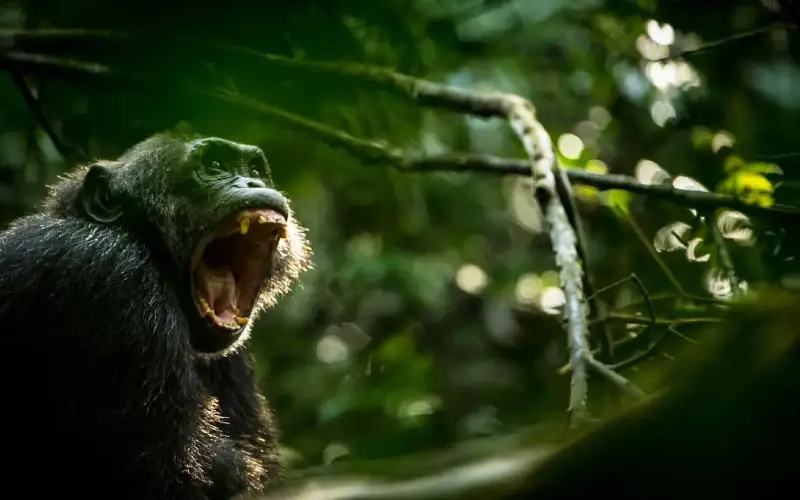
Bugoma Forest Reserve, established in 1932, is one of Uganda’s oldest protected forests, though it has long been overlooked. Serving as a crucial wildlife corridor between Murchison Falls National Park and the Semliki Valley, it is home to a rich diversity of primates and birds, including over 550 chimpanzees. In recent years, the forest has faced pressure from developers aiming to convert areas into sugarcane plantations, prompting strong conservation efforts. For those aware of its turbulent past, it is encouraging that Bugoma officially opened to chimpanzee trekking in 2024.
Bugoma - Bush2City
Best Time To Go
December to February (Driest months)
High Season
June to September (But it’s seldom busy)
Size
402km² / 155mi²
Altitude
1,008-1,243m / 3,307-4,078ft
Pros & Cons
One of Uganda’s newest and most remote chimpanzee trekking destinations.
A newly opened, off-the-beaten-path chimpanzee trekking destination in Uganda.
Habitat for diverse primates, including the endemic Uganda mangabey, unique to this forest.
Excellent birdwatching with around 260 recorded species.
Conveniently located en route to Murchison Falls from Kampala or Fort Portal.
Accessible from the eco-friendly Bugoma Jungle Lodge or nearby Hoima town.
Ecotourism is key to protecting this threatened forest ecosystem.
Tourism is still developing, with limited facilities.
Chimpanzee sightings are possible but less consistent than in established sites.
Wildlife
Bugoma Forest, though still relatively little known, is one of Uganda’s key habitats for chimpanzees, with a population of over 550 individuals—accounting for more than 10% of the country’s total. The forest is also home to a rich variety of primates, including black-and-white colobus, red-tailed monkeys, blue monkeys, olive baboons, and the rare endemic Uganda mangabey. Wildlife sightings also include buffalo, though they are rarely seen, while elephants occasionally pass through the forest. For bird lovers, Bugoma offers excellent viewing opportunities, featuring notable species such as the great blue turaco, white-thighed hornbill, rufous-sided broadbill, green-breasted pitta, and black-eared ground thrush.
Scenery
While Bugoma Forest may not offer dramatic landscapes in the traditional sense, it delivers a true tropical African rainforest experience, with dense vegetation and a raw, untamed atmosphere. In recent years, parts of the forest have faced pressure from logging, encroachment, and land clearing. Despite these challenges, Bugoma remains ecologically rich, supporting impressive plant diversity with over 224 recorded species of trees and shrubs. Among these are notable species such as Uganda ironwood (muhimbi), African mahogany, and Guinea plum, reflecting the forest’s ongoing importance as a natural habitat.
Activities
Following a long and careful habituation process, chimpanzee trekking in Bugoma Forest officially began in 2024. While sightings are not yet as consistent as in more established destinations, most visitors still have a good chance of encountering these remarkable primates. The low number of tourists adds to the experience, offering a more private and exclusive feel. In addition to chimp trekking, visitors can enjoy guided nature walks focused on spotting Uganda mangabeys and other monkey species, as well as birdwatching and community visits. Around Bugoma Jungle Lodge, a free self-guided forest trail (approximately 1.3 km / 0.8 mi) provides excellent opportunities to see monkeys and a variety of forest birds, including the well-known African grey parrot.
Weather & Climate
Bugoma Forest Reserve experiences a warm and humid climate, with higher rainfall than many other protected areas in Uganda. The driest conditions typically occur in January and February, with June, July, and December also offering relatively favorable weather. The heaviest rains usually fall between March and May, and again from August to November.
Best Time To Visit
Bugoma Forest can be visited throughout the year, and chimpanzee trekking is offered year-round. The most favorable conditions are usually during the drier months of January, February, June, July, and December. During the wetter months, trails can become muddy and rain is possible, but trekking and other forest activities remain rewarding. After heavy rainfall, a 4×4 vehicle may be needed to reach the Mwera Ecotourism Site, the starting point for chimp trekking.
Want To Visit Bugoma FR
No data was found
​Wildlife & Animals – Bugoma FR
No data was found
Wildlife Highlights
Best Time for Wildlife Viewing
Want To Visit Bugoma FR
No data was found
Wildlife Photos
​Birds – Bugoma FR

Notable Birds in Bugoma FR

No data was found
Birding Specials – Treats for Avid Birders
No data was found
Best Time for Bird Watching
Want To Visit Bugoma FR
No data was found
Facts & Figures

Bird Species

450+

Migratory Birds

Nov to Apr

Best Time To Visit – Bugoma FR

Jan

Feb

Mar

Apr

May

Jun

Jul

Aug

Sep

Oct

Nov

Dec

No data was found
No data was found
No data was found
Want To Visit Bugoma FR
No data was found
Wildlife Photos
Weather & Climate – Bugoma FR
Want To Visit Bugoma FR
No data was found
Bugoma Forest Reserve
Bugoma FR Photos
Bugoma - Bush2City
​Getting There – Bugoma FR

Bugoma Forest Reserve is located roughly 50 km (31 mi) south of Hoima, a major town on the established route connecting southwestern Uganda’s popular parks with Murchison Falls. The road from Kampala to Hoima is now mostly surfaced, making the journey increasingly convenient.


From Hoima, Bugoma can be reached in about 1 hour*. If coming from further away, plan for around 5 hours* for the 240 km (149 mi) drive from Kampala, 4 hours* for the 150 km (93 mi) drive from Fort Portal, or 3.5 hours* for the 170 km (106 mi) journey from the Paraa headquarters of Murchison Falls National Park.

Chimpanzee trekking begins at the Mwera Ecotourism Site, located along a dirt road that may need a 4×4 vehicle for access after periods of heavy rain.

*Driving times are only a rough indication. You should always consider the possibility of significant delays.
Main Park Map
Airlines & Ticket Prices
No data was found
Domestic Flights
No data was found
Passport, Visa & Other Entry Requirements
Want To Visit Bugoma FR
No data was found
​Malaria & Safety – Bugoma FR
Malaria & Vaccinations

For detailed guidance, please refer to our Uganda Malaria & Vaccinations page, as well as our general Wildlife Viewing Safety Precautions and Chimp Trekking Safety Guidelines below.

Want To Visit Bugoma FR
No data was found
Accommodations – Bugoma FR
Want To Visit Bugoma FR
No data was found
Overview – Bugoma FR
Bugoma Forest Reserve, established in 1932, is one of Uganda’s oldest protected forests, though it has long been overlooked. Serving as a crucial wildlife corridor between Murchison Falls National Park and the Semliki Valley, it is home to a rich diversity of primates and birds, including over 550 chimpanzees. In recent years, the forest has faced pressure from developers aiming to convert areas into sugarcane plantations, prompting strong conservation efforts. For those aware of its turbulent past, it is encouraging that Bugoma officially opened to chimpanzee trekking in 2024.
Bugoma - Bush2City
Best Time To Go
December to February (Driest months)
High Season
June to September (But it’s seldom busy)
Size
402km² / 155mi²
Altitude
1,008-1,243m / 3,307-4,078ft
Pros & Cons
One of Uganda’s newest and most remote chimpanzee trekking destinations.
A newly opened, off-the-beaten-path chimpanzee trekking destination in Uganda.
Habitat for diverse primates, including the endemic Uganda mangabey, unique to this forest.
Excellent birdwatching with around 260 recorded species.
Conveniently located en route to Murchison Falls from Kampala or Fort Portal.
Accessible from the eco-friendly Bugoma Jungle Lodge or nearby Hoima town.
Ecotourism is key to protecting this threatened forest ecosystem.
Tourism is still developing, with limited facilities.
Chimpanzee sightings are possible but less consistent than in established sites.
Wildlife
Bugoma Forest, though still relatively little known, is one of Uganda’s key habitats for chimpanzees, with a population of over 550 individuals—accounting for more than 10% of the country’s total. The forest is also home to a rich variety of primates, including black-and-white colobus, red-tailed monkeys, blue monkeys, olive baboons, and the rare endemic Uganda mangabey. Wildlife sightings also include buffalo, though they are rarely seen, while elephants occasionally pass through the forest. For bird lovers, Bugoma offers excellent viewing opportunities, featuring notable species such as the great blue turaco, white-thighed hornbill, rufous-sided broadbill, green-breasted pitta, and black-eared ground thrush.
Scenery
While Bugoma Forest may not offer dramatic landscapes in the traditional sense, it delivers a true tropical African rainforest experience, with dense vegetation and a raw, untamed atmosphere. In recent years, parts of the forest have faced pressure from logging, encroachment, and land clearing. Despite these challenges, Bugoma remains ecologically rich, supporting impressive plant diversity with over 224 recorded species of trees and shrubs. Among these are notable species such as Uganda ironwood (muhimbi), African mahogany, and Guinea plum, reflecting the forest’s ongoing importance as a natural habitat.
Weather & Climate
Bugoma Forest Reserve experiences a warm and humid climate, with higher rainfall than many other protected areas in Uganda. The driest conditions typically occur in January and February, with June, July, and December also offering relatively favorable weather. The heaviest rains usually fall between March and May, and again from August to November.
Best Time To Visit
Bugoma Forest can be visited throughout the year, and chimpanzee trekking is offered year-round. The most favorable conditions are usually during the drier months of January, February, June, July, and December. During the wetter months, trails can become muddy and rain is possible, but trekking and other forest activities remain rewarding. After heavy rainfall, a 4×4 vehicle may be needed to reach the Mwera Ecotourism Site, the starting point for chimp trekking.
Want To Visit Bugoma FR
No data was found
​Wildlife & Animals – Bugoma FR
No data was found
Wildlife Highlights
Best Time for Wildlife Viewing
Want To Visit Bugoma FR
No data was found
Wildlife Photos
​Birds – Bugoma FR

Notable Birds in Bugoma FR

No data was found
Birding Specials – Treats for Avid Birders
No data was found
Best Time for Bird Watching
Want To Visit Bugoma FR
No data was found
Facts & Figures

Bird Species

450+

Migratory Birds

Nov to Apr

Best Time To Visit – Bugoma FR

Jan

Feb

Mar

Apr

May

Jun

Jul

Aug

Sep

Oct

Nov

Dec

No data was found
No data was found
No data was found
Want To Visit Bugoma FR
No data was found
Wildlife Photos
Weather & Climate – Bugoma FR
Want To Visit Bugoma FR
No data was found
Bugoma Forest Reserve
Bugoma FR Photos
Bugoma - Bush2City
​Getting There – Bugoma FR

Bugoma Forest Reserve is located roughly 50 km (31 mi) south of Hoima, a major town on the established route connecting southwestern Uganda’s popular parks with Murchison Falls. The road from Kampala to Hoima is now mostly surfaced, making the journey increasingly convenient.


From Hoima, Bugoma can be reached in about 1 hour*. If coming from further away, plan for around 5 hours* for the 240 km (149 mi) drive from Kampala, 4 hours* for the 150 km (93 mi) drive from Fort Portal, or 3.5 hours* for the 170 km (106 mi) journey from the Paraa headquarters of Murchison Falls National Park.

Chimpanzee trekking begins at the Mwera Ecotourism Site, located along a dirt road that may need a 4×4 vehicle for access after periods of heavy rain.

*Driving times are only a rough indication. You should always consider the possibility of significant delays.
Main Park Map
Airlines & Ticket Prices
No data was found
Domestic Flights
No data was found
Passport, Visa & Other Entry Requirements
Want To Visit Bugoma FR
No data was found
​Malaria & Safety – Bugoma FR
Malaria & Vaccinations

For detailed guidance, please refer to our Uganda Malaria & Vaccinations page, as well as our general Wildlife Viewing Safety Precautions and Chimp Trekking Safety Guidelines below.

Want To Visit Bugoma FR
No data was found

Explore Bugoma Forest Reserve Safari Tours

No data was found

Book your Kilimanjaro trek

Our team is always here to help

General Travel Safety Precautions

Embarking on an African safari promises an adventure of a lifetime, showcasing the continent’s rich wildlife, breathtaking landscapes, and diverse cultures. While safaris are widely considered safe, especially those organized through reputable tour operators, it’s prudent to take certain precautions to ensure a smooth and secure experience. Here are some essential safety tips to consider:

Cities & Urban Areas: Safety Precautions

Traveling through Africa offers an enriching experience filled with breathtaking landscapes, diverse cultures, and unparalleled wildlife encounters. While it’s generally safe, especially on organized tours or safaris, navigating urban environments requires a bit of savvy to ensure your trip remains worry-free. Here are some straightforward tips to keep in mind, whether you’re exploring bustling metropolises or serene landscapes:

Wildlife Viewing Safety Precautions

Exploring the wild through a safari adventure is an exhilarating experience that brings you closer to nature’s most fascinating wildlife. Whether you opt for a guided tour with an experienced professional or decide to navigate the trails on a self-drive journey, safety is paramount to ensure an enjoyable and incident-free adventure. Here are some essential safety guidelines and tips to help you navigate your safari safely:

Photo Gallery of Bugoma Forest Reserve

Map of Bugoma Forest Reserve

Photo Gallery of Bugoma Forest Reserve

Main Park Map

Photo Gallery of Bugoma Forest Reserve

Map of Bugoma Forest Reserve

Photo Gallery

Photo Gallery

Photo Gallery