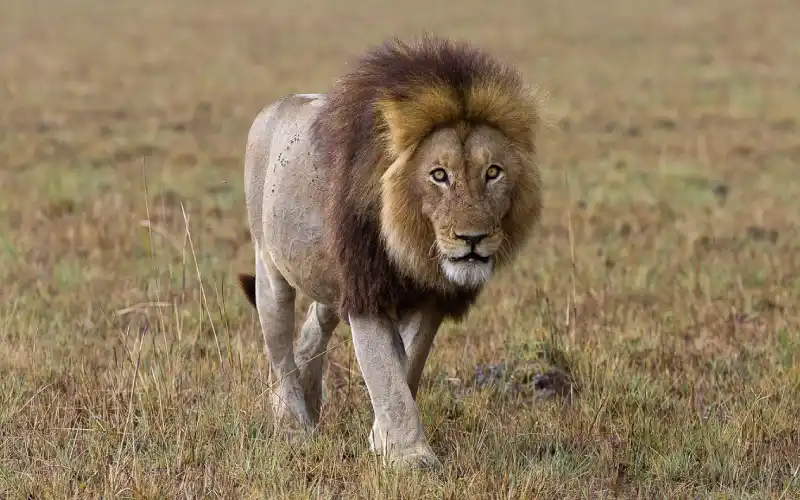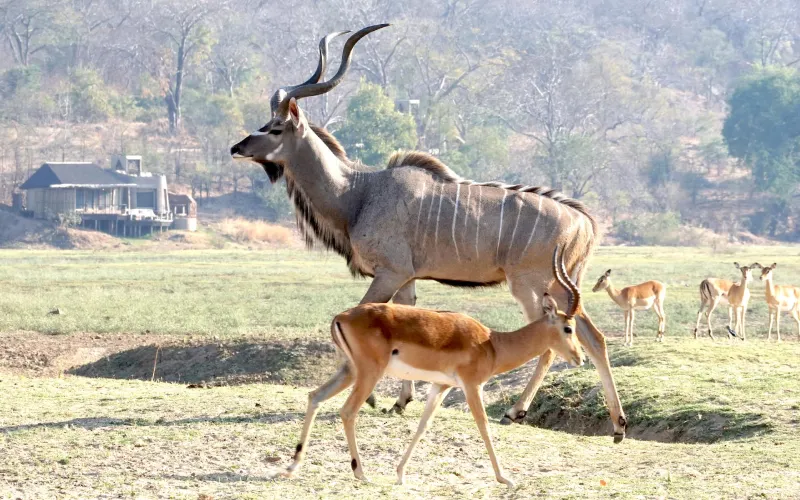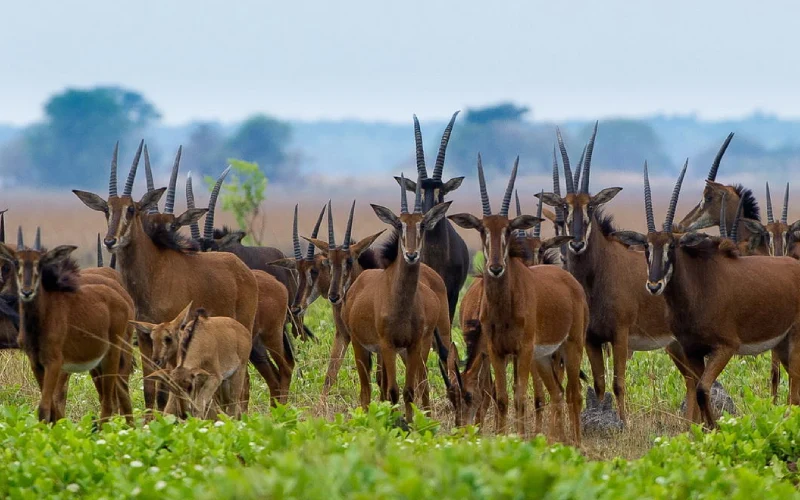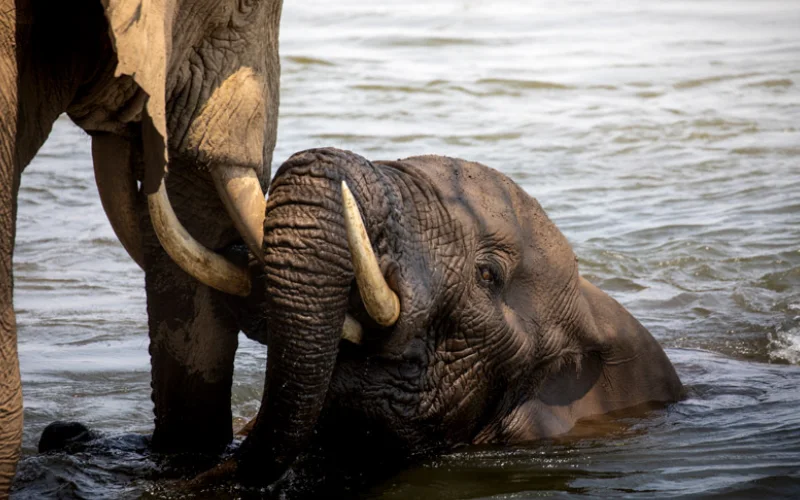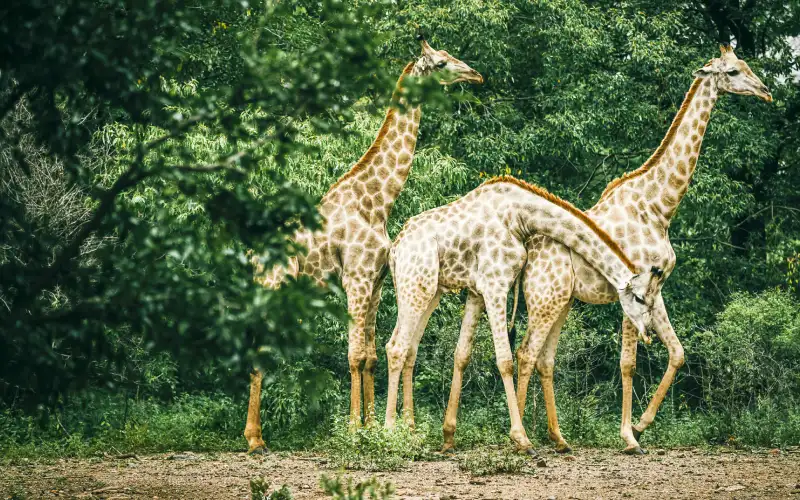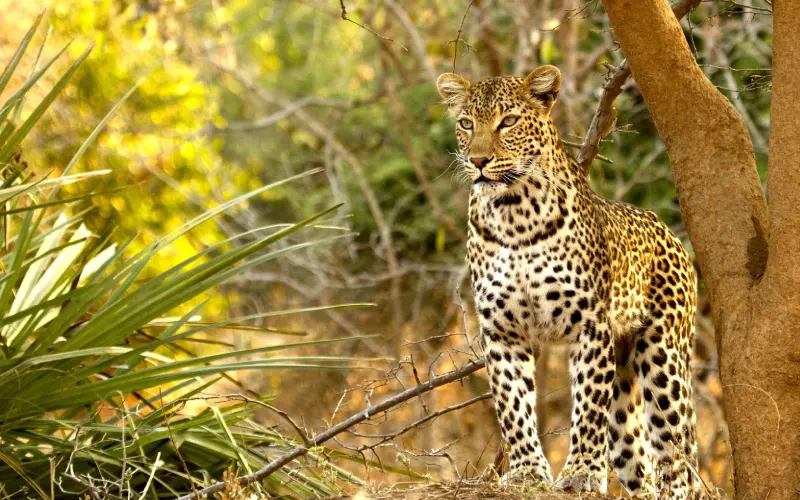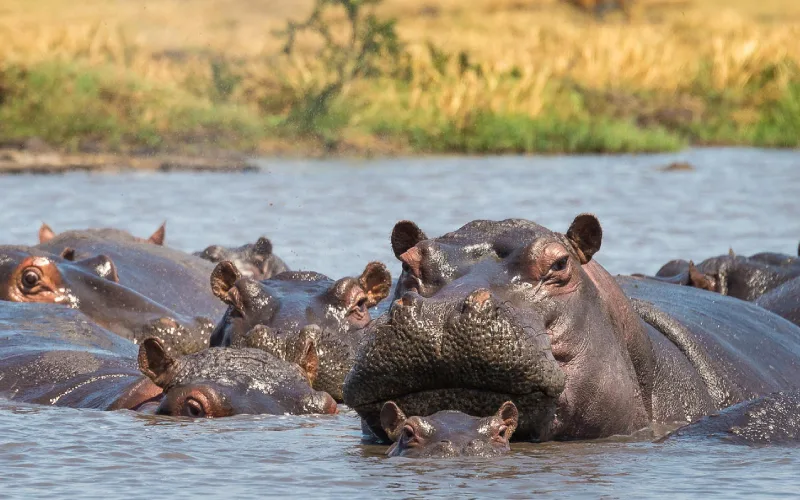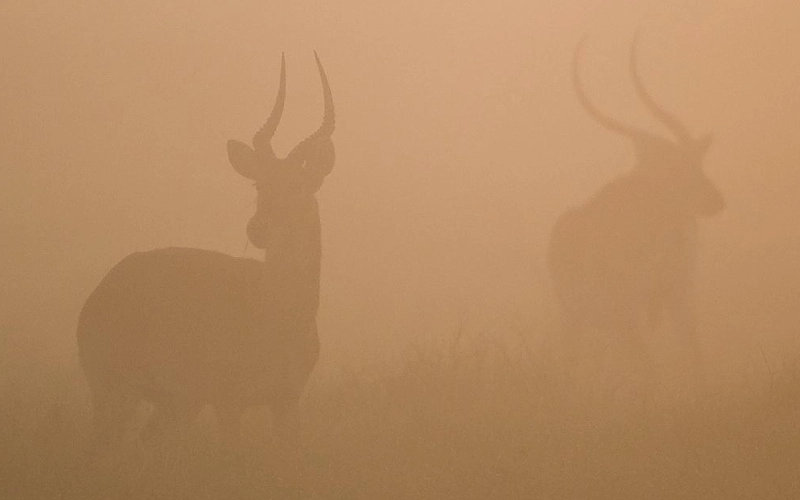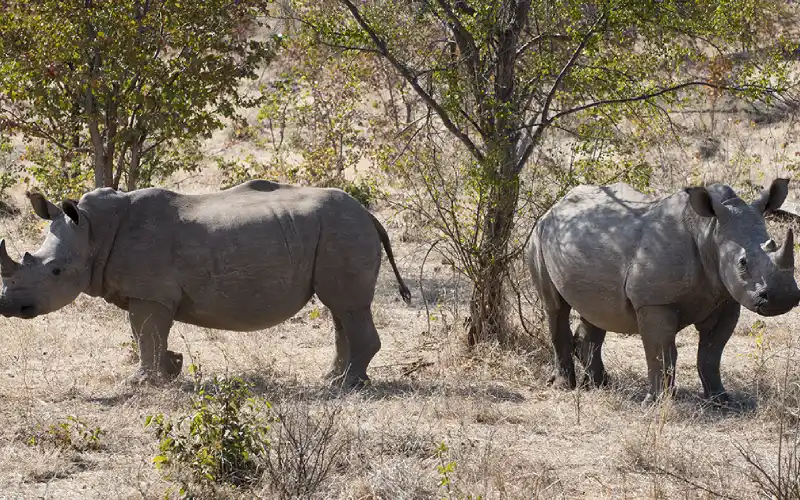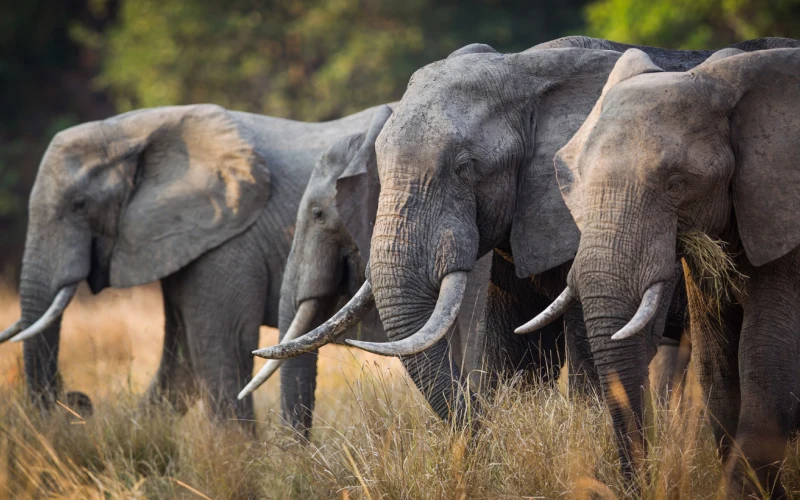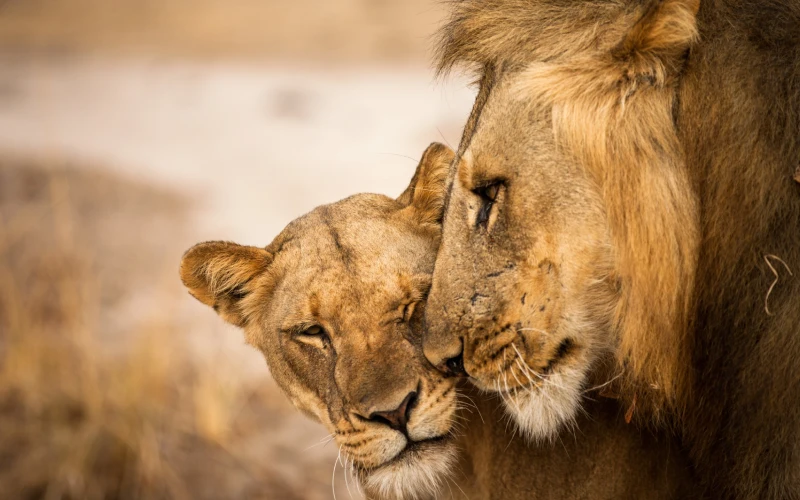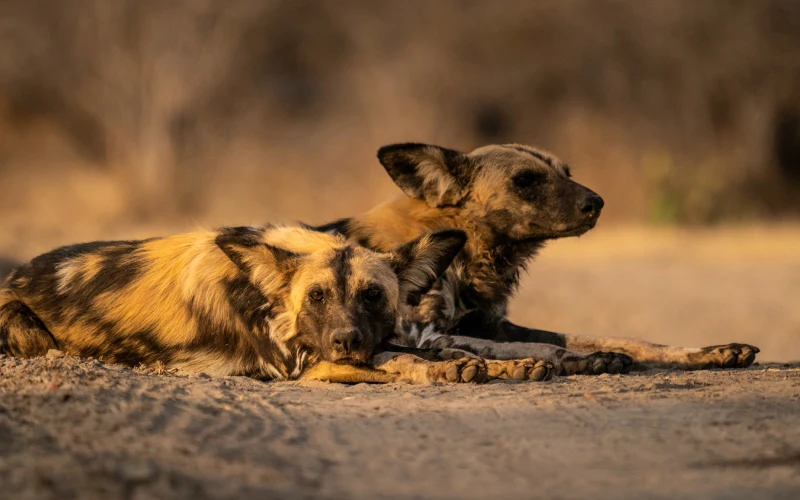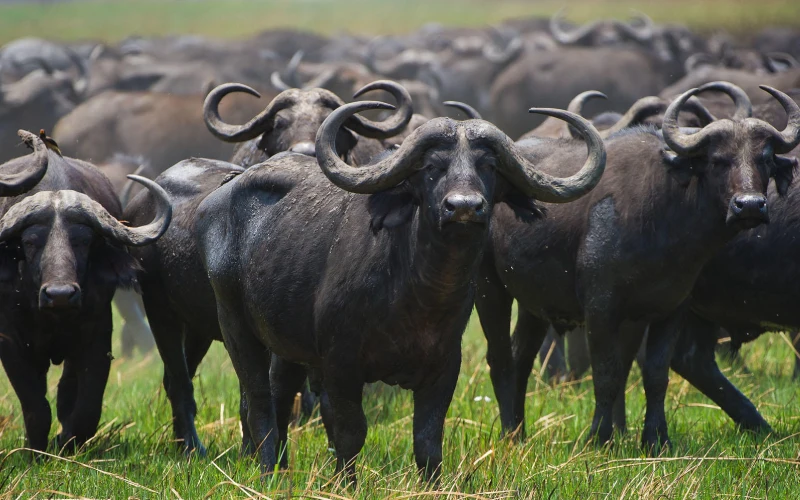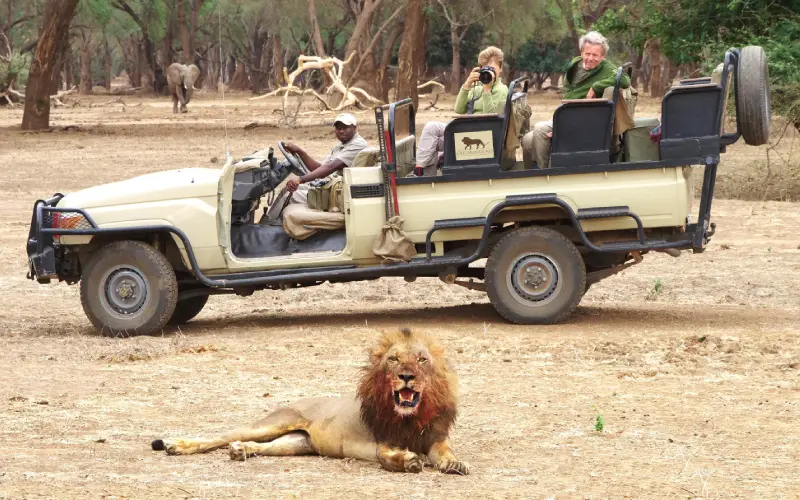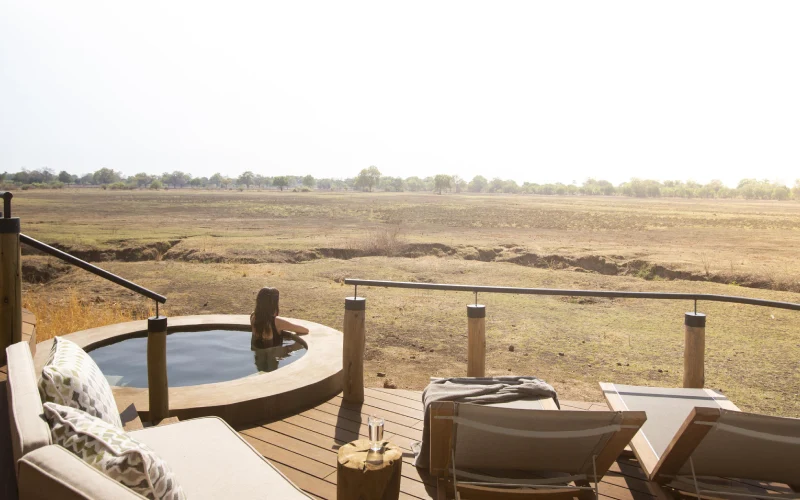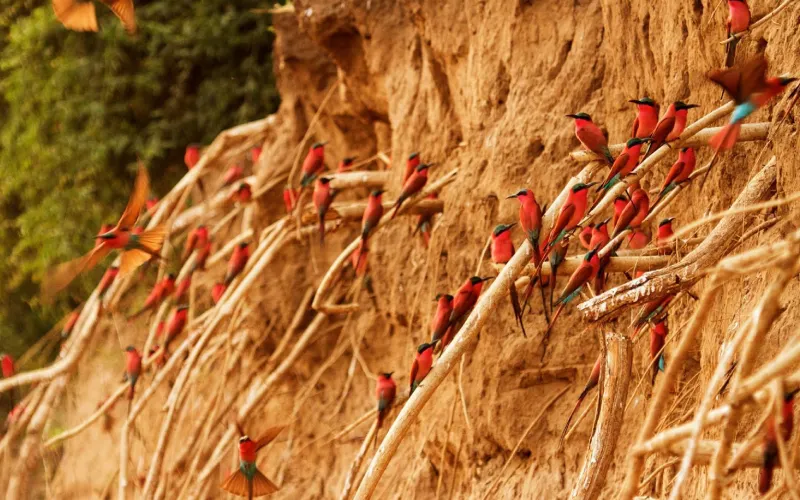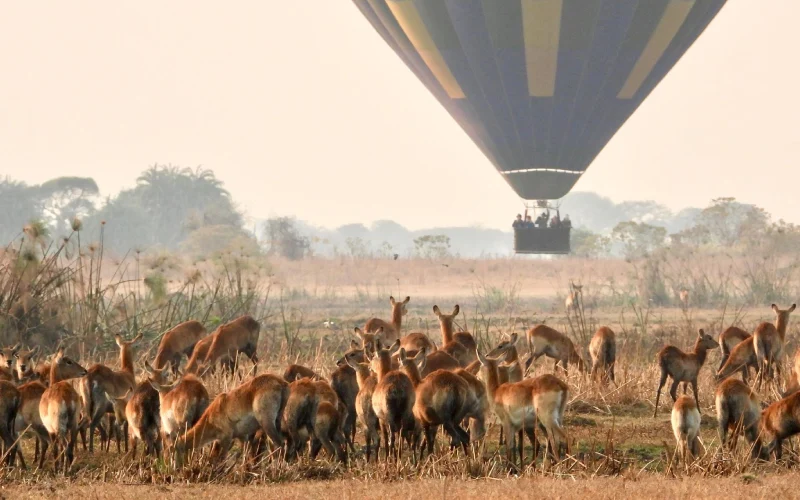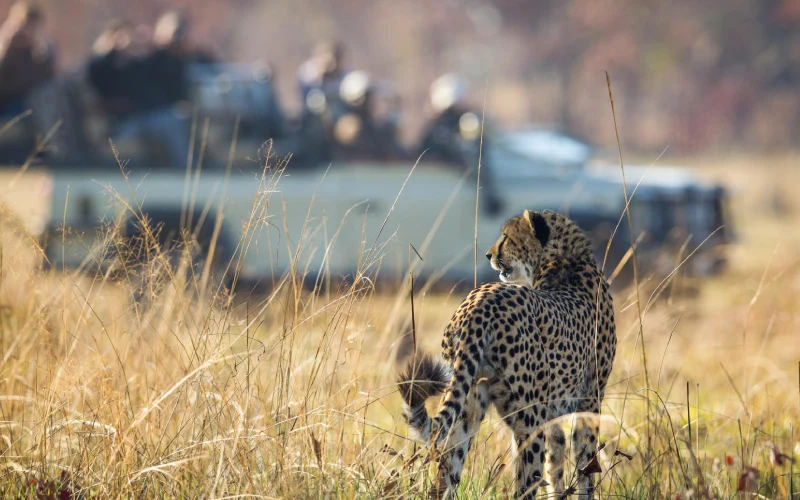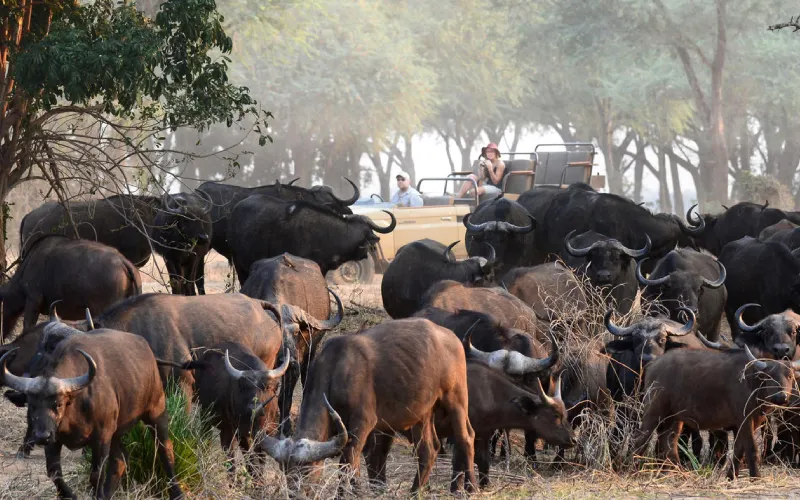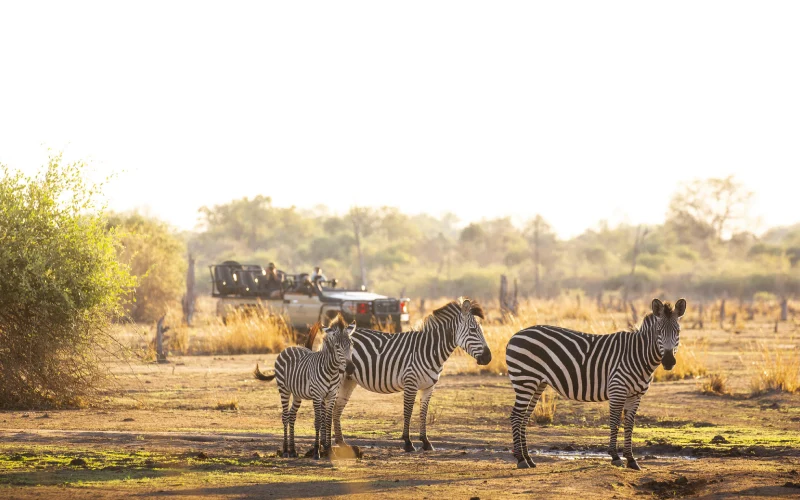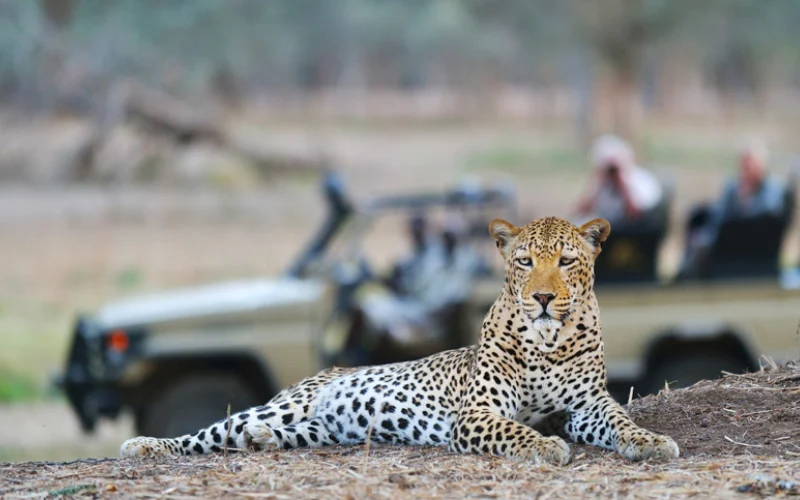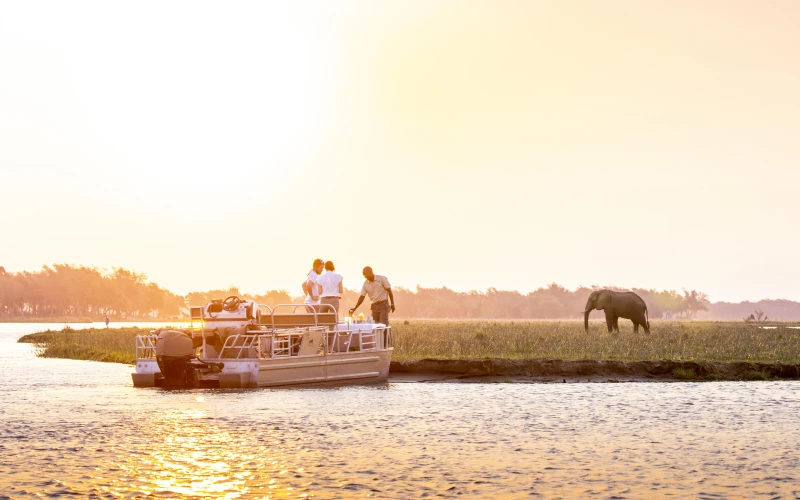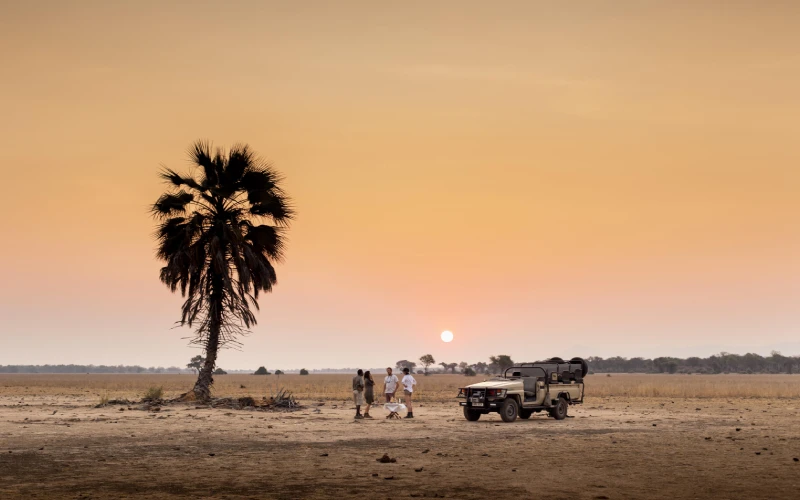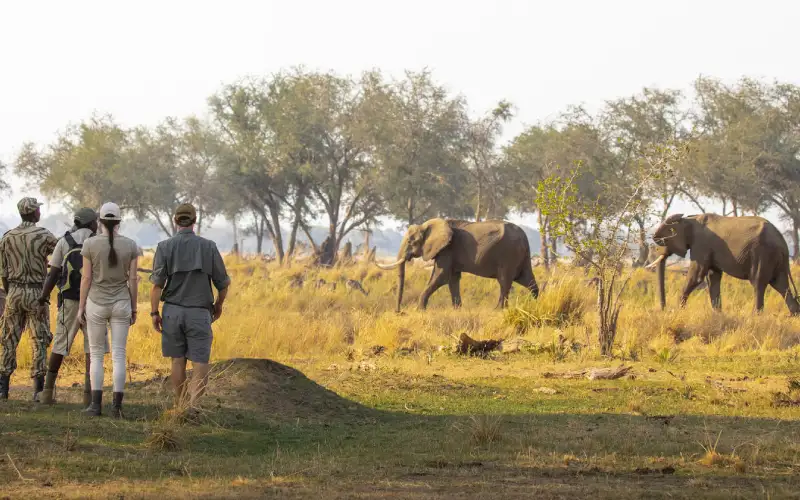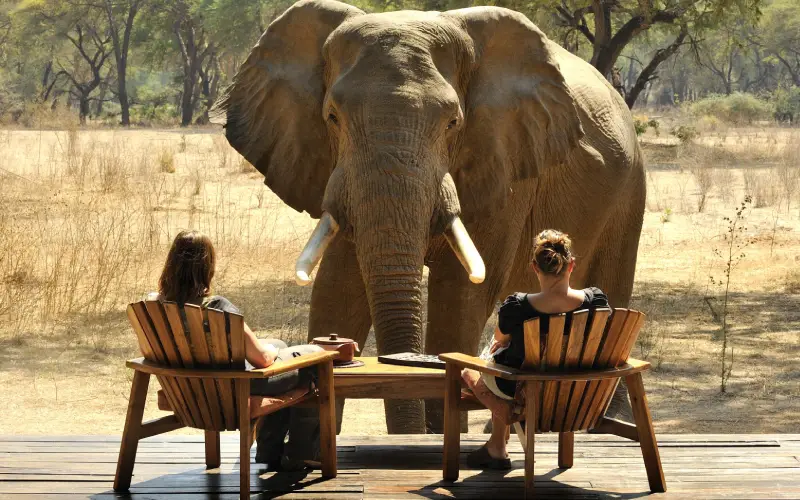
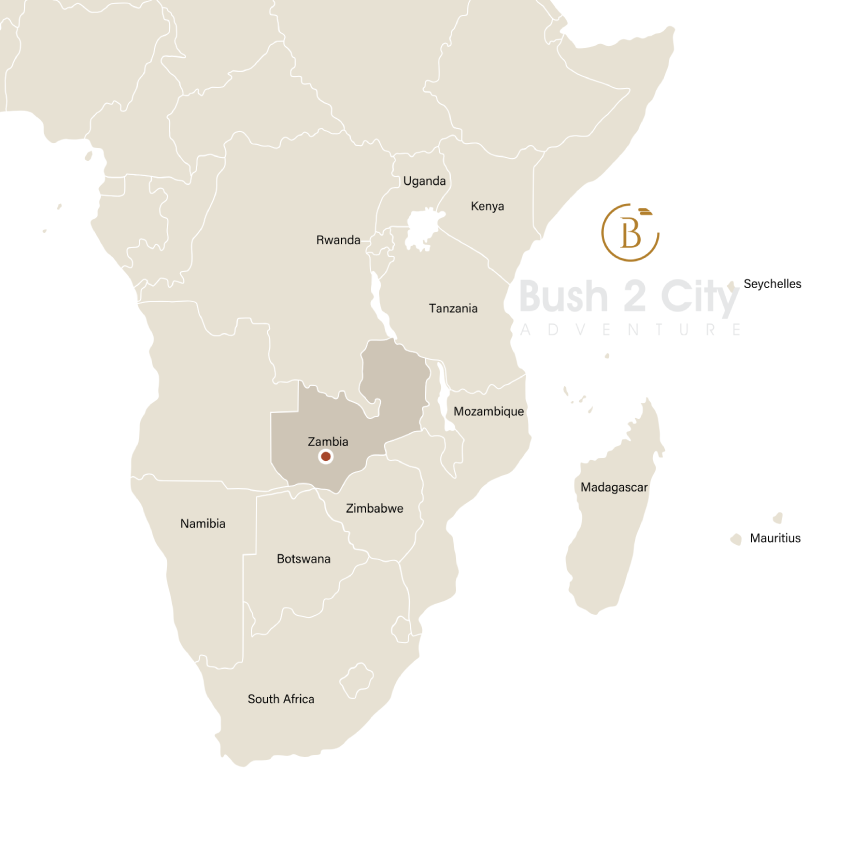
In Zambia, the safari experience is rich and diverse, offering encounters with iconic African wildlife. From majestic elephants and imposing buffaloes to the striking patterns of zebras, the country’s landscapes teem with these safari favorites. Zambia’s lions and leopards command attention, while it stands out as a crucial sanctuary for the endangered wild dog. The mighty Zambezi River and other waterways host vast populations of hippos and crocodiles, adding to the country’s wildlife spectacle. In wetland areas, expansive herds of lechwe flourish, showcasing Zambia’s biodiversity in all its splendor.
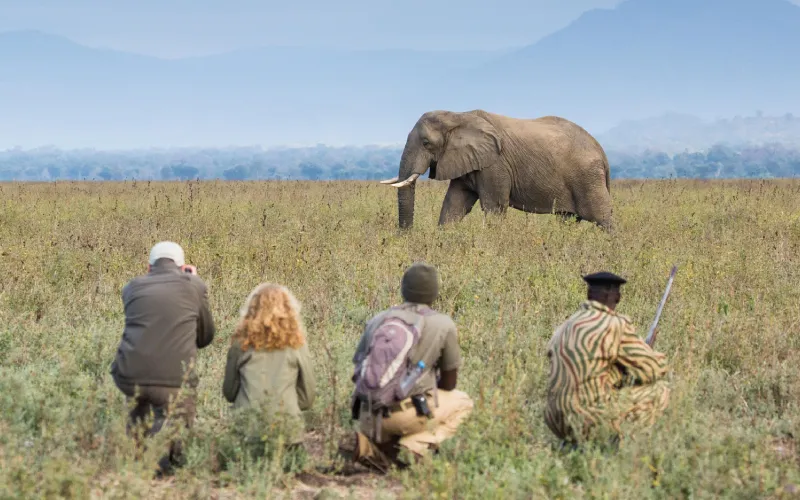
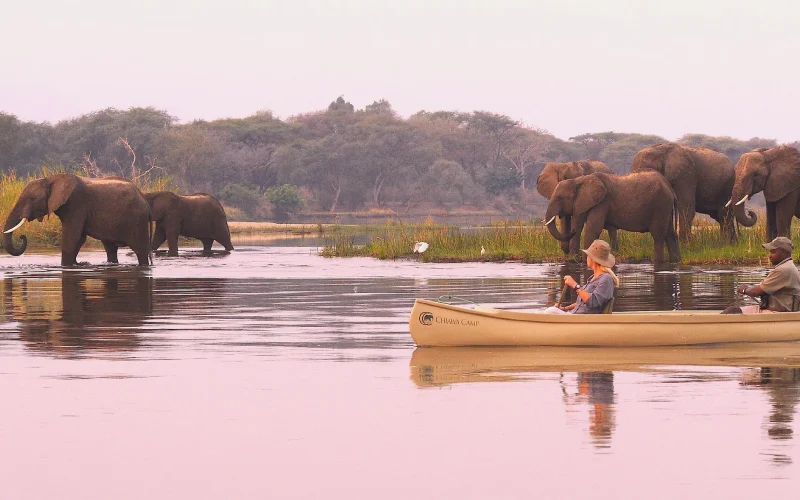
Zambia is a masterclass in the raw, authentic wilderness, where the classic game drive is merely the entry point. The experience is defined by the legendary walking safaris of South Luangwa and the elegant canoe safaris and boat expeditions along the Lower Zambezi.
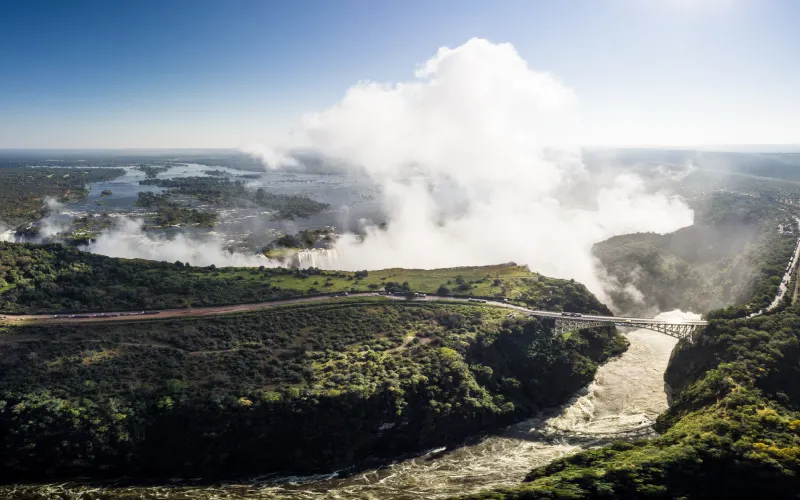
The journey scales from the thundering majesty of Victoria Falls—viewed by foot or private helicopter—to the high-octane thrills of white-water rafting and bungee jumping. From the vast, silent plains of Kafue to the world’s largest mammal migration in Kasanka, Zambia offers a seamless blend of deep-bush immersion and spectacular natural wonder.
In Zambia, the seasons paint contrasting pictures for travelers. During the Dry season (May to October), days bask in warmth, gradually heating up until October, just before the seasonal shift. However, come June, mornings dawn with a crisp chill, prompting the need for snug layers on early game drives. In stark contrast, Zambia’s Wet season (November to April) unleashes its full force, with torrential rain cascading down. The period also brings stifling heat and oppressive humidity, creating a challenging yet invigorating atmosphere for adventurers.
During Zambia’s Wet season (November to April), the landscape undergoes a dramatic transformation as heavy rainfall can isolate remote areas, posing challenges for travel. While many parks choose to close during this period, South Luangwa stands out as an exceptional destination that remains open to visitors. In contrast, the Dry season (May to October) offers a more accessible and wildlife-rich experience. With minimal rainfall, animals congregate near rivers and waterholes, providing excellent opportunities for sightings against the backdrop of Zambia’s stunning wilderness.
Embark on an adventure through Zambia’s premier national parks—South Luangwa, Kafue, and Lower Zambezi—and you’ll almost certainly encounter four of the Big Five. The landscapes are teeming with buffalo, elephants, and lions, offering unforgettable wildlife encounters. Zambia is renowned for its exceptional leopard sightings, providing a rare chance to observe these elusive cats up close. For a thrilling experience, head to Mosi-oa-Tunya National Park, where you can track rhinos on foot, adding an adventurous twist to your safari.

In Zambia, the conservation success story of the wild dog unfolds, as these endangered predators thrive in their natural habitat. Witnessing these skilled hunters in action is a rare and captivating experience. Among their preferred targets are the lechwe, an antelope species that exists in three distinct subspecies within Zambia: the endemic Kafue and black lechwe, alongside the more widespread red lechwe. The country also boasts endemic subspecies like Thornicroft’s giraffe and Cookson’s wildebeest, adding to Zambia’s exceptional and diverse wildlife tapestry.
The prime time for wildlife observation in Zambia unfolds during the Dry season (May to October), characterized by scarce water sources that draw animals to gather around rivers and waterholes. With vegetation less dense during this period, spotting wildlife becomes more straightforward. However, as the Dry season transitions into the hot months leading up to the rains, temperatures can become uncomfortably high. The Wet season (November to April) brings its own challenges, with some roads becoming impassable and many camps closing. This period also sees the landscape transform into a lush paradise, offering a different but equally captivating experience for those willing to explore.
Zambia’s avian diversity is a true marvel, boasting a remarkable 780 bird species. While renowned national parks like South Luangwa, Kafue, and Lower Zambezi offer fantastic birding opportunities, lesser-known gems are equally rewarding. Witness the breathtaking spectacle of migrating black-winged pratincoles at Liuwa Plain National Park, or explore the wetland birding haven of Lochinvar National Park. Kasanka National Park is a treasure trove of Central African bird species, including the captivating Ross’s turaco and Böhm’s bee-eater. A boat excursion in the Bangweulu Wetlands is a must-do, offering a chance to encounter the majestic shoebill. Migratory birds enhance Zambia’s birdlife from November to April, ensuring a spectacular experience for birdwatchers.


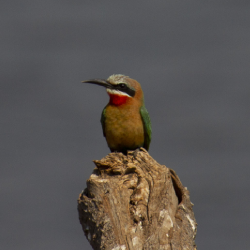

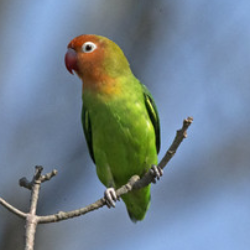
The pinnacle of birdwatching in Zambia occurs from November to April, known affectionately as the ‘Emerald season’. This period, characterized by the Wet season, transforms the landscape into a vibrant oasis, sparking a flurry of breeding activity among birds. The wetlands burst to life, hosting a mesmerizing array of migratory birds mingling with resident species. However, it’s important to be aware that some areas may become inaccessible, and many lodges choose to close their doors during this season, adding an adventurous twist to your birding expedition.
550+
Oct to Apr

Amidst Zambia’s stunning wilderness, the middle and late stages of the Dry season (May to October) offer unparalleled wildlife encounters. This period also aligns perfectly with a visit to the majestic Victoria Falls, showcasing its grandeur from June to August. On the flip side, exploring the wilderness during the Wet season (November to April) presents a more challenging adventure. Most parks and camps close their doors due to heavy rains, except for the Mfuwe section of South Luangwa National Park, which boasts a resilient network of all-weather roads, ensuring access even during the rainy season.
Exploring Zambia’s diverse landscapes is a treat during the Dry season, which is split into a cooler period from May to August and a hotter phase in September and October. Zambia, located near the tropics, receives ample rainfall during the Wet season from November to April. During this time, many camps in Kafue, Lower Zambezi, and other remote parks close. However, the Mfuwe section of South Luangwa National Park remains open throughout the year, offering a year-round haven for wildlife enthusiasts.
The climate in Lusaka, the capital, mirrors that of the elevated regions in central and southern Zambia, such as Kafue National Park. In contrast, the lower-lying South Luangwa and Lower Zambezi National Parks experience significantly warmer temperatures. For every 1,000 meters of descent (or 3,280 feet), temperatures increase by approximately 6°C (10.8°F) or 3.5°F per 1,000 feet.
In the dry winter months, precipitation is a rare occurrence, and the air is crisp with low humidity levels. This parched landscape draws a multitude of thirsty animals to congregate around the dwindling waterholes and flowing rivers, creating a captivating spectacle of wildlife activity.
In May, Zambia’s transition from summer brings cool mornings at around 11°C/52°F, gradually warming to 25°C/77°F in the afternoon. As night falls, temperatures begin to drop further, signaling the end of the rainy season.
June, July & August usher in colder mornings, averaging 10°C/50°F, necessitating warm layers for early game drives. Afternoons offer pleasant conditions, hovering around 23°C/73°F. However, parks at lower altitudes like South Luangwa and Lower Zambezi tend to be warmer.
Come September & October, the heat intensifies, and the first rains arrive, breaking the dry spell. October, the peak of heat, sees temperatures soaring to around 31°C/88°F during the day. In lower-lying areas, temperatures can exceed 40°C/104°F, creating a hot and arid environment.
The months from December to March, part of Zambia’s Wet season, are less than ideal for travel due to the heavy rainfall and challenging road conditions.
November in Zambia can be quite unpredictable, often featuring scattered afternoon showers. Mornings are cool at around 18°C/64°F, warming up to 29°C/84°F in the afternoon.
December, January, February, and March constitute the wettest period, with frequent heavy downpours in the afternoon and high humidity levels. Daytime temperatures hover around 26°C/78°F.
As April approaches, the rainy season gradually wanes, leading to a decrease in both humidity and rainfall.
For an unforgettable safari experience in Zambia, small aircraft are the preferred mode of travel, offering not just transportation but a breathtaking aerial view of the landscape. Zambia’s approach to safaris emphasizes depth over breadth, encouraging visitors to immerse themselves fully in one or two parks. This allows for a comprehensive exploration, uncovering the hidden gems of each location. Alongside classic game drives, walking and boat safaris are integral parts of the adventure, promising close encounters with wildlife and the natural beauty of Zambia.
> Victoria Falls (1 to 3 days) is one of the world’s most impressive waterfalls
> Kafue National Park (3 to 5 days) is one of Africa’s largest parks and home to a wide range of antelope
> South Luangwa National Park (3 to 6 days) is Zambia’s premier park, famous for its walking safaris
> Lower Zambezi National Park (3 to 5 days) is great for canoeing safaris
> North Luangwa National Park for walking in pristine wilderness
> Liuwa Plain National Park for a truly remote wilderness experience
> Chimfunshi Wildlife Orphanage for close-up viewing of chimpanzees
Zambia’s primary gateway is Kenneth Kaunda International Airport (LUN), conveniently situated just 14km/9mi from the capital, Lusaka. From Lusaka, travelers have the option to either fly or drive to their chosen reserves. For those planning a safari that includes the majestic Victoria Falls, Harry Mwanga Nkumbula International Airport (LVI) near Livingstone is the preferred entry or exit point, offering easy access to the falls. When booking with Bush 2 City Adventure, your travel consultant will ensure a seamless experience by arranging airport pickup and any necessary transportation as part of your safari package.
Please check Skyscanner to explore airlines that offer flights to Zambia and to check ticket prices. Alternatively, you can visit the airline’s website directly to book your flight before confirming your safari with us.
There are two main domestic carriers in Zambia: Proflight, which is a well-established airline, and the newer Zambia Airways, which offers a limited number of flights.
For travel between parks during your safari, small charter flights are often used. These local flight bookings are included in our package, and we will arrange them for you as part of the package.
The details presented here serve as a general guide and should not replace personalized advice from your travel doctor. For comprehensive and up-to-date information on health guidelines for travelers in Zambia, we recommend consulting the government organizations and travel clinics listed below.
Vaccinations are advisable; for more detailed immunization advice, please refer to the websites listed below.
The risk is high throughout the country, particularly during and just after the rainy season from November to May. For more detailed advice, please refer to the websites listed below.
Zambia is a country that we consider safe for travel, especially when you’re on one of our organized safaris. If you plan to drive independently, it’s important to get advice from locals regarding road conditions and the best routes. Driving at night should be avoided, and it’s wise to always respect the estimated travel times.
Here are some safety tips to keep in mind during your time in Zambia:
If you adhere to your guide’s instructions, your safari experience will be very safe. It’s important to always follow the park rules and show respect for the wildlife. During self-drive safaris, only exit your vehicle in designated safe areas. For more tips:
Like many major cities worldwide, urban areas in Zambia experience some level of crime, often involving minor incidents such as petty theft. Guided tours are generally safe, but when exploring on your own, it’s important to take basic precautions: seek advice from your hotel, use taxis after dark, avoid displaying valuables, and carry only essential cash. For more safety tips relevant to African cities:
Please refer to the following pages and the FAQ section below for information on malaria, vaccinations for Zambia, and general travel safety tips:
Please utilize the links below for official government travel advice regarding Zambia.
By Air:
The main international gateway to Zambia is Kenneth Kaunda International Airport (LUN) in Lusaka, the capital city. Other international airports in Zambia, such as Harry Mwanga Nkumbula International Airport (LVI) in Livingstone and Simon Mwansa Kapwepwe International Airport (NLA) in Ndola. Major airlines like Emirates, Ethiopian Airlines, South African Airways, and Kenya Airways offer flights to Zambia.
By Land:
Zambia shares borders with several countries, including Angola, Botswana, the Democratic Republic of the Congo, Malawi, Mozambique, Namibia, Tanzania, and Zimbabwe. You can enter Zambia by land through these border posts. However, checking visa requirements and border crossing regulations for each entry point is essential.
The Zambian Kwacha (ZKW) is the official currency.
Zambia operates on Central Africa Time (CAT), which is GMT +2 hours, aligning with the rest of Southern Africa.
Credit card facilities are not available in Zambia, including at Wilderness camps. Payments can be made in cash, and debit cards are accepted.
In Zambia, the standard voltage is 230V, with outlets accommodating two round pins or three round or rectangular prongs. Travelers from the UK or Europe might need an adapter, which our staff can provide during your stay.
Consult your Travel Designer about luggage restrictions specific to your tour. Generally, pack warm clothes for cooler months and light attire for summer. Avoid bright colors and white.
Victoria Falls, also known as Mosi-oa-Tunya, is on the Zambezi River, which borders Zambia and Zimbabwe. It can be viewed from both the Zambian town of Livingstone and the Zimbabwean town of Victoria Falls.
Livingstone is relatively safe, but like many places, it has some petty crime. It’s advisable not to walk around at night; taking a taxi is safer, especially as wild animals might be encountered.
Visas valid for 90 days are available on arrival at any port of entry, or they can be applied for online in advance. Additionally, visitors can obtain a single entry or day visa to explore the Zambian side of Mosi-oa-Tunya when traveling from neighboring Zimbabwe or Botswana. For the latest visa requirements, it is recommended to consult the official Zambia Department of Immigration website at https://www.zambiaimmigration.gov.zm/for-visitors/.
A yellow fever vaccination is necessary only if you are arriving in Zambia from a country where yellow fever is prevalent.
It’s advisable to discuss this with your Travel Designer or a travel clinic a few weeks before your departure. Certain malaria prophylaxis regimens must be initiated well before your trip to Zambia.
In Zambia, the safari experience is rich and diverse, offering encounters with iconic African wildlife. From majestic elephants and imposing buffaloes to the striking patterns of zebras, the country’s landscapes teem with these safari favorites. Zambia’s lions and leopards command attention, while it stands out as a crucial sanctuary for the endangered wild dog. The mighty Zambezi River and other waterways host vast populations of hippos and crocodiles, adding to the country’s wildlife spectacle. In wetland areas, expansive herds of lechwe flourish, showcasing Zambia’s biodiversity in all its splendor.
In Zambia, the seasons paint contrasting pictures for travelers. During the Dry season (May to October), days bask in warmth, gradually heating up until October, just before the seasonal shift. However, come June, mornings dawn with a crisp chill, prompting the need for snug layers on early game drives. In stark contrast, Zambia’s Wet season (November to April) unleashes its full force, with torrential rain cascading down. The period also brings stifling heat and oppressive humidity, creating a challenging yet invigorating atmosphere for adventurers.
During Zambia’s Wet season (November to April), the landscape undergoes a dramatic transformation as heavy rainfall can isolate remote areas, posing challenges for travel. While many parks choose to close during this period, South Luangwa stands out as an exceptional destination that remains open to visitors. In contrast, the Dry season (May to October) offers a more accessible and wildlife-rich experience. With minimal rainfall, animals congregate near rivers and waterholes, providing excellent opportunities for sightings against the backdrop of Zambia’s stunning wilderness.
Embark on an adventure through Zambia’s premier national parks—South Luangwa, Kafue, and Lower Zambezi—and you’ll almost certainly encounter four of the Big Five. The landscapes are teeming with buffalo, elephants, and lions, offering unforgettable wildlife encounters. Zambia is renowned for its exceptional leopard sightings, providing a rare chance to observe these elusive cats up close. For a thrilling experience, head to Mosi-oa-Tunya National Park, where you can track rhinos on foot, adding an adventurous twist to your safari.
In Zambia, the conservation success story of the wild dog unfolds, as these endangered predators thrive in their natural habitat. Witnessing these skilled hunters in action is a rare and captivating experience. Among their preferred targets are the lechwe, an antelope species that exists in three distinct subspecies within Zambia: the endemic Kafue and black lechwe, alongside the more widespread red lechwe. The country also boasts endemic subspecies like Thornicroft’s giraffe and Cookson’s wildebeest, adding to Zambia’s exceptional and diverse wildlife tapestry.
The prime time for wildlife observation in Zambia unfolds during the Dry season (May to October), characterized by scarce water sources that draw animals to gather around rivers and waterholes. With vegetation less dense during this period, spotting wildlife becomes more straightforward. However, as the Dry season transitions into the hot months leading up to the rains, temperatures can become uncomfortably high. The Wet season (November to April) brings its own challenges, with some roads becoming impassable and many camps closing. This period also sees the landscape transform into a lush paradise, offering a different but equally captivating experience for those willing to explore.
Zambia’s avian diversity is a true marvel, boasting a remarkable 780 bird species. While renowned national parks like South Luangwa, Kafue, and Lower Zambezi offer fantastic birding opportunities, lesser-known gems are equally rewarding. Witness the breathtaking spectacle of migrating black-winged pratincoles at Liuwa Plain National Park, or explore the wetland birding haven of Lochinvar National Park. Kasanka National Park is a treasure trove of Central African bird species, including the captivating Ross’s turaco and Böhm’s bee-eater. A boat excursion in the Bangweulu Wetlands is a must-do, offering a chance to encounter the majestic shoebill. Migratory birds enhance Zambia’s birdlife from November to April, ensuring a spectacular experience for birdwatchers.
550+
Oct to Apr
The pinnacle of birdwatching in Zambia occurs from November to April, known affectionately as the ‘Emerald season’. This period, characterized by the Wet season, transforms the landscape into a vibrant oasis, sparking a flurry of breeding activity among birds. The wetlands burst to life, hosting a mesmerizing array of migratory birds mingling with resident species. However, it’s important to be aware that some areas may become inaccessible, and many lodges choose to close their doors during this season, adding an adventurous twist to your birding expedition.
550+
Oct to Apr
Amidst Zambia’s stunning wilderness, the middle and late stages of the Dry season (May to October) offer unparalleled wildlife encounters. This period also aligns perfectly with a visit to the majestic Victoria Falls, showcasing its grandeur from June to August. On the flip side, exploring the wilderness during the Wet season (November to April) presents a more challenging adventure. Most parks and camps close their doors due to heavy rains, except for the Mfuwe section of South Luangwa National Park, which boasts a resilient network of all-weather roads, ensuring access even during the rainy season.
Exploring Zambia’s diverse landscapes is a treat during the Dry season, which is split into a cooler period from May to August and a hotter phase in September and October. Zambia, located near the tropics, receives ample rainfall during the Wet season from November to April. During this time, many camps in Kafue, Lower Zambezi, and other remote parks close. However, the Mfuwe section of South Luangwa National Park remains open throughout the year, offering a year-round haven for wildlife enthusiasts.
The climate in Lusaka, the capital, mirrors that of the elevated regions in central and southern Zambia, such as Kafue National Park. In contrast, the lower-lying South Luangwa and Lower Zambezi National Parks experience significantly warmer temperatures. For every 1,000 meters of descent (or 3,280 feet), temperatures increase by approximately 6°C (10.8°F) or 3.5°F per 1,000 feet.
In the dry winter months, precipitation is a rare occurrence, and the air is crisp with low humidity levels. This parched landscape draws a multitude of thirsty animals to congregate around the dwindling waterholes and flowing rivers, creating a captivating spectacle of wildlife activity.
In May, Zambia’s transition from summer brings cool mornings at around 11°C/52°F, gradually warming to 25°C/77°F in the afternoon. As night falls, temperatures begin to drop further, signaling the end of the rainy season.
June, July & August usher in colder mornings, averaging 10°C/50°F, necessitating warm layers for early game drives. Afternoons offer pleasant conditions, hovering around 23°C/73°F. However, parks at lower altitudes like South Luangwa and Lower Zambezi tend to be warmer.
Come September & October, the heat intensifies, and the first rains arrive, breaking the dry spell. October, the peak of heat, sees temperatures soaring to around 31°C/88°F during the day. In lower-lying areas, temperatures can exceed 40°C/104°F, creating a hot and arid environment.
The months from December to March, part of Zambia’s Wet season, are less than ideal for travel due to the heavy rainfall and challenging road conditions.
November in Zambia can be quite unpredictable, often featuring scattered afternoon showers. Mornings are cool at around 18°C/64°F, warming up to 29°C/84°F in the afternoon.
December, January, February, and March constitute the wettest period, with frequent heavy downpours in the afternoon and high humidity levels. Daytime temperatures hover around 26°C/78°F.
As April approaches, the rainy season gradually wanes, leading to a decrease in both humidity and rainfall.
For an unforgettable safari experience in Zambia, small aircraft are the preferred mode of travel, offering not just transportation but a breathtaking aerial view of the landscape. Zambia’s approach to safaris emphasizes depth over breadth, encouraging visitors to immerse themselves fully in one or two parks. This allows for a comprehensive exploration, uncovering the hidden gems of each location. Alongside classic game drives, walking and boat safaris are integral parts of the adventure, promising close encounters with wildlife and the natural beauty of Zambia.
> Victoria Falls (1 to 3 days) is one of the world’s most impressive waterfalls
> Kafue National Park (3 to 5 days) is one of Africa’s largest parks and home to a wide range of antelope
> South Luangwa National Park (3 to 6 days) is Zambia’s premier park, famous for its walking safaris
> Lower Zambezi National Park (3 to 5 days) is great for canoeing safaris
> North Luangwa National Park for walking in pristine wilderness
> Liuwa Plain National Park for a truly remote wilderness experience
> Chimfunshi Wildlife Orphanage for close-up viewing of chimpanzees
Zambia’s primary gateway is Kenneth Kaunda International Airport (LUN), conveniently situated just 14km/9mi from the capital, Lusaka. From Lusaka, travelers have the option to either fly or drive to their chosen reserves. For those planning a safari that includes the majestic Victoria Falls, Harry Mwanga Nkumbula International Airport (LVI) near Livingstone is the preferred entry or exit point, offering easy access to the falls. When booking with Bush 2 City Adventure, your travel consultant will ensure a seamless experience by arranging airport pickup and any necessary transportation as part of your safari package.
Please check Skyscanner to explore airlines that offer flights to Zambia and to check ticket prices. Alternatively, you can visit the airline’s website directly to book your flight before confirming your safari with us.
There are two main domestic carriers in Zambia: Proflight, which is a well-established airline, and the newer Zambia Airways, which offers a limited number of flights.
For travel between parks during your safari, small charter flights are often used. These local flight bookings are included in our package, and we will arrange them for you as part of the package.
The details presented here serve as a general guide and should not replace personalized advice from your travel doctor. For comprehensive and up-to-date information on health guidelines for travelers in Zambia, we recommend consulting the government organizations and travel clinics listed below.
Vaccinations are advisable; for more detailed immunization advice, please refer to the websites listed below.
The risk is high throughout the country, particularly during and just after the rainy season from November to May. For more detailed advice, please refer to the websites listed below.
Zambia is a country that we consider safe for travel, especially when you’re on one of our organized safaris. If you plan to drive independently, it’s important to get advice from locals regarding road conditions and the best routes. Driving at night should be avoided, and it’s wise to always respect the estimated travel times.
Here are some safety tips to keep in mind during your time in Zambia:
If you adhere to your guide’s instructions, your safari experience will be very safe. It’s important to always follow the park rules and show respect for the wildlife. During self-drive safaris, only exit your vehicle in designated safe areas. For more tips:
Like many major cities worldwide, urban areas in Zambia experience some level of crime, often involving minor incidents such as petty theft. Guided tours are generally safe, but when exploring on your own, it’s important to take basic precautions: seek advice from your hotel, use taxis after dark, avoid displaying valuables, and carry only essential cash. For more safety tips relevant to African cities:
Please refer to the following pages and the FAQ section below for information on malaria, vaccinations for Zambia, and general travel safety tips:
Please utilize the links below for official government travel advice regarding Zambia.
Embarking on an African safari promises an adventure of a lifetime, showcasing the continent’s rich wildlife, breathtaking landscapes, and diverse cultures. While safaris are widely considered safe, especially those organized through reputable tour operators, it’s prudent to take certain precautions to ensure a smooth and secure experience. Here are some essential safety tips to consider:
Traveling through Africa offers an enriching experience filled with breathtaking landscapes, diverse cultures, and unparalleled wildlife encounters. While it’s generally safe, especially on organized tours or safaris, navigating urban environments requires a bit of savvy to ensure your trip remains worry-free. Here are some straightforward tips to keep in mind, whether you’re exploring bustling metropolises or serene landscapes:
Exploring the wild through a safari adventure is an exhilarating experience that brings you closer to nature’s most fascinating wildlife. Whether you opt for a guided tour with an experienced professional or decide to navigate the trails on a self-drive journey, safety is paramount to ensure an enjoyable and incident-free adventure. Here are some essential safety guidelines and tips to help you navigate your safari safely: